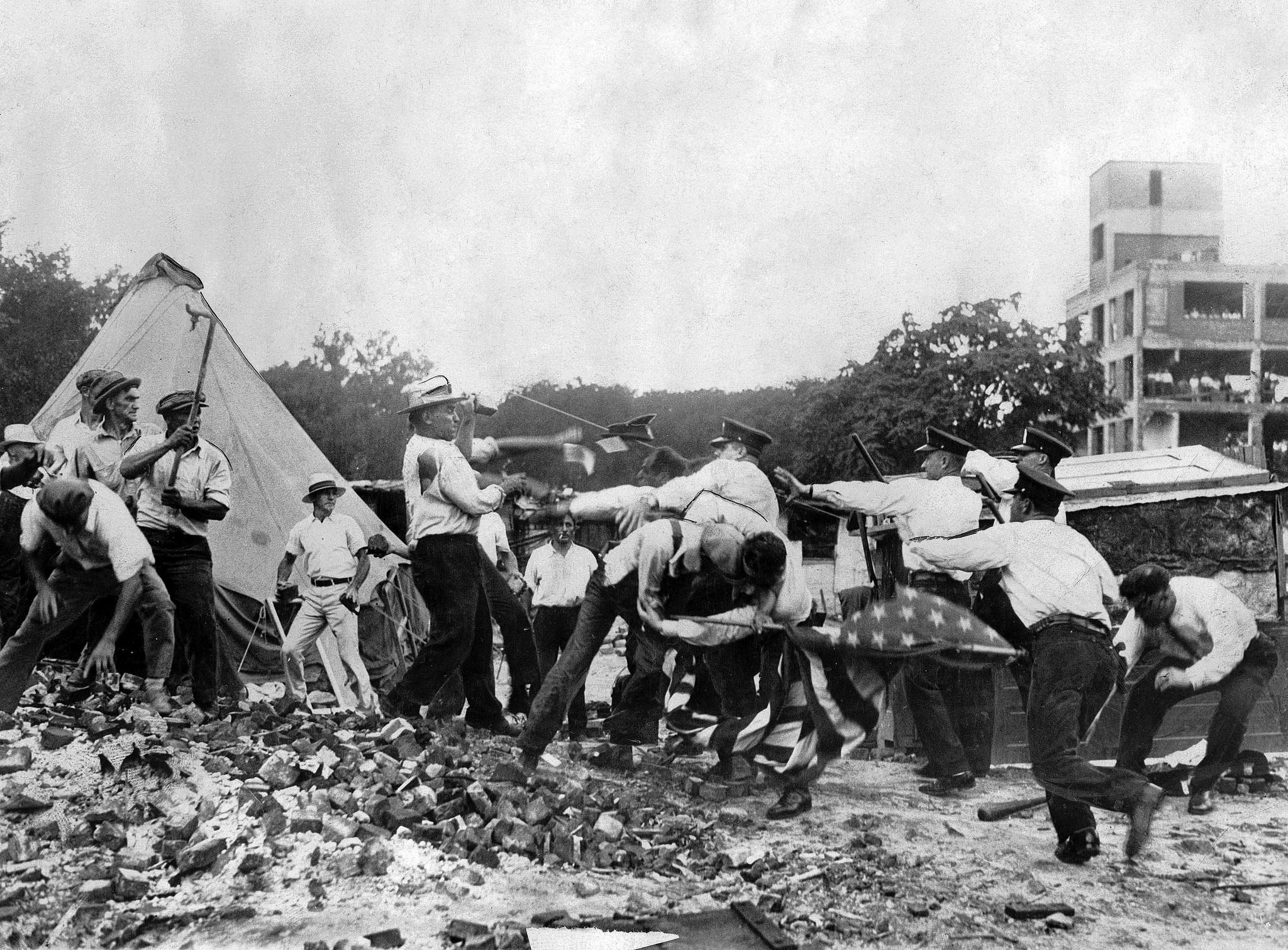
Great Depression: In Washington, D.C., troops disperse the last of the "Bonus Army" of World War I veterans using arson, bayonets, sabers, tanks, tear gas, and vomit gas.
The Bonus Army, a group of 43,000 demonstrators—17,000 veterans of U.S. involvement in World War I, their families, and affiliated groups—gathered in Washington, D.C., in mid-1932 to demand early cash redemption of their service-bonus certificates. Organizers called the demonstrators the Bonus Expeditionary Force (B.E.F.), to echo the name of World War I's American Expeditionary Forces, while the media referred to them as the "Bonus Army" or as "Bonus Marchers".
The demonstrators were led by Walter W. Waters, a former sergeant. Many of the war veterans had been out of work during the early years of the Great Depression. The World War Adjusted Compensation Act of 1924 had awarded all U.S. World War I veterans "bonuses" in the form of certificates which they could not redeem until 1945.
Each certificate, issued to a qualified veteran soldier, bore a face value equal to the soldier's promised payment with compound interest. The principal demand of the Bonus Army was the immediate cash payment of their certificates.


Watch: PBS Documentary: The March of the Bonus Army
From the SFDVTV channel.
Sources and further reading: Wikipedia — Bonus Army, Great Depression, Bayonet, Sabre (CC BY-SA). Images: Wikimedia Commons.


