
On the morning of July 21, 1960, in the legislative chamber of Ceylon, a 44-year-old widow placed her hand on the nation's constitution and took an oath that no woman in human history had taken before. Sirimavo Bandaranaike, who less than a year earlier had been a political housewife devoted to social work and raising her three children, became the world's first democratically elected female head of government. The achievement was so unprecedented that the British press scrambled to coin a new term—'stateswoman'—because 'statesman' would not do.
The path to this historic moment had been paved in blood and grief. Just ten months before, Sirimavo's husband, Prime Minister S.W.R.D. Bandaranaike, had been assassinated by a Buddhist monk. The killing had thrown Ceylon into political chaos and left Sirimavo, by her own admission, unprepared for public life. Yet the leadership of the Sri Lanka Freedom Party (SLFP) saw in the grieving widow something her opponents would dismiss: a connection to her husband's legacy that could mobilize voters. Her detractors mockingly called her the 'Weeping Widow.' History would remember her differently.
From Aristocratic Manor to Political Stage
Born Sirima Ratwatte on April 17, 1916, at Ellawala Walawwa in Ratnapura, she descended from the radala aristocracy—chieftains who had served the Kingdom of Kandy. Her paternal ancestor had signed the 1815 Kandyan Convention, the treaty that had ceded Ceylon to British rule. Educated at St Bridget's Convent in Colombo, she moved through Anglican institutions while remaining a practicing Buddhist, fluent in both English and Sinhala—a duality that would define her political career.
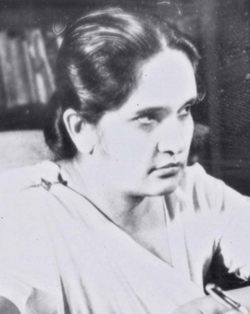
Her marriage in 1940 to S.W.R.D. Bandaranaike had been dubbed 'the wedding of the century' for its grandeur, though it had required careful negotiation. The Ratwattes were Kandyan aristocrats who had served traditional royalty; the Bandaranaikes were low-country wealth that had risen through colonial service. Only when astrologers confirmed compatible horoscopes did the families unite. The couple settled into Tintagel, a Colombo mansion, where Sirimavo spent two decades as hostess to her husband's political circle, raising daughters Sunethra and Chandrika, and son Anura, while engaging in social work through the Lanka Mahila Samiti.
She focused on empowering rural women, developing agricultural programs to boost rice yields, and advocating for girls' education and family planning. Politics was her husband's domain—until September 1959, when a bullet ended his life and thrust her into a role she had never sought.

The July Election That Changed Everything
The SLFP, founded by her husband in 1951 on socialist principles, faced extinction without his charismatic leadership. Party leaders persuaded Sirimavo to assume the chairwoman position and lead them into the July 1960 election against Prime Minister Dudley Senanayake's United National Party. She campaigned on her husband's legacy, promising to continue his vision of a Sinhalese-Buddhist nation freed from colonial influence. Despite her opponents' ridicule, voters responded. The SLFP defeated the UNP, and on July 21, Sirimavo Bandaranaike took office.
The British press had to invent the term 'stateswoman' because their language had no word for what Sirimavo Bandaranaike had become: the world's first democratically elected female head of government.
The swearing-in ceremony was both triumph and burden. She inherited a nation grappling with post-colonial identity, economic instability, and ethnic tensions. Her opponents expected her tenure to be brief, a sentimental interlude before men reclaimed power. Instead, she would serve three separate terms spanning 17 years and 211 days—the longest cumulative prime ministership in Sri Lankan history.

A Legacy Written in Contradictions
Bandaranaike's first two terms, from 1960 to 1965 and 1970 to 1977, pursued aggressive socialist policies. She nationalized banks, industries, schools, and media outlets, attempting to transform the former British Dominion into a socialist republic. In 1972, she oversaw the drafting of a new constitution that formally established the Republic of Sri Lanka, severing final ties to the British Empire. She survived a 1962 coup attempt and crushed a 1971 youth insurrection, demonstrating political resilience her critics had not anticipated.
Yet her achievements came with devastating costs. Her insistence on changing the administrative language from English to Sinhala and her promotion of Sinhalese nationalist policies alienated the Tamil population. The Citizenship Act of 1948 had already rendered estate Tamils stateless; her policies deepened the grievances that would eventually erupt into civil war. High unemployment, inflation, and food import dependency plagued her domestic record, even as she championed land reform and created what would become the Ministry of Women and Child Affairs in 1975.

On the international stage, she excelled. Bandaranaike became a prominent leader among the Non-Aligned Nations, navigating Cold War politics with skill. Her diplomatic abilities stood in sharp contrast to her domestic struggles. In 1977, J.R. Jayewardene defeated her in a landslide. Three years later, she was stripped of her civil rights for alleged abuses of power and barred from government for seven years—a political exile that might have ended any other career.
The Return and Final Act
But Bandaranaike was not finished. By 1988, her party had developed more centrist policies and advocated reconciliation with Tamils amid the escalating civil war. She opposed Indian military intervention, viewing it as a sovereignty violation. When her daughter Chandrika Kumaratunga won the 1994 presidential election, Sirimavo returned for a third term as prime minister at age 78, serving until her retirement in August 2000. She died on October 10, 2000, just hours after voting in a parliamentary election—a final act of political engagement.
The woman who took office on July 21, 1960, opened a door that remains open. Her record is complex: pioneer and polarizer, champion of women and architect of policies that sowed ethnic division. Yet the fact remains that when she raised her hand that summer morning in Ceylon, she proved that the highest offices of democratic government need not remain a male preserve. Dozens of women have followed her path to prime ministerial and presidential power, but none can claim what history gave Sirimavo Bandaranaike—the honor and burden of being first.
All three of Bandaranaike's children returned from education abroad to serve in Sri Lankan government: daughter Chandrika became the fifth President of Sri Lanka, son Anura became the 16th Speaker of Parliament, and daughter Sunethra also entered politics. Bandaranaike died on October 10, 2000, just hours after casting her vote in a parliamentary election—her final political act before suffering a fatal heart attack.
Watch: Sirimavo Bandaranaike: The world’s first woman prime minister - BBC World Service, Witness History
From the BBC World Service channel.
Sources and further reading: Wikipedia — Sirimavo Bandaranaike, Prime Minister of Sri Lanka, List of elected or appointed female heads of state or government (CC BY-SA). Images: Wikimedia Commons.


