
The End of a Brief Respite
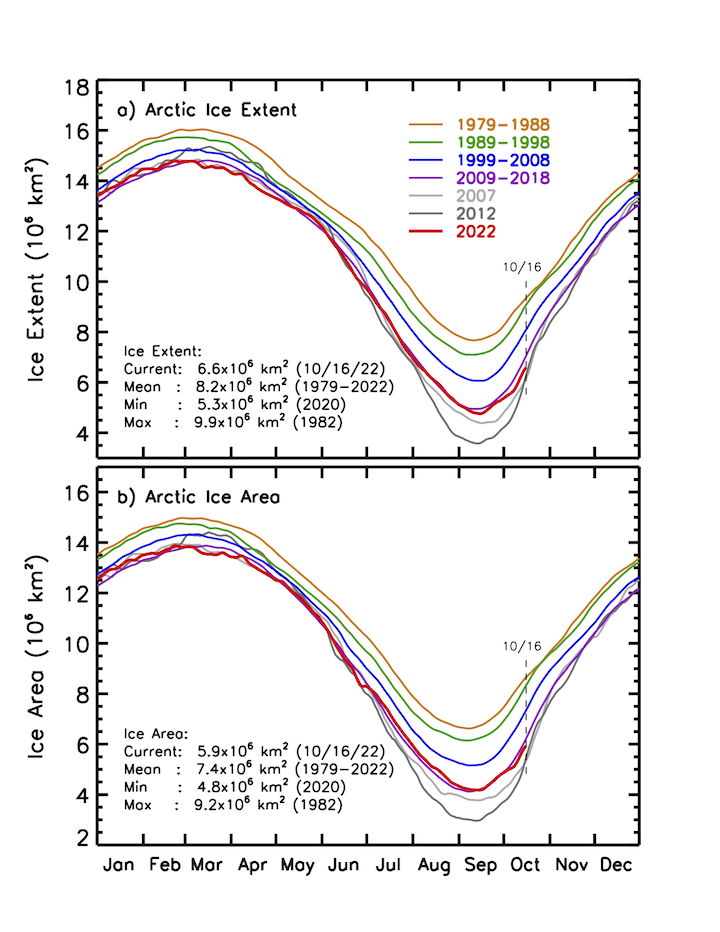
For two decades, satellite observations of the Arctic offered a glimmer of hope: while the region continued to warm significantly faster than the global average, the rate of sea ice loss appeared to be decelerating. Researchers and climate scientists often pointed to this slowdown as evidence of complex, nuanced interactions within the polar ecosystem. However, new research confirms that this reprieve has ended. Recent winters, characterized by record-breaking low-ice levels in 2025 and 2026, indicate that the Arctic has resumed an aggressive trajectory of decline.
This shift is not merely a statistical anomaly but a reflection of a system under immense stress. While natural variability can mask long-term trends over short periods, the data now suggests that the 'pause' was a temporary fluctuation rather than a permanent change in the Arctic's structural health.
Evidence of Accelerated Loss
The evidence driving this conclusion is rooted in a series of rigorous observations. Recent winter measurements show that the extent of ice cover is no longer maintaining its previous, albeit slow, stability. Instead, researchers reported that the seasonal cycle of refreezing is increasingly failing to compensate for summer melt. This development suggests that the Arctic is entering a new, more volatile phase of environmental transition.

The recent decline in Arctic winter sea ice marks the definitive end of a twenty-year period of relative stability, signaling a shift back to rapid, long-term degradation of the polar cryosphere.
According to climatological consensus, the Arctic warms at three to four times the global average rate—a phenomenon known as Arctic amplification. The disappearance of sea ice creates a feedback loop: as bright, reflective ice is replaced by dark, heat-absorbing ocean water, the region absorbs more solar radiation, further accelerating the warming process. This process has profound implications for the global climate, particularly regarding freshwater export into the North Atlantic, which can reorganize ocean circulation patterns.
Consequences for the Global North
The impact of this accelerated decline extends far beyond the polar circle. As the Arctic transitions toward a state where summer sea ice may cease to exist entirely within this century, the ripple effects are being felt across the Northern Hemisphere. Expedition cruise operators and local communities in regions like Greenland, Canada, and Svalbard are already navigating an environment that is rapidly being redefined.
- Altered ecosystems: Changes in sea ice thickness and extent are forcing shifts in the diets and migratory patterns of Arctic species, including those in the Antarctic where researchers are observing parallel climate-driven pressures.
- Navigational risks: The reduction in reliable ice cover is altering the landscape for travel and exploration, demanding new safety protocols and a reassessment of climate risks for those traversing the last great wilderness.
- Oceanic feedback: The influx of freshwater from melting ice sheets and reduced sea ice formation continues to influence global ocean currents, which are vital for regulating climate across the planet.
Pathways for Solutions and Resilience
The transition toward a warmer Arctic is well underway, but researchers and innovators are exploring how to adapt to this new reality. Scientific experiments—such as those currently being conducted in the Canadian Arctic—are investigating methods to stabilize thinning sea ice. While these interventions are in the experimental stages and cannot replace the necessity of global greenhouse gas mitigation, they represent an essential proactive approach to managing the most immediate risks.
Addressing the root cause of this decline requires sustained, evidence-based global policy. The consensus remains clear: greenhouse gas forcing is the primary driver of the long-term decline in Arctic sea ice. As the temporary slowdown concludes, the focus must sharpen on both the reduction of emissions to prevent the most extreme scenarios and the implementation of adaptive strategies for a region that is undergoing a transformation of historic proportions. The coming years will be critical in determining how successfully global systems can manage the impacts of a fundamentally altered Arctic.


