Belgian trade unions launched a nationwide general strike on Monday, halting all commercial flights at the country's major airports and causing widespread transport disruptions to protest proposed government austerity measures.
How severely were Belgian transport systems and public services disrupted?
Belgian transport systems suffered massive delays and widespread cancellations throughout the day after air traffic controller Skeyes suspended regular operations between 7:00 a.m. and 9:00 p.m. local time due to insufficient staffing levels. Officials at Brussels Airport in Zaventem confirmed that all 404 scheduled departing and arriving flights were called off during this window, impacting upwards of 50,000 travelers. Operations were similarly frozen at Brussels-Charleroi Airport, a primary hub for low-cost carriers such as Ryanair, stranding thousands of passengers without prior notice. The Board of Airline Representatives in Belgium noted that Monday's walkout represented the 11th strike to affect Belgian airspace within the past 11 months.
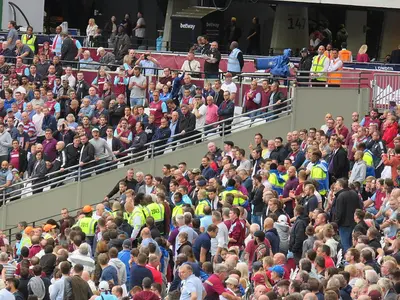
Beyond aviation, urban transit networks felt the brunt of the industrial action. Underground subway lines in Brussels ceased operation, while regional bus and train services, schools, government offices, and municipal refuse collection faced heavy disruptions across the country. In the capital city, law enforcement estimated that 50,000 demonstrators took to the streets, blowing whistles and displaying labor union flags to oppose the federal government's economic agenda.
Why are Belgian workers protesting against the government?
Belgian labor organizations organized the national walkout to fight against planned spending cuts and proposed economic policy reforms intended to curb the national deficit. Demonstrators expressed frustration over deteriorating public investment and rising living costs. Philippe Naime, a teacher participating in the Brussels demonstration, explained the sentiment to Reuters: "Quite simply, no more money is being invested in education, and people are left to fend for themselves. But people do not have the means to do that." Unions are demanding that the administration protect social safety nets rather than enacting widespread reductions.
"In total, 404 flights today cannot be operated, which has an impact on more than 50,000 passengers," stated Brussels Airport spokesperson Jeffrey Franssens to the BBC.
Union leaders argue that alternative financial avenues exist to resolve the country's fiscal challenges without weakening public services. Bert Engelaar, leader of the FGTB union, publicly called for "a genuine wealth tax, fair taxation, and the elimination of tax loopholes" as reported by the BBC. Labor groups continue to demand higher taxation on high earners to offset any proposed reductions in public spending, matching similar economic protests seen across Europe in recent months.
Why is the Belgian government facing a political crisis over the budget?
The Belgian government is locked in political turmoil because Prime Minister Bart De Wever is attempting to secure 10 billion euros ($10.9 billion) in budget savings over the coming years to address a national budget deficit that exceeds 5% of gross domestic product. Under European Union fiscal regulations, member states are mandated to maintain budget deficits below 3% of GDP and limit total public debt to under 60% of GDP. De Wever's proposed measures to bridge this gap include direct cuts to healthcare funding, pension adjustments, and an increase in the value-added tax (VAT).
These proposed austerity measures have fractured the five-party ruling coalition. The center-left Vooruit party, the sole socialist faction in the cabinet, has repeatedly refused to support the budget plan endorsed by its four coalition partners. Vooruit has insisted on incorporating wealth taxes while scaling back proposed reductions to healthcare and retirement benefits. The persistent disagreement led De Wever to offer his resignation to King Philippe on November 2, but the monarch rejected the resignation to grant the prime minister extra time to break the political stalemate.
What regional context surrounds the capital city of Brussels?
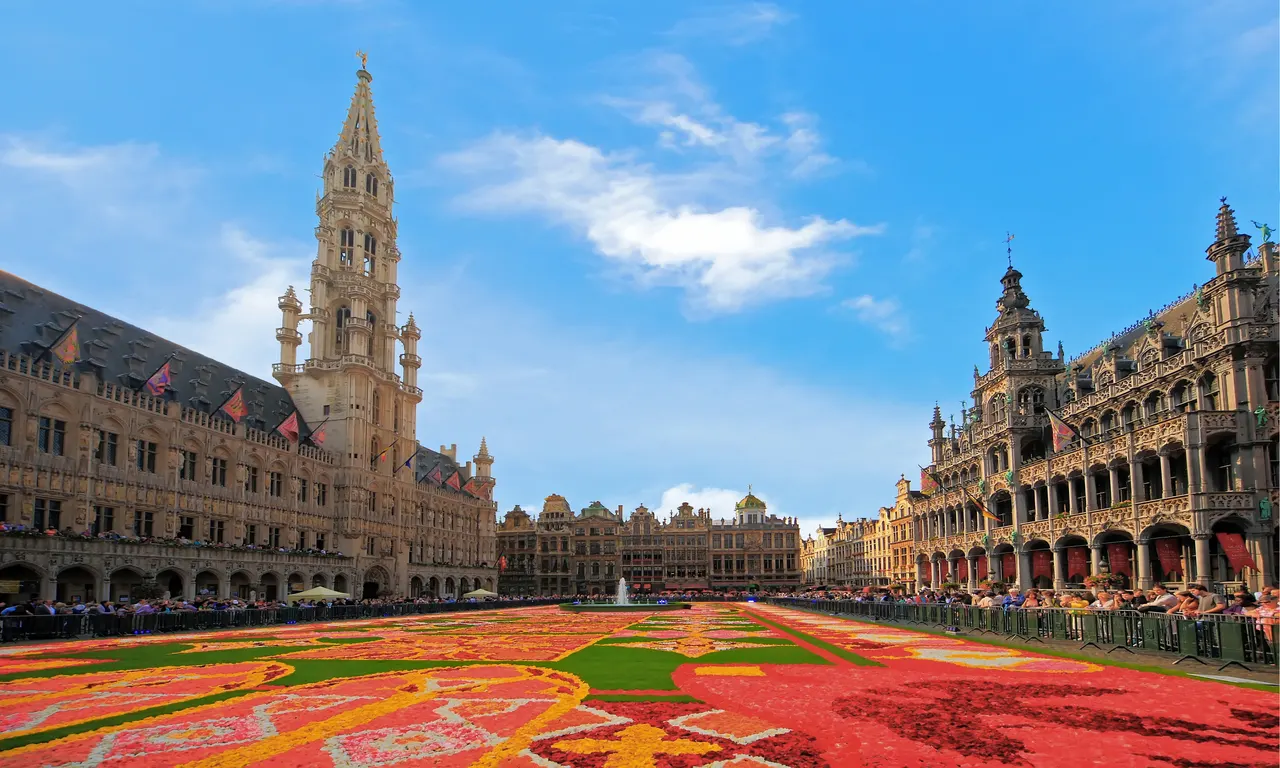
The geographic focus of the protests, Brussels, serves as the official Brussels-Capital Region and comprises 19 distinct municipalities, including the City of Brussels. Positioned in the central portion of Belgium, the Brussels-Capital Region forms a bilingual enclave belonging to both the French and Flemish Communities of Belgium. Geographically, it is completely surrounded by the Flemish Region, while sitting less than 4 kilometers north of the Walloon Region. As the seat of the federal government and key European institutions, political demonstrations in the capital city carry significant administrative and symbolic weight across the country.
What happens next in the Belgian budget standoff?
The next critical political milestone is December 31, a deadline Prime Minister Bart De Wever set for his five-party coalition to formalize an agreement on the upcoming annual budget. De Wever's office explicitly warned that if a budget consensus is not achieved before the end of the year, the coalition will lose its functional ability to govern, effectively forcing the administration to dissolve. Following a third update in a month on the status of negotiations on Monday, King Philippe urged the prime minister to maintain talks to resolve the impasse as quickly as possible.
It remains unconfirmed whether coalition leaders will reach a compromise on wealth taxation and healthcare spending before the year-end deadline. Furthermore, trade unions have not publicly clarified whether additional nationwide strikes will be scheduled if negotiations fail to produce concessions for workers.
Sources: This report draws on coverage by Al Jazeera, France 24, BBC News, Euronews.com, Peoples Gazette Nigeria, Saudi Gazette, Demócrata, Anadolu Ajansı. The wording is our own.