How does a DNA repair defect make a tumor vulnerable to the immune system?
In 2019, 38-year-old Sascha Roth noticed rectal bleeding. While working at her family's furniture store in Maryland, she maintained a regular running routine, but a biopsy confirmed a diagnosis of rectal cancer. After an initial chemotherapy plan at Georgetown University, a second opinion at the Memorial Sloan Kettering Cancer Center (MSK) in New York changed her course of treatment. Her tumor was identified as having a defect in its ability to correct DNA replication errors. Roth became the first patient in a small trial testing the drug dostarlimab as a monotherapy. After six months of treatment, scans revealed no trace of the tumor. As of October 2026, it has been five years since the treatment ended, and the cancer has not returned.
The U.S. Food and Drug Administration (FDA) granted approval for this treatment pathway on October 19, 2026. Dostarlimab, marketed as Jemperli, is now indicated for use as a monotherapy in adult patients with stage 2 or 3 rectal cancer that has not been previously treated and carries this specific DNA repair defect. The approval was granted through an accelerated pathway, contingent upon the results of long-term monitoring.
- How a repair defect in a tumor alerts the immune system.
- Why two separate evaluations of the same 154 patients produced differing results.
- The rigorous monitoring schedule for patients who avoid surgery.
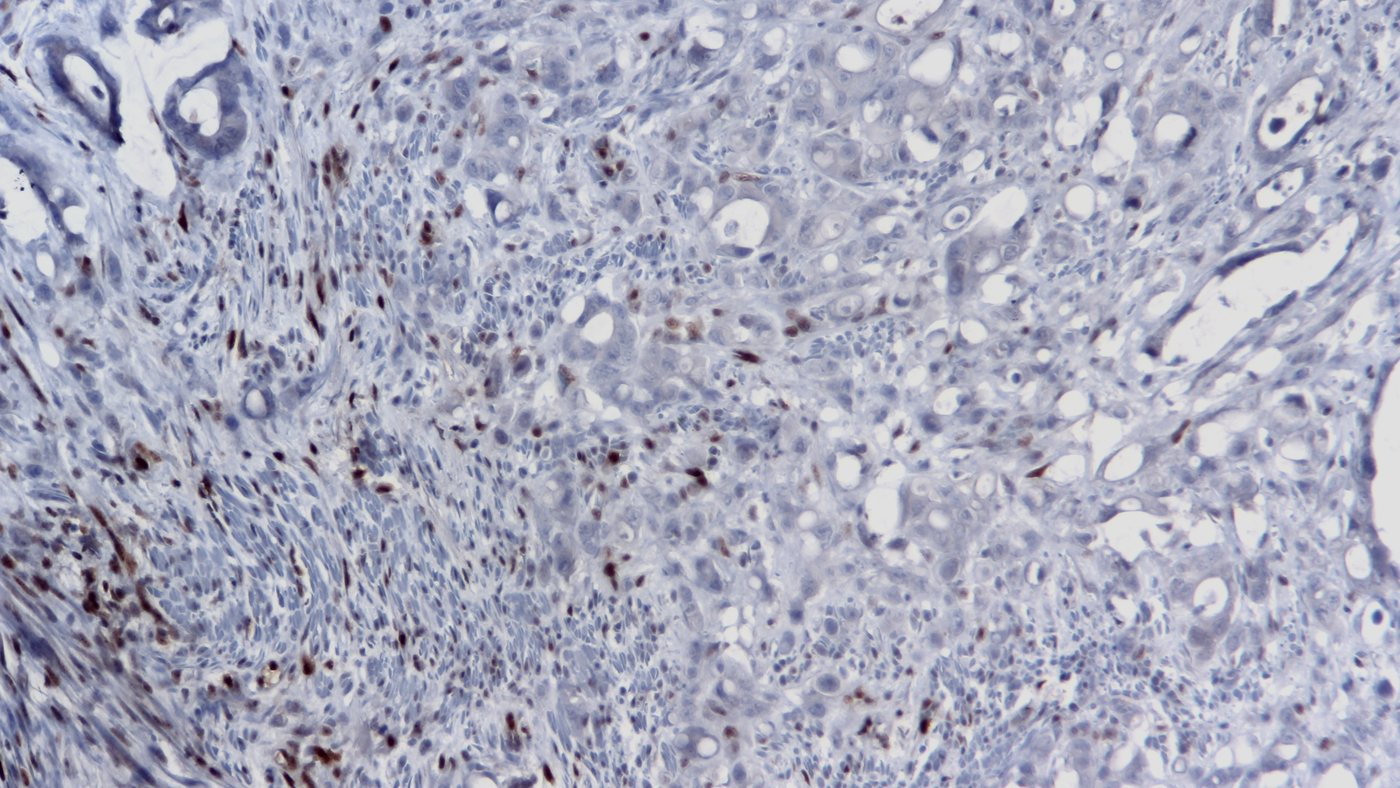
When cells divide, they copy their DNA, inevitably resulting in minor typos. A system known as mismatch repair (MMR) identifies and fixes these errors. When this system fails, errors accumulate, and tumor cells begin producing numerous abnormal proteins that the immune system can recognize as foreign. The FDA classifies these tumors using two terms: dMMR, where repair proteins are missing in the tissue, and MSI-H, where DNA repeat sequences are shifted. Both indicate the same underlying defect via different testing methods.
These tumors often employ a defense mechanism: they press a "brake" on the surface of immune cells called PD-1, halting the attack. Dostarlimab acts as an antibody that disables this brake. In a 2015 study, a similar class of drug elicited responses in 40% of metastatic colon cancers with repair defects, while showing no effect on tumors without the defect. Building on this, researchers Andrea Cercek and Luis Diaz at MSK tested the drug in the earlier, non-metastatic stages of the disease.
The initial findings were published in the New England Journal of Medicine (NEJM) in June 2022. Among the first 12 patients to complete the treatment, no trace of tumor was detected via MRI, PET scan, endoscopy, or biopsy.
What are the findings from the 154-patient AZUR-1 clinical trial?
The FDA's decision is based on the Phase 2 AZUR-1 trial conducted by GSK. Across multiple international centers, 154 patients received up to nine doses of dostarlimab over six months, administered once every three weeks. Those whose tumors disappeared completely avoided surgery and underwent monitoring via endoscopy, MRI, and tomography every four months for the first two years. At a median follow-up of 26.3 months, 110 patients (71%) had avoided surgery, radiation, and additional chemotherapy, with no disease progression. While 26 patients eventually underwent surgery and 13 received additional treatments, 12 of the 15 patients whose surgical samples were analyzed showed no remaining cancer cells.
The primary endpoint of the study was a clinical complete response lasting at least 12 months, and this metric varied between assessments. The attending investigators reported a 68% response rate (98 of 144 patients), while the independent committee, which reviewed imaging without patient contact, reported 47% (54 of 116 patients); the committee noted an additional 38 patients were in complete response but had not yet met the 12-month duration requirement. According to GSK, none of the patients who responded to the treatment have experienced a recurrence to date.
Notes and Sources
- Memorial Sloan Kettering Cancer Center (October 2026). “FDA Approves Immunotherapy-Only Approach for Some Rectal Cancers: What Patients Need To Know.”
- U.S. Food and Drug Administration (October 19, 2026). “FDA Approves Immunotherapy That May Allow Certain Patients with Rectal Cancer to Avoid Chemotherapy, Radiation and Surgery.”
- Le, D. T., Uram, J. N., Wang, H. et al. (2015). “PD-1 Blockade in Tumors with Mismatch-Repair Deficiency.” New England Journal of Medicine, 372(26), 2509-2520.
- Cercek, A., Lumish, M., Sinopoli, J. et al., Diaz, L. A. Jr. (2022). “PD-1 Blockade in Mismatch Repair–Deficient, Locally Advanced Rectal Cancer.” New England Journal of Medicine, 386(25), 2363-2376.
- U.S. Food and Drug Administration, Oncology Center of Excellence (October 19, 2026). “FDA grants accelerated approval to dostarlimab for locally advanced rectal cancer.”
- GSK (October 19, 2026). “Jemperli (dostarlimab-gxly) approved in US as first and only immunotherapy for adults with MSI-H/dMMR locally advanced rectal cancer.”
- Cercek, A., Foote, M. B., Rousseau, B. et al., Diaz, L. A. Jr. (2025). “Nonoperative Management of Mismatch Repair–Deficient Tumors.” New England Journal of Medicine, 392(23), 2297-2308.