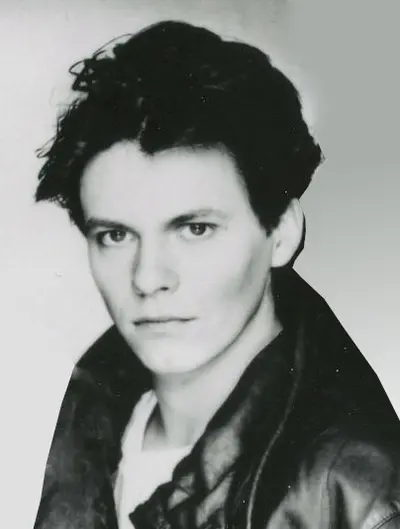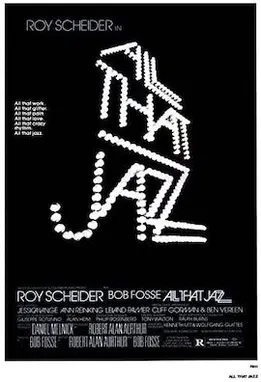
Academy Award-winning production designer Philip Rosenberg, who crafted the distinct visual landscapes of cinematic classics such as "All That Jazz," "Network," and "Moonstruck," died on October 28 in West Palm Beach, Florida, at the age of 91. His death was publicly announced by his nephew, Alan Rosenberg, as reported by Deadline and Variety. Over a career spanning more than three decades, Rosenberg emerged as a key figure in New Hollywood's realist movement, transforming how urban environments and interior worlds were depicted on screen.
What were Philip Rosenberg's major artistic achievements and career highlights?
Philip Rosenberg earned widespread acclaim for his scenic craftsmanship, culminating in an Academy Award for Best Art Direction for Bob Fosse's semi-autobiographical 1979 musical drama "All That Jazz." At the 1980 ceremony, Rosenberg shared the Oscar with Tony Walton, Edward Stewart, and Gary J. Brink. A year prior to that victory, Rosenberg had received his first Oscar nomination for his work as an art director on the 1978 musical film "The Wiz," which creatively reimagined New York City into a fantasy setting. His final feature film credit came on the 2002 action narrative "Collateral Damage."
Philip Rosenberg earned an Academy Award alongside Tony Walton, Edward Stewart, and Gary J. Brink for their art direction on Bob Fosse's 1979 film "All That Jazz."
How did Rosenberg shape the visual landscape of 1970s and 1980s cinema?
Philip Rosenberg built a reputation during the 1970s as a leading practitioner of cinematic realism, an era when directors shifted away from stylized studio soundstages in favor of authentic, grounded settings. He forged enduring artistic partnerships with prominent New York-based filmmakers, including Sidney Lumet, Norman Jewison, and Paul Mazursky. Rosenberg served as art director on Herbert Ross's 1970 romantic comedy "The Owl and the Pussycat" and transitioned to production designer on James Toback's 1974 film "The Gambler." His work on Lumet's 1976 media satire "Network" solidified his influence in New Hollywood. He later collaborated with Lumet on titles such as "Daniel," "Garbo Talks," "Running on Empty," and "Night Falls on Manhattan." His productive association with Jewison yielded celebrated films including the 1987 romantic comedy "Moonstruck" and the 1999 boxing biography "The Hurricane."
What was Philip Rosenberg's background and early life?
Born in Brooklyn in 1935, Philip Rosenberg was raised in the Prospect Park South section of Flatbush. He pursued formal training in scenic design at Yale University, studying under Donald Oenslager. Following his education, Rosenberg gained early professional experience assisting at the Metropolitan Opera—where he worked alongside designers Ita Maximovna and Eugene Berman—and assisting Marcel Vertès on mural work for the Cafe Carlyle in New York. He entered the motion picture industry in 1968 as a design assistant on "The Sea Gull." Outside of his individual work, Rosenberg often collaborated with his wife, Siv Sandstrom, whom he met following her work at the Swedish pavilion during the 1964 New York World's Fair. Sandstrom assisted in film art departments on projects including "Moonstruck" and "Running on Empty" before her death in 2024. Rosenberg is survived by his two brothers, Stanley and David, alongside six nieces and nephews.
What details about Philip Rosenberg's passing remain unconfirmed?
Family members and news outlets have not released a cause of death for Philip Rosenberg following his passing in Florida. Additionally, representatives for the family have not yet published details regarding public memorial services, industry tributes, or funeral arrangements.
Sources: This report draws on coverage by Variety, Deadline, Kursiv Media Узбекистан, IMDb. The wording is our own.