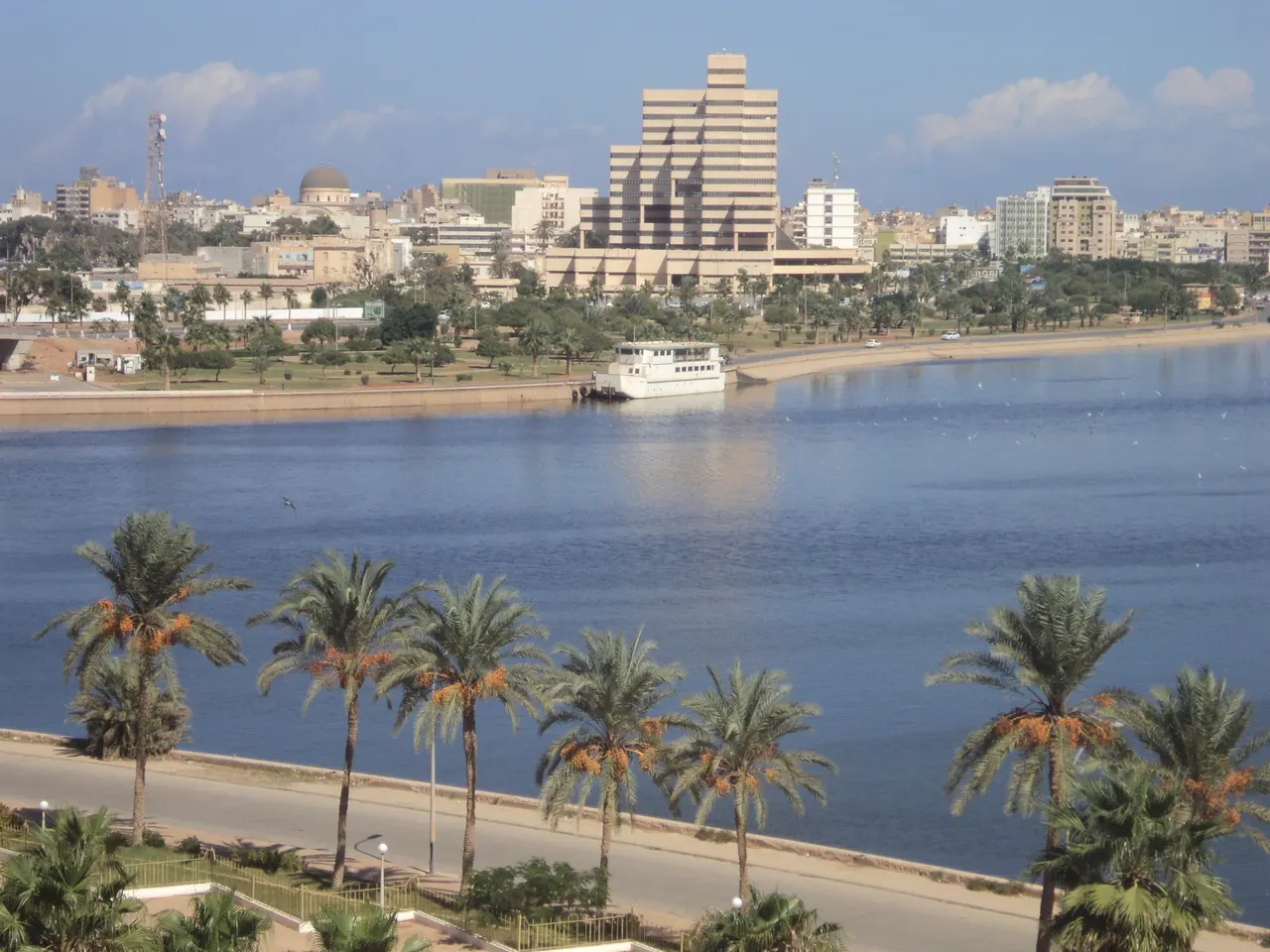
A Russian vessel docked at the naval base in Benghazi, Libya, was hit by a suspected drone strike early Sunday morning, resulting in an explosion and fire, according to the country's eastern-based administration. The incident occurred while the ship was stopped in the Mediterranean port city to refuel and resupply under a maritime cooperation agreement between the two nations, marking a volatile development that has raised concerns about the expansion of the Russia-Ukraine conflict into North Africa. Authorities have confirmed that the fire was contained and the port facility secured, with no immediate casualties reported, though local investigations remain ongoing to determine the source of the blast.
Details of the incident and regional response
The explosion took place at dawn, drawing swift attention from government officials in eastern Libya. While initial reports from local television suggested a fire at a military warehouse, administrators later clarified that the primary damage was sustained by the docked Russian vessel itself. Satellite imagery reviewed by the BBC shows a ship on fire at 0547 GMT, with subsequent imagery appearing to reveal the vessel as partially submerged. Naval analysts have provisionally identified the ship as the Russian missile corvette Merkury, though this classification has not been officially confirmed by either Moscow or the Libyan government. In response to the breach of maritime security, the eastern-based authorities pledged to conduct a thorough joint investigation with their Russian counterparts to identify the party responsible for the suspected drone attack. They emphasized that Libya is not a participant in the conflict between Russia and Ukraine and warned against the weaponization of domestic ports.
The Libyan government will not allow Libyan ports, territory or territorial waters to be turned into an arena for settling scores or exporting international conflicts.
The internationally recognized Government of National Unity based in Tripoli issued a broader warning, highlighting the inherent risks of allowing foreign military assets to utilize civilian facilities. They expressed concern that such activities threaten the safety of national infrastructure and local citizens. Meanwhile, international observers note that the strike occurred amid an uptick in long-range drone and missile activity by Ukrainian forces, who have increasingly targeted Russian naval capabilities far from the front lines, including recent incidents in the Baltic Sea and Mediterranean waters. The eastern government noted that Libyan security forces were active in the vicinity, reporting that they intercepted more than 12 naval drones off the coast of Benghazi on Sunday evening.
Context of the Russian presence in Libya
Benghazi, the second-largest city in Libya and a strategic seaport, has become a key node for Russian interests in North Africa following years of instability. The country has remained deeply divided since the 2011 uprising that led to the removal of Muammar Gaddafi, with power split between the UN-supported government in Tripoli and the eastern administration, which maintains close ties with military commander Khalifa Haftar. For Russia, the port serves as a logistical hub for supplying personnel and maintaining a Mediterranean presence, which has gained heightened importance in the context of broader geopolitical shifts. The current maritime agreement allows Russian vessels to utilize the Benghazi naval base for necessary maintenance, refueling, and logistical support as they transit through the region.
What is still unclear?
Despite the official statements from Libyan authorities, several critical facts remain unconfirmed. The identity of the Russian vessel has not been officially declared by Moscow, which has maintained silence regarding the event. Furthermore, no group or government has claimed responsibility for the strike, leaving open the question of whether the attack was launched by a state actor or an independent entity operating in the region. Discrepancies also remain regarding the extent of the damage; while some outlets cite reports of the vessel's destruction, local officials have focused on the securing of the port and the containment of the fire. The exact number of injuries remains unverified, with reports from the eastern government indicating no casualties, while other sources have alluded to a small number of unspecified injuries. No specific timeline has been established for the completion of the joint investigation, and until additional forensic data is released, the origin and the precise technology utilized in the suspected drone attack remain subjects of speculation.
Sources: This report draws on coverage by BBC News, The Guardian, Al Jazeera, DW.com, Euronews.com, Reuters, Naval News, NewsCord. The wording is our own.