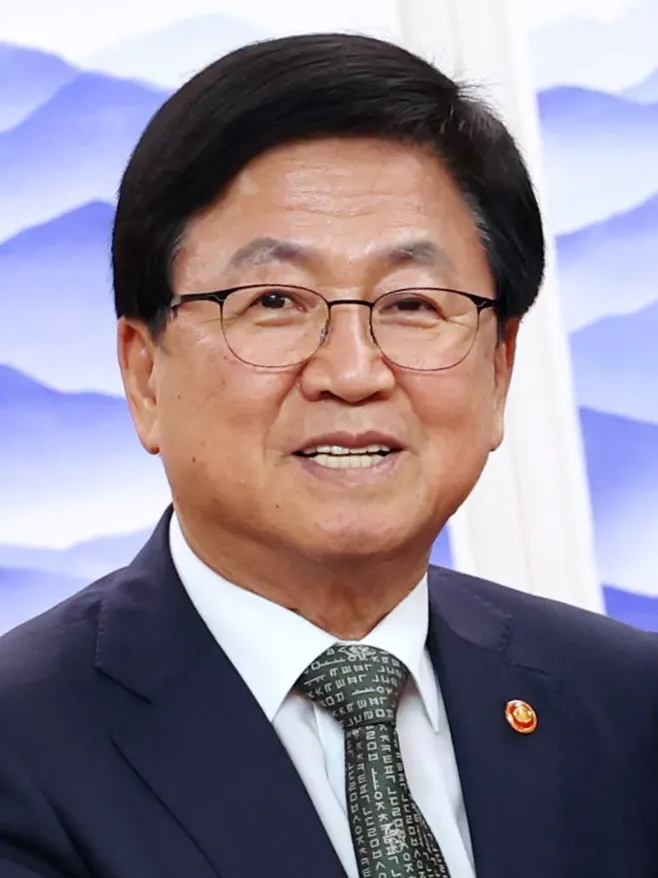
South Korean Education Minister Choi Kyo-jin resigned on Sunday, November 22, 2026, after emergency, last-minute anti-cheating measures triggered nationwide disruption during the country's national college entrance examination.
President Lee Jae Myung accepted Choi's resignation shortly after its submission, with presidential sources describing the move as a de facto dismissal. The cabinet departure follows intense public anger over how the Ministry of Education handled security for the high-stakes test, officially known as the College Scholastic Ability Test (CSAT) or Suneung, which took place on Thursday across 1,312 testing centers.
Why did Choi Kyo-jin resign?
Choi Kyo-jin resigned after taking public responsibility for the confusion and inconvenience caused by emergency security protocols introduced just days before the national examination. Criticism of the minister intensified after he admitted during a parliamentary hearing before the exam that he lacked confidence in his ability to stop modern high-tech cheating methods, citing his age.
According to reports from BBC News and the Guardian, Choi released a public statement conceding that he failed to adequately prepare the government's anti-cheating strategy in advance. "Now that the exam has concluded, I feel a deep sense of responsibility and am offering my resignation," Choi stated, as reported by Yonhap News Agency.
"Now that the exam has concluded, I feel a deep sense of responsibility and am offering my resignation," former Education Minister Choi Kyo-jin stated.
Public dissatisfaction mounted after the ministry implemented aggressive measures to prevent students from using artificial intelligence. To locate unreported mobile phones, authorities activated the national disaster alert network, broadcasting three un-silenceable phone alarms into testing areas between 8:00 AM and 3:00 PM on exam day. In addition, monitors conducted physical inspections of candidates' eyeglasses and watches, blocked public Wi-Fi signals near venues, and placed adhesive tape over buttons on students' shirts and jackets to obscure potential hidden cameras.
How widespread was the cheating during the exam?
Discrepancies exist among official media reports regarding the exact count of candidates caught breaking rules during the Suneung. According to the Ministry of Education figures cited by BBC News and Startup Fortune, proctors uncovered 111 applicants carrying unauthorized electronic devices, with emergency phone broadcasts directly exposing nearly half of those violations. TRT World reported that authorities caught approximately 100 individuals cheating out of 551,864 registered test takers, while BBC News placed the total participant count at roughly 500,000 students.
The sudden overhaul of exam rules was triggered by a scandal earlier in the month. On November 15, Han Won-seok, a 34-year-old test-taker who scored near-perfect marks on the national tax accountancy exam in April, posted a video confession admitting he used a button-sized microcamera, a smartphone, and AI assistance to solve test questions. Public anxiety deepened further following reports regarding Lee Jin-woo, a 32-year-old dentistry student who earned a perfect score on the law school entrance exam; local police discovered his body in a Seoul motel on Thursday while investigating allegations that he had also utilized artificial intelligence to cheat.
What background context led to this crisis?
South Korea's Ministry of Education, established as a cabinet-level department in March 2013, oversees policy across a national educational system where the annual Suneung holds extraordinary social and economic importance. Choi Kyo-jin, who previously served as the elected superintendent of education for Sejong Special Self-Governing City from 2014 to 2025, assumed the role of national education minister in 2025. The intense competition surrounding the eight-to-nine-hour entrance exam regularly leads South Korean authorities to halt military exercises, delay stock market openings, and freeze civil aviation landings during English listening comprehension segments.
Following Choi's departure, President Lee Jae Myung announced on social media that the administration will launch comprehensive audits of exam management protocols across all national academic tests. The government confirmed plans to bar individuals caught cheating on the Suneung from retaking the exam for up to ten years, while offering financial bounties of up to 100 million won ($75,000) for reports of organized academic fraud.
What is still unclear about the ministry's next steps?
The presidential administration has not yet identified a nominee to replace Choi Kyo-jin as education minister. Chief presidential spokesperson Kang Yu-jung confirmed that Prime Minister Han Seong-sook has been directed to lead the government's immediate response and oversee follow-up procedures for the Suneung while the replacement process proceeds.
Furthermore, authorities have not finalized specific technical mechanisms to prevent future high-tech cheating. While President Lee indicated the government is evaluating proposals to print unique tracking identifiers onto individual question papers to trace leaked photographs, official implementation timelines and technical standards for future exam cycles remain unconfirmed.
Sources: This report draws on coverage by The Guardian, BBC News, Startup Fortune, TRT World, Korea JoongAng Daily, The New York Times, France 24, Superpower Daily. The wording is our own.