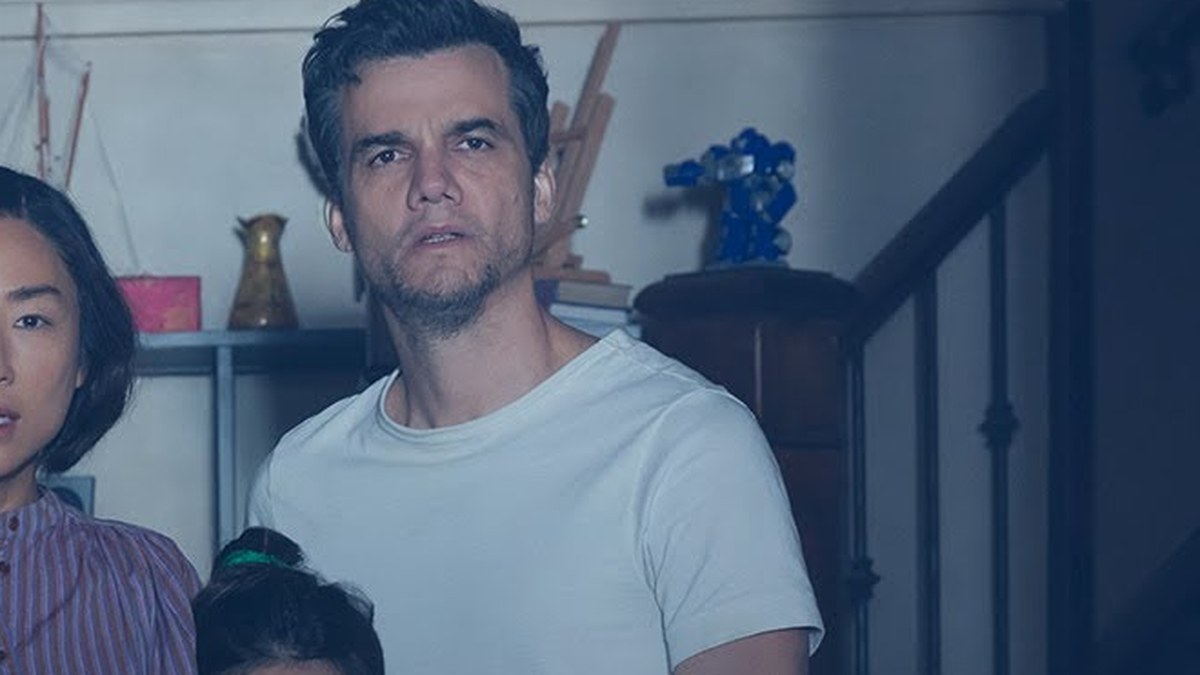
- A film opened 27.5 million times in its first three days while earning a 22 percent approval rating from critics, demonstrating that high viewership and critical acclaim measure entirely different things.
- Nearly all critics praise the opening thirty minutes of The Last House before objecting to the exact same narrative pivot, which stems from a creative decision rather than a single scene.
- The first half of the film was shot on 35-millimeter stock, and the primary house set was meticulously built to age alongside the characters, reflecting genuine artistic effort.
- Netflix's own editorial division felt compelled to publish an article explaining the film's ambiguous ending, a phenomenon that speaks volumes beyond the low review scores.
One morning you wake up and discover your front door will not open. The windows remain firmly shut as well. Something unknown waits outside, and you have no way of knowing what it is or how long it will stay, leaving you with only whatever provisions happen to be stored in the pantry.
It is easy to imagine the visceral reaction this premise evokes, given that a milder version of this confinement was experienced globally in 2020. Netflix's feature film The Last House centers precisely on this premise, which likely explains why it achieved both massive viewership and widespread critical dismissal. During its opening three days, the film was opened 27.5 million times, ranking as the platform's most-watched title across all languages for the week of August 3 to August 9. Simultaneously, the Rotten Tomatoes critic score sat at 22 percent based on 68 reviews, while the audience score rested at 28 percent, accompanied by a Metacritic average of 42 derived from 21 reviews. When regional press covered this pronounced contradiction on August 13, the critic approval rating stood at 27 percent, indicating that the score declined further as public discussion grew.
Fact Sheet: The Last House · Netflix · August 7, 2026 · 1 hour 52 minutes · PG-13. Directed by Louis Leterrier, written by Matthew Robinson, starring Greta Lee and Wagner Moura, production design by Kevin Jenkins, original score by Yair Elazar Glotman.
This discussion is less about whether The Last House is inherently a bad film and more about a fundamental question: when a movie draws 27.5 million households in its opening days, what drives those numbers if not inherent quality?
What premise does The Last House establish for the viewer?
The narrative framework is straightforward. The Delgado family of four finds themselves locked inside their own home as vital resources diminish, an external threat looms, and days stretch into weeks and months. Because their children are portrayed by two distinct pairs of actors as they age, this is clearly not a transient narrative covering just a few days. Director Louis Leterrier describes the project as an assault on the concept of a safe haven, transforming the traditional family home into a deeply hostile environment.
This premise naturally paved the way for two distinct types of films. The first is an intimate chamber drama focusing on four individuals inside a single house, depleted rations, and strained relationships. The second is a science fiction narrative exploring the external threat, its origins, and potential avenues of escape. The Last House attempts to execute both approaches simultaneously, prompting critics worldwide to praise the opening act while raising identical objections to the latter half.
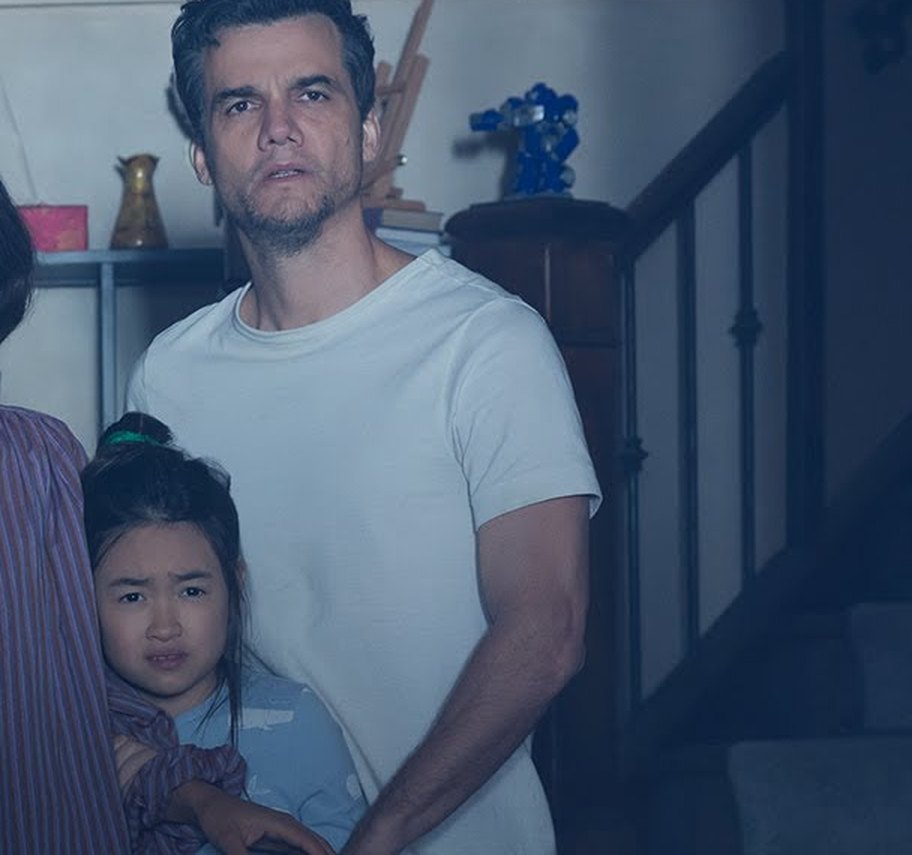
How do global critics evaluate The Last House?
Variety directly links the reception of The Last House to collective lockdown memories, noting that prior to 2020 such a scenario might have seemed far-fetched, whereas it now feels eerily familiar, allowing the film to leverage that recognition into a claustrophobic advantage. The same review argues that the film's greatest strength lies in its slow-burn family drama rather than its science fiction elements, observing that digital effects occasionally feel unpolished and that the film succeeds most when focusing on unseen threats. Kevin Jenkins' production design receives explicit praise for making the decay of the house, its structural strain under pressure, and the domestic clutter of ongoing life entirely believable.
Other publications echo these sentiments. The Seattle Times notes that the dedicated cast struggles against implausible dialogue and questionable character choices that pull viewers out of the experience. SSG Syndicate argues that The Last House loses its narrative focus the moment it reveals its central mystery, concluding with generic creatures and a disappointing third act. Conversely, Reel Film Reviews validates this critique from the opposite angle, suggesting the film functions effectively only as long as the external entity remains incomprehensible. The official Rotten Tomatoes consensus synthesizes these views, stating that a capable cast is ultimately stranded within an increasingly repetitive narrative structure.
The most revealing data point, however, does not appear on traditional review aggregation tables. Released in Spanish-speaking territories as La última casa, the film triggered a wave of search traffic focused not on critical reviews, but on articles explaining its ambiguous conclusion. Furthermore, Netflix's own editorial division addressed this demand by publishing an official ending explanation on the platform's editorial site, posing the direct question of what those mysterious creatures actually are. When audiences finish a film and immediately search the internet for explanations answered directly by the distributor, the final thirty minutes have failed to communicate effectively on their own terms.
What do viewing figures for The Last House actually measure?
To be entirely clear, 27.5 million views do not measure artistic quality; they measure the clarity of a premise.
Netflix's homepage excels at marketing concepts that can be summarized in a single sentence. The premise of a family locked inside their own home is instantly communicated through a preview image and a ten-second trailer fragment, requiring zero external explanation. Furthermore, it taps directly into shared contemporary experiences: Friday evening, living room fatigue, and the exhaustion of decision-making. When these elements combine, a film secures high initial viewing numbers. Yet securing an audience is only the first half of the equation; the second half depends on whether the film delivers on its foundational promise.
The core issue of The Last House appears to lie in its script structure rather than the performances. Establishing a mystery is invariably easier than resolving it. A locked door presents a question, and as long as that question remains unanswered, viewers fill the void with their own anxieties regarding their homes, their children, and limited food supplies. Because the audience populates that emptiness with their personal lives, the opening act resonates universally. The moment the film provides a definitive answer, the viewer's internal narrative is sidelined, replaced by an external authorial choice that often feels less compelling than what the audience imagined.
At the same time, the genuine craftsmanship behind The Last House deserves recognition. The production team collaborated with a survival consultant to ensure the household resourcefulness remained grounded and convincing. Jenkins constructed a set designed to age alongside the characters, allowing kitchen appliances and children's scooters to weather realistically as the years pass. Additionally, the first half of The Last House was shot on 35-millimeter film, a choice Leterrier made to evoke the distinct visual texture of Steven Spielberg's early Amblin productions. This is by no means a careless production; the issue lies not in a lack of effort, but in the narrative payoff delivered to the audience in the final act.
Regarding Greta Lee and Wagner Moura, both actors consistently shoulder dramatic weight far beyond what the script comfortably supports. Moura brings an Academy Award-nominated gravity to the screen, while Lee excels at conveying nuance through silence. Assembling a cast of this caliber only to subject them to a generic third-act threat is a distinct production choice, and the cast inevitably bears the burden of that decision on screen.
Who should watch The Last House and who should skip it?
Watch The Last House if: you appreciate contained chamber thrillers, derive more enjoyment from narrative setup than ultimate resolution, and enjoy entertaining hypothetical scenarios about survival. The opening forty minutes deliver effectively on this front, and the PG-13 rating makes it suitable for shared household viewing.
Skip The Last House if: you demand a logically airtight science fiction universe, place high value on a tightly resolved conclusion, or feel fatigued by mystery-box storytelling. The final resolution offers a smaller payoff than the initial premise promises.
Official trailer via Netflix's verified channel.
Notes and Sources
- Medyafaresi, report on Netflix weekly viewing figures for August 3–9, August 14, 2026. ↩
- Rotten Tomatoes, The Last House (2026) metrics page, Tomatometer score of 22 percent (68 reviews), Popcornmeter score of 28 percent, and critical consensus. Accessed August 16, 2026. ↩
- Metacritic, The Last House score page, 42/100 based on 21 reviews. Accessed August 16, 2026. ↩
- Muhalif, coverage of critical reception versus viewership rankings, August 13, 2026. ↩
- Netflix Tudum, promotional and background features for The Last House, 2026: cast details, statements from Louis Leterrier and Wagner Moura, collaboration with survival consultant Megan Hine, Kevin Jenkins' aging set design, and the use of 35-millimeter stock for the first half. ↩
- Variety, review of The Last House, August 2026. ↩
- El Comercio, coverage of search trends for La última casa ending explanations, August 2026. ↩
- Netflix Tudum, editorial piece addressing narrative resolution, August 2026. ↩
All statistical metrics cited reflect measurements recorded on August 16, 2026, and are subject to subsequent updates by respective platforms.