The Architect of the New Stage
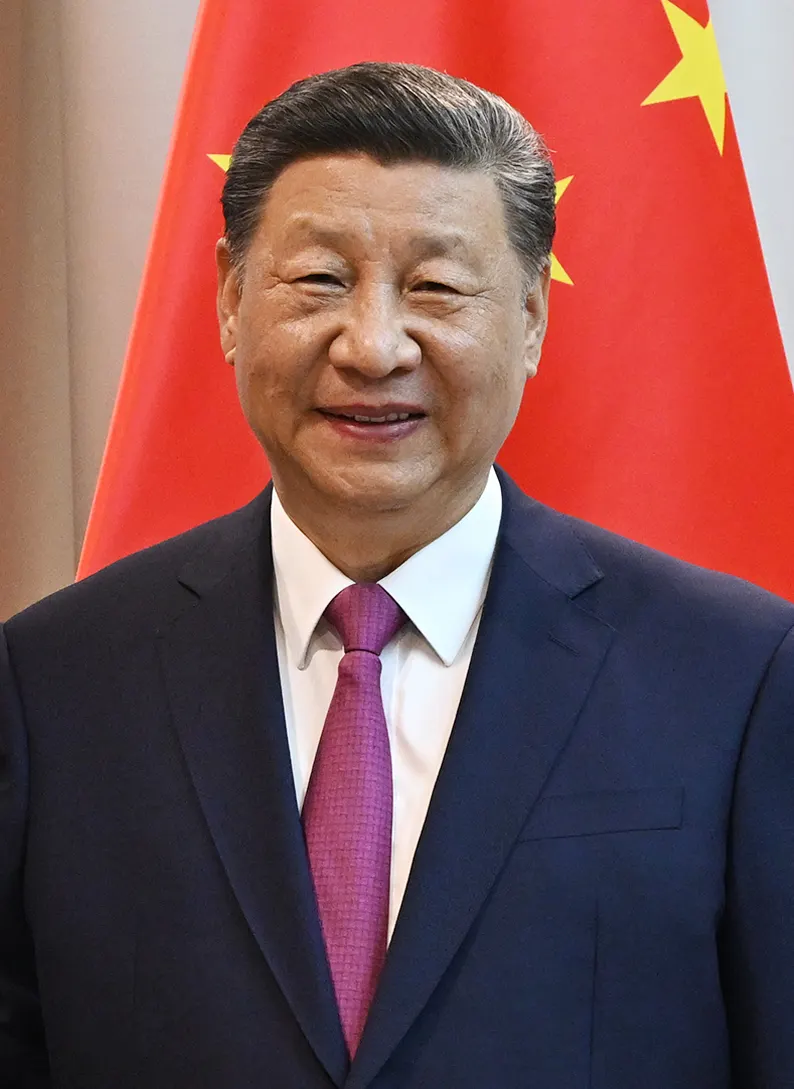
In the secluded, verdant confines of the Kylin Villa resort in Shenzhen, history was meticulously scripted this week. As host to an unprecedented trilateral summit involving U.S. President Donald Trump and Russian President Vladimir Putin, Chinese President Xi Jinping occupied the center of the world stage. The backdrop of the APEC summit offered more than just a venue; it provided a canvas for Xi to display his ambition, utilizing the high-tech hub of Shenzhen to signal China's industrial and geopolitical arrival. Yet, as the cameras clicked and the world watched for breakthroughs on nuclear arms or the conflicts in Ukraine and Iran, the event appeared to prioritize optical dominance over substantive resolution. For Xi, this gathering was a masterful exercise in stagecraft, revealing his ability to draw the world’s most powerful figures into his orbit while maintaining the rigid discipline that defines his rule.
From Yaodong to the Party Peak
Xi’s path to the epicenter of global power began in a landscape far removed from the climate-controlled chambers of Shenzhen. Born in 1953 as the son of CCP revolutionary Xi Zhongxun, his early life was marred by the volatile currents of the Cultural Revolution. After his father was purged, the young Xi was sent to the rural village of Liangjiahe in Shaanxi province, where he lived in a yaodong—a traditional cave dwelling. This period of labor and hardship is often cited as the crucible of his political resilience. After struggling to gain admission to the Party, he eventually rose through the ranks, serving as a local secretary before studying chemical engineering at Tsinghua University. His career trajectory saw him lead Fujian and Zhejiang provinces, before his rapid ascent to the Politburo Standing Committee in 2007. Since becoming General Secretary in 2012 and President in 2013, he has solidified his position as China’s paramount leader, overseeing a Party that now boasts over 101 million members.
The Style of a Paramout Leader
Xi’s leadership style is defined by a calculated balance of outward stability and internal consolidation. To his supporters, he is the iron-willed protector of China’s national rejuvenation, a figure capable of standing against Western 'protectionism'—a sentiment echoed by Vladimir Putin during this week's summit. This alignment with Russia, even amidst global outcry over the war in Ukraine, demonstrates Xi’s willingness to foster partnerships that challenge the prevailing international status quo. However, critics see a different reality: a leader who maintains absolute control over the state’s apparatus through rigorous self-management. This was made starkly visible in Shenzhen, where a Bloomberg reporter was barred from talks for the perceived infraction of shouting a question to President Trump. Such moments underscore the tension between the international openness required for a global superpower and the tight, top-down control that remains the hallmark of Xi’s administration.
The trilateral meeting at Kylin Villa, a site once frequented by Kim Jong-il and Xi’s own father, serves as a poignant reminder that in the theater of international relations, history and optics are as critical as policy itself.
The Stakes of the Shenzhen Moment
The trilateral summit represents a risky, high-stakes gambit. By convening Trump and Putin, Xi aimed to project authority and influence, yet the absence of concrete policy outcomes—save for vague references to global stability—has invited skepticism. The reality of the meeting appears to be less about a transformation of policy and more about the projection of power. As President Trump departs China, the international community is left to decipher the 'hug' and the handshakes that occupied the headlines. Xi’s objective seems to be the creation of a geopolitical environment where the U.S. power structure is not necessarily replaced, but rather effectively countered by a coalition that views Western pressure as an impediment to national progress.

What Lies Ahead
As the APEC summit concludes, the world remains watching to see if this historic meeting marks the beginning of a new trilateral era or remains a singular moment of diplomatic performance. For Xi, the challenge remains unchanged: how to sustain a vision of global leadership while navigating the deepening fractures of an increasingly unpredictable world. He has signaled that he is willing to host, to negotiate, and to lead, but whether he can translate these summits into lasting strategic victories remains the defining question of his tenure. The Shenzhen meeting may have made history, but in the halls of power, the real work—and the real consequences—are only just beginning.
Sources: This report draws on coverage by The New York Times, BBC News, The Guardian, TIME, Reuters, Al Jazeera, NPR, CNBC. The wording is our own.