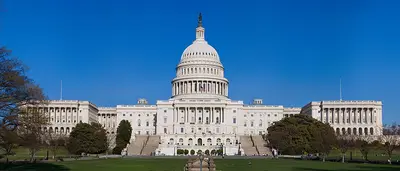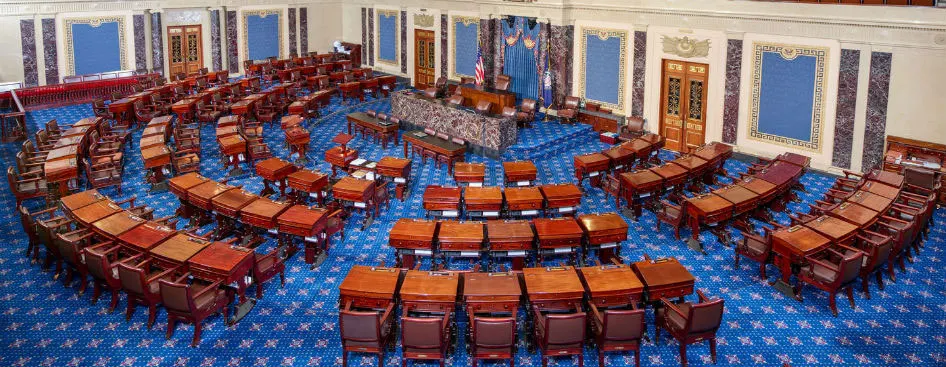
The U.S. Senate passed the bipartisan DEATH BETS Act on Thursday evening, establishing the first federal regulatory framework to prohibit prediction markets from offering or clearing financial contracts tied to war, terrorism, assassination, or individual deaths. By a voice vote, lawmakers moved to amend the Commodity Exchange Act, empowering the Commodity Futures Trading Commission to oversee and restrict exchanges that host wagers predicated on sensitive or violent real-world outcomes, including those tied to U.S. military operations. The legislation, which now advances to the House of Representatives, aims to curb industry practices that critics argue jeopardize national security and violate ethical standards.
Legislative Intent and Scope of the Act
The legislation, formally titled S. 4035 and spearheaded by Sens. Adam Schiff (D-Calif.) and John Curtis (R-Utah), targets the operational practices of digital prediction platforms that have gained significant prominence in recent years. Beyond explicitly listed prohibited categories, the bill introduces a critical "reasonably expected" standard for compliance. Under this mandate, exchanges would be barred from listing any contract that, at the time of creation, is reasonably expected to settle primarily on an individual’s death, regardless of whether the specific terminology of the wager explicitly references death. This regulatory shift forces platforms to conduct rigorous pre-listing reviews rather than relying on final settlement outcomes. Senator Schiff emphasized the urgency of these guardrails on the Senate floor, noting that current market operations lack sufficient oversight.
"They are offered with no regard for national security and in far too many cases, even basic morality," Senator Adam Schiff stated regarding the unregulated nature of these markets, as reported by BigGo Finance and Fortune.
Context of Escalating Market Scrutiny
The push for federal intervention follows a series of controversial episodes involving platforms like Polymarket and Kalshi, which have faced backlash for hosting bets on geopolitical conflicts and human safety. Reports indicate that unidentified users utilized Polymarket to place approximately $1.2 million in wagers on the timing of U.S. strikes in Tehran, sparking widespread concerns regarding the potential for insider trading based on classified intelligence. Additional incidents cited by lawmakers include a trader profiting over $400,000 from bets placed on the removal of Venezuelan leader Nicolás Maduro prior to his capture in January, as well as debates surrounding a market tied to the potential death of Iranian Supreme Leader Ali Khamenei. While industry representatives have previously defended these markets as useful tools for informational discovery, the bipartisan support for the DEATH BETS Act signals a significant cooling of political appetite for the industry's rapid expansion.

Market Definitions and Regulatory Framework
Prediction markets, also frequently referred to as event derivatives or information markets, function as binary options where participants trade on the occurrence or non-occurrence of specific future events. By utilizing financial incentives, these platforms aim to aggregate public sentiment to forecast outcomes ranging from election results to geopolitical shifts. Historically, these entities have operated in a regulatory gray area, but the current legislative effort specifically targets the Commodity Futures Trading Commission (CFTC) as the primary gatekeeper. By amending the Commodity Exchange Act, the legislation grants the CFTC the authority to supervise clearinghouses and exchanges, effectively closing the gap that previously allowed for speculation on human tragedy. This oversight seeks to address the systemic risks inherent in unregulated betting and the information asymmetry that potentially favors participants with private knowledge.
What happens next?
The DEATH BETS Act faces a critical timeline, as it must secure passage in the House of Representatives before the current session of Congress concludes in January. While the Senate vote marks a historic first for the industry, the ultimate implementation of these restrictions remains contingent upon House approval and the subsequent signature of the president. Furthermore, separate legislative efforts are currently in motion to address related concerns; for instance, Rep. Sean Casten and Rep. Ted Lieu have recently advocated for the establishment of a dedicated Department of Justice whistleblower program. This proposed initiative aims to specifically target and curb instances of insider trading within the prediction market sector. As it stands, there is no official consensus or confirmed schedule regarding when or if the House will take up the Senate-passed bill, nor have lawmakers finalized the specific administrative penalties that might accompany the new compliance standards for digital exchanges.

Sources: This report draws on coverage by The Block, BigGo Finance, CDC Gaming, Fortune, PlayNJ, Senator John Curtis (.gov), CoinDesk, SBC Americas. The wording is our own.
Market Snapshot
| Asset | Price | 24h | Market Cap |
|---|---|---|---|
 Bitcoin BTC | $56,231 | -8.50% | $1131.1B |
 Ethereum ETH | $1,566 | -9.10% | $191.4B |
 BNB BNB | $515.84 | -8.86% | $67.8B |
 XRP XRP | $0.877 | -8.82% | $55.7B |
 Solana SOL | $66.01 | -8.17% | $39.1B |
 Dogecoin DOGE | $0.0519 | -8.70% | $8.1B |
 Cardano ADA | $0.136 | -7.92% | $5.1B |
Live data: CoinGecko — 2026-11-21 05:21 UTC