U.S. Supreme Court Accepts Landmark Challenge to State AR-15 Weapon Bans
The Supreme Court of the United States has agreed to hear oral arguments in a major Second Amendment case regarding state and local prohibitions on AR-15 rifles. The ruling will weigh safety measures against a growing prevalence of semi-automatic firearms across the country.
W
World Desk
4 min read0 views
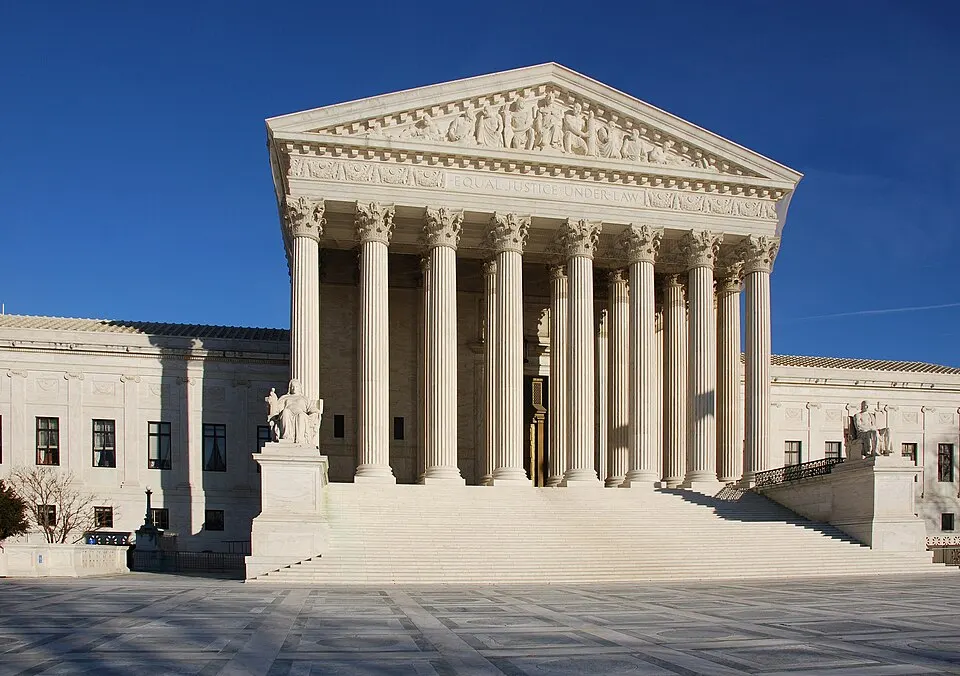
The Supreme Court of the United States has agreed to review the constitutionality of state and local bans on AR-15-style semi-automatic rifles, setting up a pivotal Second Amendment oral argument scheduled for Wednesday. Justice high-court proceedings will examine prohibitions enacted by jurisdictions including Connecticut and Cook County, Illinois, directly testing whether local governments can ban America's most popular rifle under constitutional guarantees to bear arms.
What are the main legal arguments before the Supreme Court?
The main legal arguments before the Supreme Court center on whether semi-automatic firearms like the AR-15 qualify as weapons in "common use" and are therefore protected by the Second Amendment. Challengers contesting the state and local restrictions emphasize Justice Antonin Scalia's precedent from 2008, employing the phrase "common use" 56 times in their main legal filings. The Trump administration has aligned with gun rights advocates in the proceeding, incorporating the same term 49 times within its September amicus submission to argue that widely owned firearms cannot be outlawed by local authorities.
Watch: BREAKING: Supreme Court Drops Lead Plaintiff — AR-15 Ban Case Still ALIVE! — Jared Yanis
Conversely, municipal prosecutors and gun control organizations argue that public safety mandates necessitate restrictions on high-capacity semi-automatic rifles in densely populated communities. Defending local regulations in court, Cook County State's Attorney Eileen O'Neill Burke stressed the severe lethality of the platforms in suburban environments. Many local statutes were implemented or tightened following public outcry over severe mass shooting events, including the 2012 tragedy at Sandy Hook Elementary School in Newtown, Connecticut, where 20 first-grade pupils and six educators were killed.
How has the legal landscape for Second Amendment rights shifted?
precise legal standards governing gun ownership have altered drastically as the 6-3 conservative majority on the Supreme Court expanded the scope of individual firearm privileges. Recent precedent established constitutional protections for keeping handguns at home and carrying weapons publicly, while simultaneously requiring lower courts to evaluate modern gun laws against historical regulations dating back to 1791. This shifting constitutional standard has pushed gun rights litigation into state-level judicial systems as well.
"One hundred percent of the children who were hit with this weapon at Sandy Hook died," stated Cook County State's Attorney Eileen O'Neill Burke, emphasizing the lethal threat posed by semi-automatic rifles in populated areas.
AR-15–style rifle (Image: Wikimedia Commons)
Reflecting this wider judicial shift, the Virginia Supreme Court recently issued a 41-page opinion curtailing automatic firearm prohibitions for nonviolent felons. Justice Wesley Russell wrote for the state court that blanket bans on convicted individuals were modern statutory inventions rather than historical traditions. Criminal defense attorney Mario Lorello noted that the ruling fundamentally alters state prosecutions by requiring authorities to actively prove a defendant presents a danger to others before stripping their constitutional rights. However, other judicial bodies have taken contrasting approaches; for instance, a challenge regarding Illinois rifle bans recently faced procedural delays in separate court proceedings.
Why does the AR-15 debate carry national significance?
The AR-15 debate carries immense national significance because the semi-automatic platform has grown into the most prevalent rifle nationwide, with industry estimates indicating up to 26 million individuals currently own such weapons. Supreme Court justices unanimously acknowledged in previous proceedings that the weapon design is widely legal and routinely purchased by ordinary consumers across the country. With a national population reaching 341.8 million people, according to 2025 World Bank data, any binding federal precedent establishing whether states can outlaw common commercial firearms will instantly affect tens of millions of gun owners and regulatory frameworks nationwide.
What remains uncertain following the court's decision to accept the case?
It remains unclear how broadly the Supreme Court will frame its ultimate opinion and whether a ruling will strike down all state-level assault weapon prohibitions or leave room for targeted restrictions based on specific mechanical features. Legal experts are waiting to see if the justices will establish a rigid definition for what constitutes a firearm in "common use." The court has not yet announced a target date for issuing its final written decision following the upcoming Wednesday oral arguments.