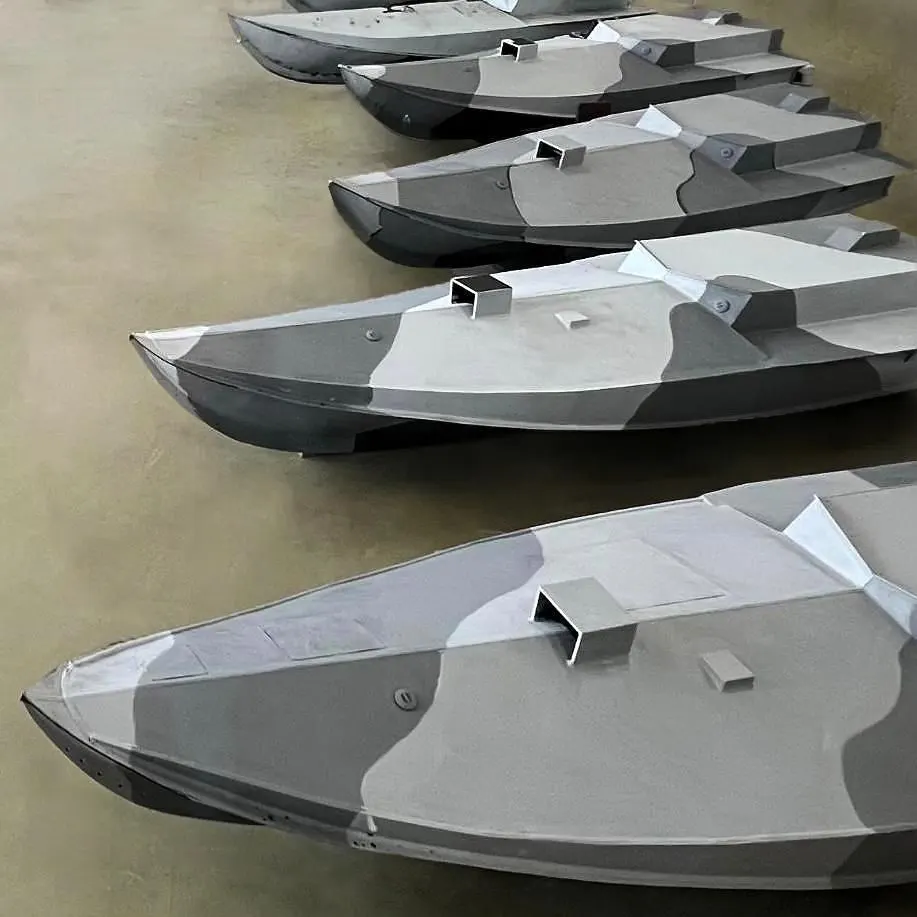
Ukrainian naval drones successfully targeted and sank the Russian warship Merkury during a surprise operation at the Libyan port of Benghazi on Sunday, November 22, 2026. President Volodymyr Zelenskyy and the Security Service of Ukraine (SBU) confirmed on Monday that seven domestically produced sea drones were deployed to strike the vessel, which was one of Russia's most modern corvettes. The attack, launched approximately 1,500 miles from the primary conflict zone in Ukraine, also hit the MV Angara, a Russian cargo ship that Ukrainian officials claim was being used to ferry military hardware. This expansion of hostilities into North African waters marks a significant shift in Kyiv's maritime strategy and its ability to strike Russian assets far beyond the Black Sea.
How did the Ukrainian drone strike in Benghazi unfold?
Ukrainian forces conducted the strike by deploying seven suicide naval drones, often referred to as "Sea Baby" drones, from a larger mothership in the Mediterranean. According to reports from The Guardian and NBC News, the drones reached the Benghazi naval base despite defensive attempts to intercept them from the air. Footage released by President Zelenskyy showed the unmanned vessels approaching their targets at night, resulting in massive explosions upon impact that illuminated the harbor. Satellite imagery from Planet Labs and high-resolution photos from Vantor later confirmed that the Merkury, a Project 20380 Steregushchiy-class corvette, had capsized at its berth, with only its bow remaining visible above the water. A Ka-27 military helicopter that was stationed on the deck of the corvette was also destroyed during the sinking.
"The defence forces of Ukraine have once again demonstrated that the Russian military fleet and its logistics networks have no safe routes, even far beyond the Black Sea," the SBU stated to the Guardian.
What vessels were targeted in the Libyan port?
The primary target of the Ukrainian operation was the Merkury, a Russian navy corvette commissioned as recently as 2023, which had docked in eastern Libya to refuel and take on supplies. The ship was a point of pride for the Kremlin; according to The Guardian, President Vladimir Putin had personally toured the shipyard during its construction in 2019 and featured the vessel in the 2023 Navy Day parade. Additionally, the strike hit the MV Angara, a sanctioned Russian dry cargo carrier. While the SBU and President Zelenskyy identified the Angara as a legitimate military target involved in transporting weaponry, the health ministry in Benghazi reported that civilians or crew on a commercial ship were among those injured during the explosions. Local authorities in eastern Libya confirmed that civil defense units were required to extinguish substantial fires at the naval base following the Sunday morning blasts.

How have Russia and the international community responded?
The Kremlin has refrained from providing a detailed official account of the losses, with spokesman Dmitry Peskov deferring technical questions to the Russian Ministry of Defense. However, the BBC reported that Peskov acknowledged Zelenskyy's claims and warned that the spread of such activity represents a "dangerous trend" that escalates regional tensions. This maritime strike occurred just one day after another Russian cargo vessel, the Sparta II, was reportedly hit by a drone in the Gulf of Finland, suggesting a coordinated effort by Kyiv to target Russian logistics globally. In Libya, the United Nations Support Mission (UNSMIL) expressed grave concern, stating that the nation must not be transformed into a "battleground for foreign conflicts." The eastern-based Libyan government characterized the incident as a violation of national sovereignty and announced a joint investigation with Russian officials.
What is the strategic context of this attack?
Libya is a large North African nation that has been a site of geopolitical interest for Russia, particularly through cooperation agreements with the government controlling the eastern portion of the country where Benghazi is located. The presence of the Merkury in a Libyan port was part of this ongoing military and logistical partnership. For Ukraine, striking a target 2,400 kilometers from its borders demonstrates a sophisticated long-range capability. As noted by NPR, this operation follows other high-profile asymmetric attacks, such as the 2025 "Operation Spiderweb" and recent strikes on the Kerch Bridge. By targeting the Merkury—a ship built with stealth technology designed to be "invisible to radar"—Ukraine has signaled that Russian naval power is vulnerable even in ostensibly neutral or remote waters.

What is still unclear?
The exact number of casualties resulting from the sinking of the Merkury and the damage to the MV Angara has not been confirmed by the Russian Ministry of Defense or independent maritime observers. While the SBU claims the drones were launched from a mothership, the identity and origin of that vessel remain undisclosed. Furthermore, it is not yet established whether the injuries reported by the Libyan health ministry occurred on the MV Angara or a separate third-party commercial vessel caught in the crossfire. No specific date has been set for the results of the investigation promised by the United Nations and the local Benghazi authorities. Finally, while Ukraine has confirmed its role in the Libya strike, it has yet to officially claim responsibility for the Saturday attack on the Sparta II in the Baltic Sea, which Finnish authorities believe was also a Ukrainian operation.
Sources: This report draws on coverage by BBC News, The Guardian, Al Jazeera, NPR, NBC News, France 24, AP News, CNBC. The wording is our own.