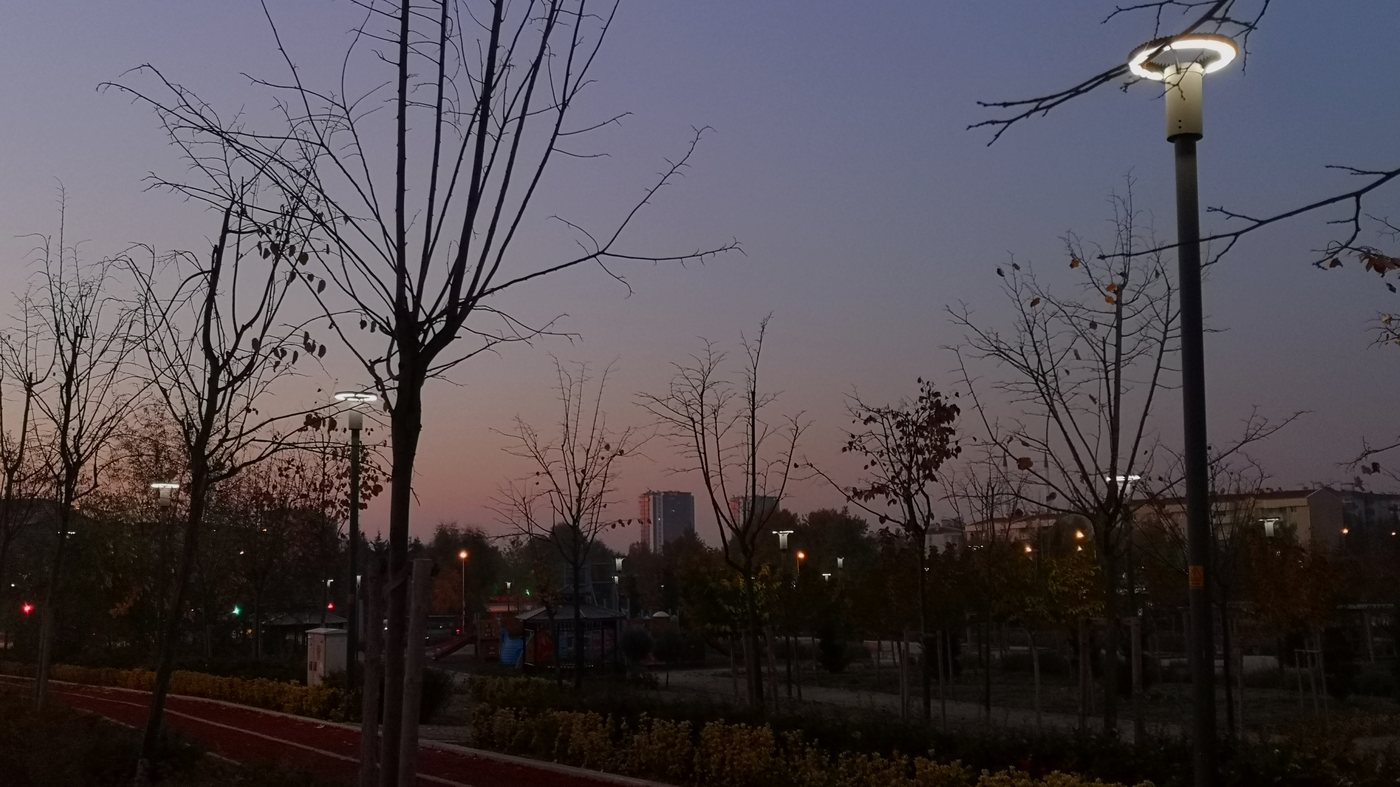
On the night of March 27, 2016, at 3:00 AM, clocks in Turkey were advanced by one hour, initiating a permanent shift that was originally scheduled to revert on October 30 of that year. A Cabinet decision published in the Official Gazette on September 8, 2016, canceled that rollback, decreeing that daylight saving time would remain in effect year-round.1 A decade of winters has since passed, leaving the country permanently positioned three hours ahead of Greenwich Mean Time in the UTC+3 zone.
An analysis published on October 5, 2026, in Canada calculated the public health toll for provinces embarking on the exact same path. The sunrise timetable featured in the study mirrors the dark winter mornings experienced across Turkey year after year.
- The choices made by four Canadian regions to abandon seasonal clock changes and the objections raised by sleep physicians.
- The toll that a one-hour delay in morning light takes on sleep, mood, and long-term earnings.
- The geographic factors separating sunrise times across regions by more than an hour.
- The legal and political foundation sustaining permanent daylight saving despite judicial pushback.
Is Canada facing the same policy crossroads on permanent daylight saving time?
The analysis was published in the Canadian Medical Association Journal (CMAJ) by a team of researchers including psychiatrist Raymond Lam of the University of British Columbia, psychologist Ralph Mistlberger of Simon Fraser University, economist Patrick Baylis of the Vancouver School of Economics, and physician Alexandra Choi of Vancouver Coastal Health.2 Yukon abandoned biannual clock changes in 2020. British Columbia followed suit in March 2026, with Alberta and the Northwest Territories adopting the same measure a month later, all four choosing permanent daylight saving time. Meanwhile, the United States House of Representatives passed a bill in July 2026 establishing permanent daylight saving time nationwide, with the text pending in the Senate.
The authors do not object to ending the twice-yearly ritual of shifting clocks. Their opposition targets the choice of permanent daylight saving time rather than permanent standard time. Major sleep and biological rhythm societies universally advocate for sticking to permanent standard time, a stance reaffirmed by the American Academy of Sleep Medicine in 2024.3
Past attempts yielded swift reversals. During the 1974 energy crisis, the United States switched to permanent daylight saving time, only to abandon it within a year amid public backlash over pitch-dark winter mornings and children walking to school before dawn. Russia implemented the same measure in 2011 before reverting in 2014.2
How does morning light set the human biological clock?
The master biological clock residing in the hypothalamus region of the human brain completes a full cycle in roughly 24.2 hours.2 Because this internal rhythm runs slightly slower than a solar day, it requires daily external cues, with sunlight serving as the most powerful synchronizer. Morning light advances this internal clock, while evening light delays it.
Permanent daylight saving time disrupts both ends of the daily cycle during winter by pushing morning light an hour later while extending evening light, both of which shift the internal clock backward. Meanwhile, the fixed schedules of work, school, and public transit remain unchanged, forcing individuals to wake up before their bodies are biologically prepared. Researchers refer to this chronic misalignment as social jet lag.
The footprint of this biological mismatch extends all the way to paychecks. In regions of the United States sharing the same time zone where the sun sets an hour later, weekly sleep duration is nearly an hour shorter and long-term earnings are roughly five percent lower. A study comparing schools on opposite sides of a time zone boundary in Florida found that adolescents who enjoyed an additional hour of morning sunlight before classes scored higher on standardized math and reading tests.2

Data regarding mental health originates from Canada, where between one and three percent of the population suffers from winter depression, or seasonal affective disorder, while up to fifteen percent report milder seasonal mood fluctuations. A 2025 meta-analysis found that the prevalence of this condition increases by 0.2 percentage points for every degree of latitude. The proven clinical treatment for seasonal affective disorder is early morning exposure to bright light. According to the study authors, a time policy that delays morning light during the winter works in direct opposition to this therapy.2
Why do winter sunrise times vary so drastically across geographic regions?
Time zones are fundamentally determined by longitude. Because the Earth rotates 15 degrees every hour, the natural time zone corresponding to UTC+3 centers on the 45th meridian east. While eastern regions approach this line, western cities sit much further west at lower longitudes. Legal foundations continue to tether official time calculations to the 30th meridian east, corresponding to UTC+2.1 Across vast geographic areas, wall clocks run far ahead of solar time, with the discrepancy widening steadily toward the west.
Calculated sunrise times for the winter season illustrate this divergence clearly. The latest winter sunrises occur well past conventional morning hours, with western locations seeing the sun rise latest compared to eastern counterparts. On the winter solstice, the sun reaches its highest point at radically different times across distant longitudes.6
According to the data tables compiled in the CMAJ analysis, if Montréal were to adopt permanent daylight saving time, its latest winter sunrise would occur at 8:35 AM on January 2, while Toronto's would hit 8:51 AM on January 3.2 The dark mornings that Canadian researchers warn against coincide precisely with the morning hours experienced by western regions under year-round daylight saving policies.
How did permanent daylight saving time survive legal challenges in court?
The implementation of permanent daylight saving time faced immediate judicial challenges. The Council of State's Administrative Litigation Chambers Board suspended the execution of the policy on September 14, 2017. The board ruled that the governing statutes authorized the Cabinet to set daylight saving time only by defining specific start and end dates, establishing standard winter time as the legal baseline, and rendering indefinite implementation an abuse of administrative authority.1
The government responded by publishing a new decree on October 28, 2017, which repealed the 2016 regulation, maintained daylight saving time temporarily, and scheduled a clock rollback for October 28, 2018. A month later, the legislature amended the foundational statutory language to remove the strict date requirements. A presidential decree issued on October 2, 2018, permanently mandated the year-round application of UTC+3 time, preventing the autumn clock rollback and providing the legal foundation for current policies.1 Subsequent legislative sessions have seen repeated parliamentary proposals submitted to reintroduce seasonal time changes.5
The most concrete public health projections come from the United States. In a 2025 study published in PNAS, researchers Lara Weed and Jamie Zeitzer integrated regional sunlight exposure, time policies, and health records across every U.S. county into a single predictive model.4 Compared to the current system of biannual clock shifts, switching to permanent standard time reduces obesity prevalence by 0.78 percentage points and stroke incidence by 0.09 percentage points. Permanent daylight saving time also yields improvements, though to a lesser degree: a 0.51 percentage point drop in obesity and 0.07 in strokes. The model assumes populations live under ideal natural light conditions, meaning the true health impact may be attenuated for populations spending the vast majority of their time indoors.
Because these numerical estimates were calculated using North American latitudes, working hours, and school calendars, they do not translate on a one-to-one basis globally. Furthermore, energy-saving justifications have proven weak. The CMAJ authors note that claims regarding evening daylight reducing electricity consumption remain limited, with Canadian studies finding that energy consumption dropped in some provinces while increasing in others.2
As long as current regulations remain in effect, mid-winter sunrises will continue to occur long after standard waking hours begin, contrasting sharply with the earlier dawn hours that would prevail under traditional seasonal clock adjustments.
Notes and Sources
- Cabinet Decree 2016/9154, Official Gazette, September 8, 2016; Council of State Administrative Litigation Chambers Board, E. 2017/806, September 14, 2017; Cabinet Decree 2017/10921, Official Gazette, October 28, 2017; Presidential Decree 139, Official Gazette, October 2, 2018; Law No. 697 on the Division of the Twenty-Four-Hour Day, amended by Law No. 7061, November 28, 2017. mevzuat.gov.tr. ↩
- Lam, R. W., Mistlberger, R., Baylis, P. and Choi, A. (2026). Analysis of health impacts associated with adopting permanent standard time or permanent daylight saving time to inform policy in Canada. CMAJ, 198(34), E1335-E1340. DOI: 10.1503/cmaj.261089. ↩
- Rishi, M. A., Cheng, J. Y., Strang, A. R. et al. (2024). Permanent standard time is the optimal choice for health and safety: an American Academy of Sleep Medicine position statement. Journal of Clinical Sleep Medicine, 20(1), 121-125. DOI: 10.5664/jcsm.10898. ↩
- Weed, L. and Zeitzer, J. M. (2025). Circadian-informed modeling predicts regional variation in obesity and stroke outcomes under different permanent US time policies. PNAS, 122, e2508293122. DOI: 10.1073/pnas.2508293122. ↩
- Grand National Assembly of Turkey, Legislative Proposals Nos. 2/2469 and 2/2754, 2024. tbmm.gov.tr. ↩
- Sunrise and solar noon calculations based on standard refraction horizons and UTC+3 parameters. ↩
This content is for informational purposes only and does not constitute medical advice.