A pilot study led by the NYU Grossman School of Medicine has demonstrated that ten minutes of focused transcranial ultrasound stimulation (TUS) can significantly reduce the severity of delusions in patients with schizophrenia. Results published in the journal npj Acoustics on October 20, 2026, revealed that patients experienced a notable decrease in delusional conviction one week after receiving the targeted sound wave treatment compared to a sham session.
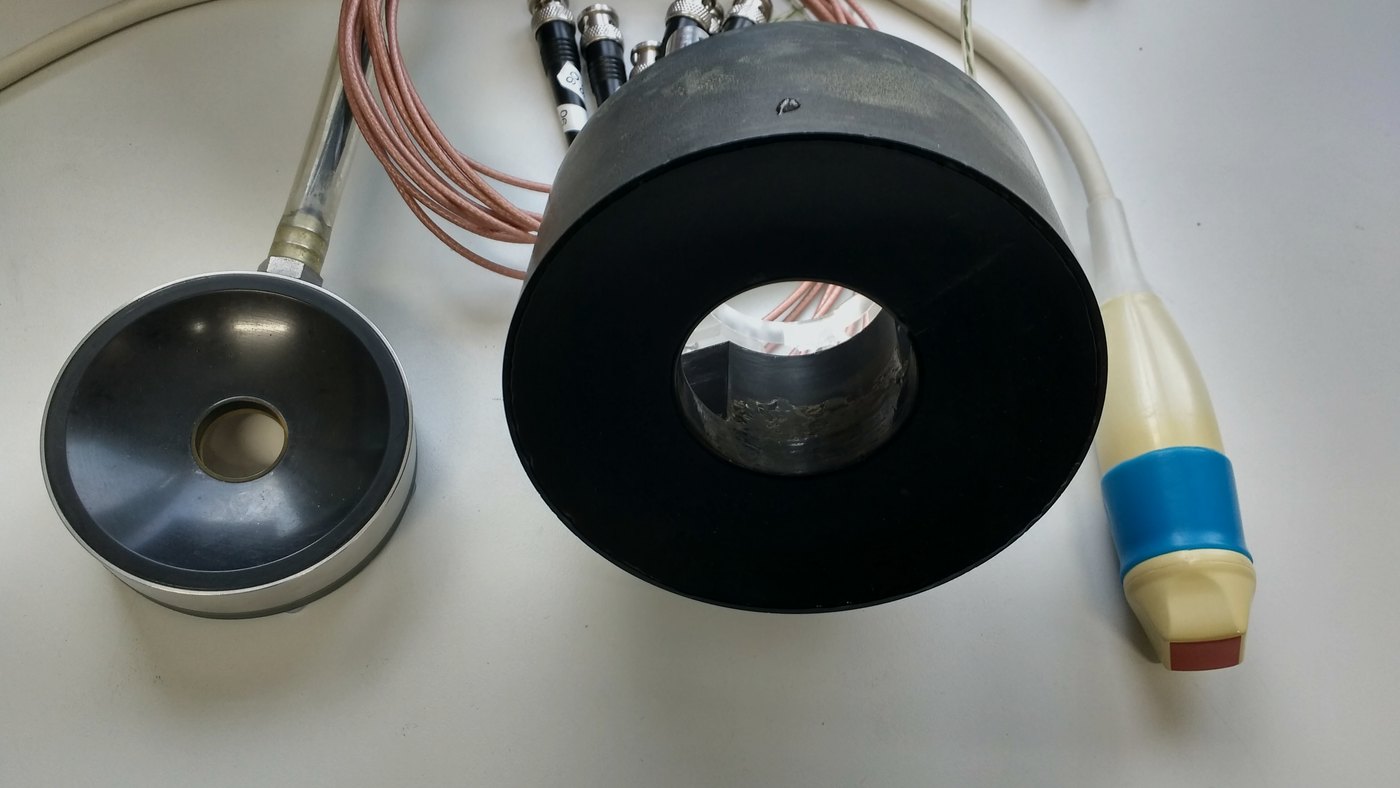
Between May 2023 and January 2024, ten participants underwent a specialized protocol where their heads were stabilized with foam blocks and their hair was prepared with ultrasound gel to ensure a seamless connection. A transducer fitted with a water-filled rubber bolus was placed against the temple, delivering ultrasound pulses in 30-second intervals over a ten-minute period. The target was a small nucleus located approximately six centimeters beneath the cerebral cortex.
How do ultrasound waves penetrate the skull to target deep brain structures?
Transcranial ultrasound stimulation (TUS) uses high-frequency sound waves at 350 kilohertz—well above the range of human hearing—to modulate neuronal activity at a specific focal point. The device used by the NYU team utilized a concave plastic lens to converge the sound waves approximately 65 millimeters in front of the transducer, creating a focal zone roughly 2.7 centimeters long and 5.6 millimeters wide. Neural engineer Shy Shoham, one of the study’s authors, compares this mechanism to a magnifying glass focusing light into a single intense point. While the human skull typically absorbs a significant portion of acoustic energy, measurements on skull samples indicated that 12 to 17 percent of the intensity successfully reaches the brain through the temporal bone. To ensure precision, researchers used a camera system synchronized with each patient's MRI scans to lock the ultrasound beam onto the target.
Why did researchers target the globus pallidus interna for schizophrenia treatment?
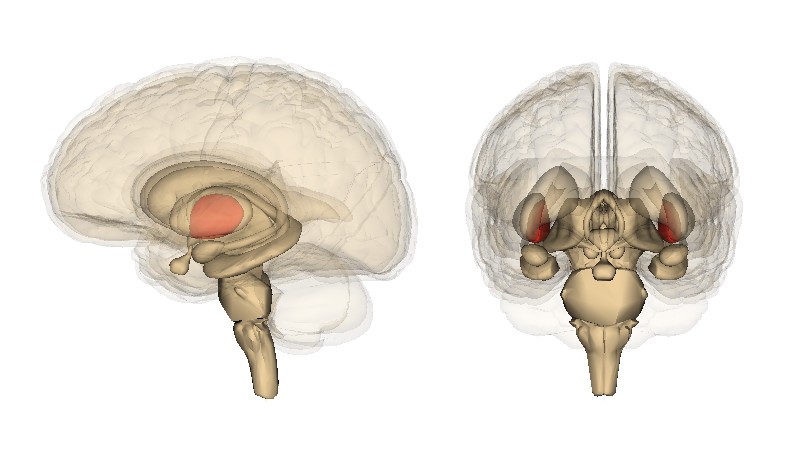
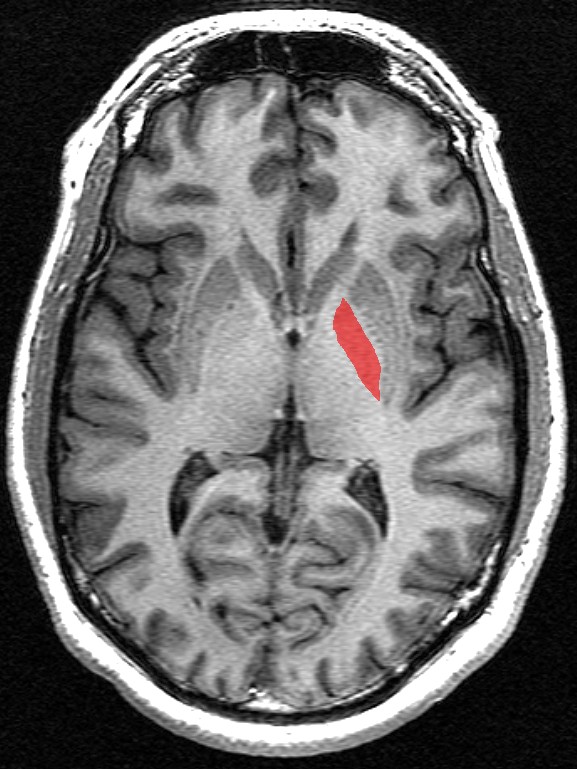
The globus pallidus interna (GPi) was selected because it acts as a critical hub in the basal ganglia circuit, which regulates movement, emotion, and cognition. According to lead researcher Wei Qi, schizophrenia involves an imbalance between excitation and inhibition regarding what environmental signals are deemed "salient" or important. In a 2023 study, Qi’s team discovered that patients experiencing their first psychotic episode had abnormally strong connections between the right GPi and the anterior cingulate cortex. This hyper-connectivity directly correlated with the severity of symptoms and could even predict how well a patient would respond to medication. By stimulating this deep structure non-invasively, the team hoped to reset this imbalanced neural circuitry without the systemic side effects, such as weight gain and hypertension, associated with traditional antipsychotic drugs.
Did patients perceive a difference between the real and sham sessions?
Participants were unable to distinguish between the active treatment and the placebo because the study employed a randomized, double-blind, sham-controlled design. During the sham session, the ultrasound device operated with the same settings, but an air bubble was intentionally left in the water bolus. Since sound waves cannot travel through air, the energy never reached the brain. Both the patients and the clinical staff evaluating the symptoms remained unaware of which session was the active one. Interestingly, mild side effects such as headache or fatigue were reported by seven patients after the real session and by all ten patients after the sham session, suggesting that the procedure itself is well-tolerated and that the placebo effect influenced the reporting of minor discomfort.
What were the clinical outcomes for delusions and hallucinations after one week?
The primary finding was a significant reduction in delusions, while auditory hallucinations remained largely unchanged. Delusion severity was measured using a scale tracking the strength of the belief and the distress it caused at several intervals: during the session, one hour later, one day later, and seven days later. After the real session, delusion scores dropped by an average of 1.2 points, whereas they rose by 0.4 points after the sham session. Statistical modeling accounted for all time points and found that the real treatment resulted in a 1.56-point cumulative improvement over the sham. The gap widened over time, reaching a 2.7-point difference by the seventh day, although these individual time-point differences lost statistical significance after adjusting for multiple comparisons. Cognitive tests for memory and thinking showed no differences between the two groups, confirming the treatment did not negatively impact general brain function.
Notes and Sources
- Qi, W., Gilad, A., Santacatterina, M., Brinker, S., Capichioni, G., Ando, F., Shoham, S. and Goff, D. C. (2026). "Transcranial ultrasound stimulation of the right globus pallidus interna in schizophrenia: A randomized, sham-controlled pilot study". npj Acoustics 2, 39. doi:10.1038/s44384-026-00076-3
- NYU Langone Health (October 20, 2026). "Gentle Brain Ultrasound May Help Ease Delusions in Schizophrenia". nyulangone.org
- World Health Organization. "Schizophrenia" fact sheet. who.int
- Schneider, L. (October 20, 2026). "Ultrasound waves that jiggle deep brain structures may relieve delusions in schizophrenia, small trial hints". Live Science. livescience.com
- Qi, W. et al. (2023). "Aberrant resting-state functional connectivity of the globus pallidus interna in first-episode schizophrenia". Schizophrenia Research 261, 100-106. doi:10.1016/j.schres.2023.09.018
- Leucht, S. et al. (2017). "Sixty years of placebo-controlled antipsychotic drug trials in acute schizophrenia". American Journal of Psychiatry 174(10), 927-942. doi:10.1176/appi.ajp.2017.16121358
- Subramaniam, K. et al. (2026). "Low-intensity focused ultrasound targeting striatal circuits in schizophrenia: feasibility, safety, and effects on hallucinations and striatal-temporal functional connectivity". Brain Stimulation 19, 103084. doi:10.1016/j.brs.2026.103084