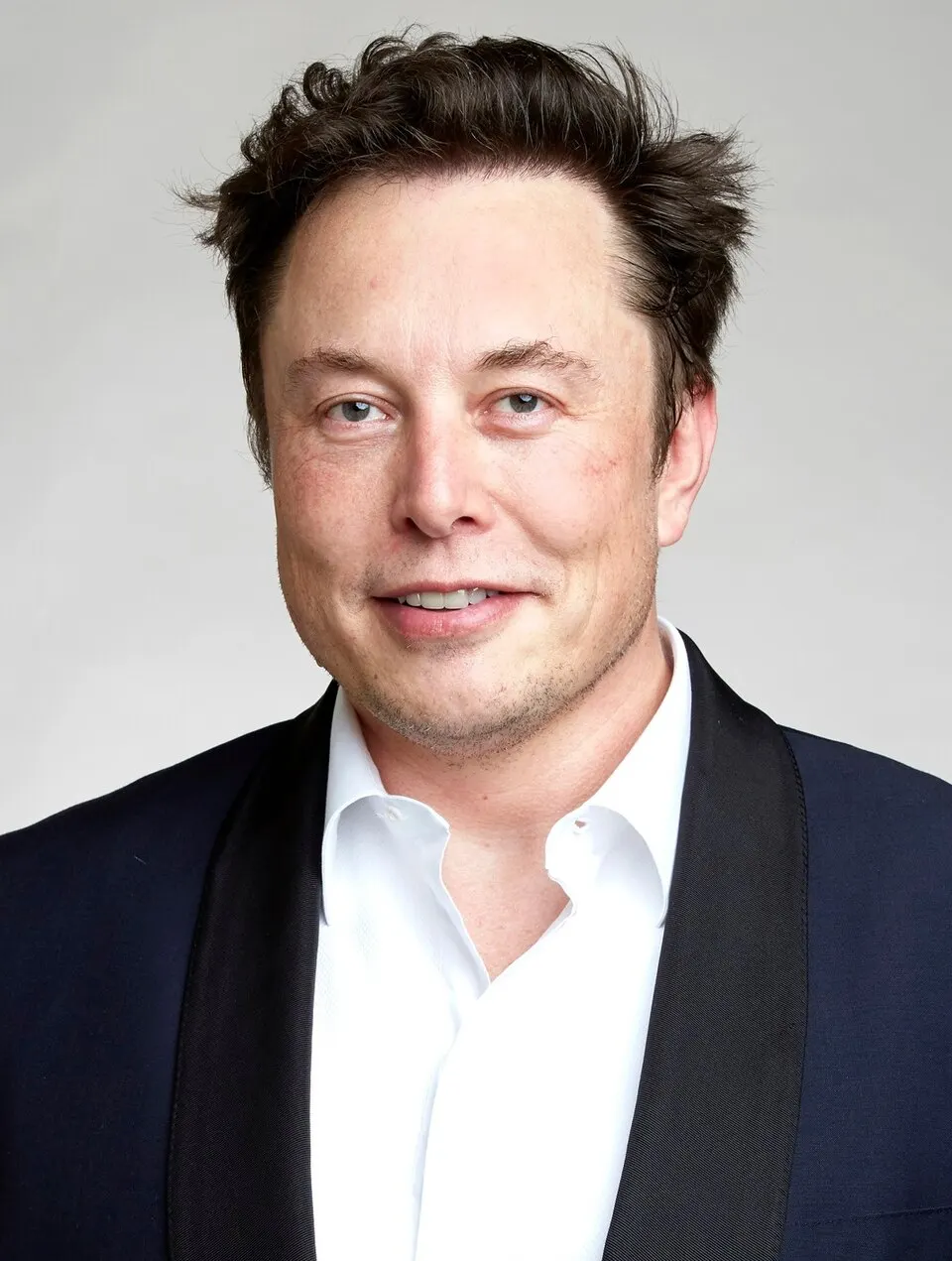
Billionaire industrialist Elon Musk expressed deep regret on Wednesday over his unprecedented $446 million financial contribution to Republican candidates in the 2026 United States midterm elections, describing his record outlay as "pretty foolish" following sweeping Democratic victories across the nation. Speaking virtually at the annual New York Times DealBook Summit in New York City, the chief executive of Tesla and SpaceX acknowledged that his massive political investment yielded minimal tangible returns after Democrats successfully seized control of both chambers of the US Congress and ousted long-standing Republican leaders in key states like Texas.
How much did Elon Musk spend and what were the election results?
Elon Musk spent an estimated $446 million during the 2026 midterm election cycle, making him the top individual donor in the United States, yet Republican candidates suffered decisive defeats nationwide. Democratic candidates captured majorities in both the House of Representatives and the Senate, reversing previous Republican dominance and flipping multiple competitive swing districts. The outcome represented a broad public political rebuke of President Donald Trump's administration, whose popularity has been squeezed by growing domestic voter dissatisfaction over rising living costs.
A significant portion of Musk's financial focus was directed toward state and federal contests in Texas, where several of his flagship corporate enterprises are based. Musk channeled at least $45 million into the Texas Senate race to support incumbent Republican Ken Paxton, who ultimately lost to Democratic challenger James Talarico, according to analysis cited by Plataforma Media. Simultaneously, Democratic candidate Gina Hinojosa defeated incumbent Republican Governor Greg Abbott, bringing an end to more than thirty years of uninterrupted Republican executive control in the state. Al Jazeera and Reuters reported that Musk's total commitment approached half a billion dollars, primarily intended to preserve a favorable political and regulatory environment for his industrial operations.
Why does Elon Musk say he feels "pretty foolish" about his spending?
Elon Musk acknowledged at the DealBook Summit that immense political spending cannot single-handedly dictate American electoral outcomes, admitting that he saw very little return on his massive financial commitment. Interviewed by journalist Andrew Ross Sorkin, the industrialist reflected on his strategic miscalculation regarding the effectiveness of political donations.
"I feel pretty foolish about having spent so much money, and not seeing much for it," Elon Musk stated during the interview, as reported by Al Jazeera and Anadolu Ajansı.
While Musk argued that conservative candidates might have performed even worse without his intervention, he conceded that his campaign financing strategy ultimately failed. "Probably, if I could rewind the clock, I would have spent less money," Musk remarked during the session, according to Al Jazeera. Despite the unfavorable election results for his favored candidates, Musk offered a pragmatic evaluation of Texas's incoming Democratic leadership. He described Governor-elect Hinojosa as "quite moderate" rather than far-left, predicting that corporate and policy operations in Texas would remain stable under her incoming administration.

How is Elon Musk shifting his relationship with Donald Trump and MAGA?
Elon Musk used his platform at the DealBook Summit to publicly distance himself from President Donald Trump's Make America Great Again (MAGA) political movement, marking a clear pivot from his previous high-profile political alignment. Rebuffing labels connecting him strictly to right-wing ideology, Musk explicitly rejected party dogma during the broadcast.
"I'm not MAGA," Musk told the audience, according to the BBC and Plataforma Media. He elaborated that if the movement implies "sort of blind adherence to a set of policies by the Republican Party, then I certainly don't have that," adding that he evaluates politics pragmatically because both major political parties exhibit distinct positives and negatives.
This neutral stance contrasts sharply with Musk's active involvement in national politics during the 2024 presidential campaign and early 2025. At a 2024 campaign rally supporting Donald Trump, Musk famously declared to attendees that he was "dark, gothic MAGA." Following Trump's return to the White House, Musk served in early 2025 as an unpaid special government employee co-leading the Department of Government Efficiency (Doge), an advisory entity focused on reducing federal spending. As recently as October 2026, the Department of Defense named Musk co-lead of Project Meridian, a specialized initiative evaluating the future of military warfare, while he continued traveling alongside the president.
How do the midterm results impact Elon Musk's business empire?
The Democratic takeover of the US Congress presents new political and regulatory challenges for Elon Musk, whose corporate empire relies heavily on federal contracts, technology incentives, and state-level infrastructure. The world's wealthiest individual—whose net worth Forbes estimates at $849.7 billion—oversees Tesla, SpaceX, and complex artificial intelligence infrastructure projects that face heightened legislative scrutiny from incoming Democratic lawmakers.
Democratic leaders coming into power in the Senate and House of Representatives have pledged to intensify oversight of large technology corporations. Congressional lawmakers have specifically proposed formal investigations into SpaceX, which has secured an estimated $10 billion in new federal government contracts since Trump's re-election. Furthermore, lawmakers are taking aim at the rapid construction of energy-intensive computing facilities. In Georgia, where SpaceX maintains active data infrastructure, the newly elected Democratic governor has pledged to curb the expansion of massive data centers and restrict corporate tax incentives.

Similar regulatory friction exists in Texas, where Governor-elect Hinojosa supports maintaining a temporary moratorium on constructing new data centers, according to reports in The New York Times. Addressing his ongoing technology ventures during the summit, Musk confirmed that artificial intelligence firm Anthropic remains highly likely to rent computing power from SpaceX, with the firm seeking up to 10 additional gigawatts of capacity, as reported by Reuters.
What remains uncertain for Elon Musk and US regulatory policy?
The reporting leaves several key details unresolved concerning how federal agencies and state governments will interact with Elon Musk's companies moving forward. News outlets have not established whether incoming Democratic congressional leaders will formally launch subpoena-backed investigations into SpaceX's $10 billion federal defense contracts, nor have they confirmed specific start dates for proposed legislative hearings on technology subsidies.
It also remains unclear how the newly elected Democratic governors in Texas and Georgia will structure executive policies surrounding data center energy usage and corporate tax credits once they take office. Additionally, while Musk indicated his desire to scale back future campaign funding, media reports have not confirmed whether he plans to completely dissolve his political action committees or retain a reduced financial presence in upcoming election cycles.
Sources: This report draws on coverage by Plataforma Media, BBC, Al Jazeera, Anadolu Ajansı, TRT World, AFP.com, CNBC, The Washington Post. The wording is our own.