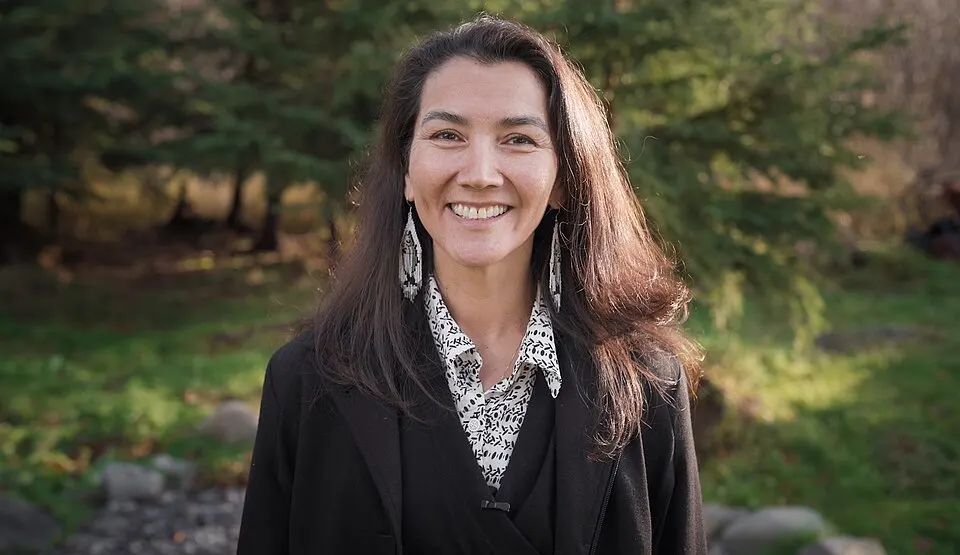
Democrat Mary Peltola has won Alaska's U.S. Senate race, defeating incumbent Republican Senator Dan Sullivan and expanding her party's majority to 56 seats in the upper chamber. Decision Desk HQ, the Associated Press, and NBC News projected the victory after an updated vote count showed Peltola surpassing the 50 percent threshold needed to win without triggering additional ranked-choice elimination rounds. Peltola secured 144,302 votes against Sullivan's 131,844, concluding a two-week tabulation process that marked the final uncalled Senate contest of the 2026 midterm elections. The outcome caps a historic election cycle in which Democrats flipped nine Republican-held Senate seats, creating the largest Senate majority held by either political party in 16 years.
How did Mary Peltola secure victory in Alaska?
Mary Peltola secured victory in Alaska by capturing 50.1 percent of the first-preference votes, allowing her to win the election outright. Under Alaska's voting system, all candidates compete in an open primary, with the top four finishers advancing to a ranked-choice general election. Because Peltola cleared the majority threshold directly, election officials did not need to reallocate the second-choice votes of lower-ranking candidates. Peltola's victory ends a two-decade span without a Democratic U.S. senator representing Alaska. The newly elected senator will join Minnesota Senator-elect Peggy Flanagan as one of the first two Native American women ever to serve in the United States Senate.
"As a lifelong Alaskan who has dedicated my life to serving our state, there is no greater honor than having Alaskans’ support," Peltola said in a statement reported by DW.com.
Following her win, Peltola pledged to address economic challenges facing local families. "As our next United States Senator, I will stand up to anyone to take on the rigged system in DC and deliver results for Alaska's working families," Peltola stated in remarks reported by NBC News. Senate Democratic Leader Chuck Schumer praised the result on social media, writing that a 56-seat majority puts Democrats in a position to pass legislation lowering costs and challenge President Donald Trump to veto those measures, according to NBC News reporting.
What controversies shaped the Alaska Senate campaign?
The Alaska Senate campaign was shaped by a high-profile legal dispute over the presence of a second candidate named Dan J. Sullivan on the general election ballot. According to reports from The 19th News, DW.com, and NBC News, Republicans alleged that Peltola's campaign aides backed the candidacy of Daniel J. Sullivan, a retired teacher and political newcomer, to confuse voters and divert support from incumbent Senator Dan S. Sullivan. The New York Times reported connections between Peltola's team and the third-party candidate's recruitment, prompting state and federal prosecutors to investigate the matter starting in July.

Although the Alaska Supreme Court affirmed that the challenger candidate could remain on the ballot, the U.S. Department of Justice initiated legal action against the state, while Alaska's Republican governor warned he might withhold election certification if the incumbent lost. Senator Sullivan condemned the tactic on Election Day, accusing his opponent's campaign of deliberately misleading voters, as reported by DW.com. Peltola denied any involvement in or prior knowledge of a candidate recruitment scheme. Ultimately, the challenger candidate received 4,760 votes, a total smaller than Peltola's final winning margin over the incumbent Senator.
Why did economic issues and local context sway Alaska voters?
Economic issues swayed Alaska voters due to severe local price inflation driven by energy market disruptions. As reported by The 19th News, remote Alaskan communities rely heavily on diesel fuel for home heating and electricity generation. Escalating international conflict in Iran escalated regional fuel prices, aggravating existing financial burdens on residents who already pay elevated rates for food and healthcare due to the state's geographic isolation. With much of Alaska inaccessible by road, high transportation costs directly raised the cost of living throughout the region.
Peltola tailored her campaign to appeal to independent voters by focusing on local economic concerns, maritime industries, and distance from continental political disputes. Highlighting her personal background as a Yup'ik Alaskan who grew up salmon fishing, Peltola promoted an "Alaska First" platform while emphasizing her willingness to break party lines. Her campaign advertisements highlighted her "A" rating from the National Rifle Association, her critique of federal border policies under the Biden administration, and her support for major domestic oil development initiatives within Alaska.

With a national population of 341.8 million people, according to World Bank data for 2025, the U.S. relies on the United States Senate to craft federal legislation alongside the House of Representatives. The Senate meets at the U.S. Capitol in Washington, D.C. Peltola previously served as Alaska's sole U.S. representative from 2022 to 2025 after winning a special election following the death of longtime Congressman Don Young. The incoming Democratic majority in the Senate will include 54 party members alongside independent Senators Angus King of Maine and Bernie Sanders of Vermont, who caucus with the Democrats.
What happens next for the Senate balance of power?
What remains to be seen is how quickly the newly elected senators will be sworn into office when Congress convenes, and how the expanded Democratic majority will structure its committee assignments. Outlets have not yet confirmed the final formal certification timetable from Alaska election authorities following previous non-certification threats by the state's governor. The 56-44 majority grants Senate Democrats absolute operational control over legislative scheduling, committee leadership, and presidential nomination hearings, enabling the caucus to launch investigations into administrative officials and shape upcoming federal budget debates.
Sources: This report draws on coverage by NBC News, The 19th News, DW.com, Reuters, Politico, The Washington Post, NPR, KOSU. The wording is our own.