The Nationalist Congress Party-Sharadchandra Pawar (NCP-SP) confirmed on Friday, November 27, 2026, that it will support the central government’s proposed Delimitation Bill during the special parliamentary session scheduled for November 30, a decision that has triggered political fallout within the Opposition’s INDIA bloc. The government’s proposal, which includes a 50 percent increase in total Lok Sabha seats from the current 543 to 850, is being framed by the administration as a constitutional necessity to facilitate the implementation of the women's reservation law passed in 2023. While the NCP-SP views the exercise as a mandatory constitutional process, the decision has drawn sharp criticism from its allies, with the Congress party labeling the move as "unfortunate" and detrimental to Opposition unity.
What are the government’s plans for the special parliamentary session?
The Union Cabinet has formally approved a Constitution Amendment Bill aimed at initiating a comprehensive delimitation process across India. This legislation proposes to expand the Lok Sabha's strength by 50 percent across all states and union territories, maintaining this seat distribution ratio for 25 years until after the 2051 census. Government officials contend that this seat expansion is fundamentally tied to the Nari Shakti Vandan Adhiniyam, a law that reserves 33 percent of seats for women, which the ruling administration intends to implement in conjunction with the redrawing of constituency boundaries for the 2029 general elections. This special sitting serves as a follow-up to previous legislative attempts, following reports that the government has spent months securing the necessary parliamentary support after a similar bill failed to pass on April 17, 2026, due to a shortfall of 54 votes required for the necessary two-thirds constitutional majority.
How has the Opposition reacted to the proposal?
The INDIA bloc, a coalition of opposition parties, remains deeply divided over the government's approach. Congress general secretary Jairam Ramesh has accused the Prime Minister and Home Minister of misleading the public, asserting that the special session is not genuinely focused on women's reservation, as that legislation is already law, but is instead a vehicle for political gerrymandering. According to reports from The New Indian Express, Ramesh claimed the government is attempting to leverage the expertise of Chief Election Commissioner Gyanesh Kumar, whom the Congress has previously criticized regarding the integrity of electoral rolls, to manipulate constituency geography. Samajwadi Party leader Akhilesh Yadav further warned that this delimitation exercise could represent a significant political error for the ruling party. Conversely, NCP-SP leader Jitendra Awhad maintained that his party’s position was reached after internal discussions, including consultations with party patriarch Sharad Pawar, who is currently hospitalized. Awhad stated, "We will support the delimitation Bill. We will attend the INDIA Bloc meeting." Despite this, internal strain is evident, as party member Supriya Sule has reportedly sought further clarity on the draft before finalizing her stance, and other alliance members like the Dravida Munnetra Kazhagam (DMK) have issued their own conditional requirements for support.

"The government’s intentions behind this Bill are not honest," said Congress leader Sachin Sawant, as reported by The Hindu, criticizing the NCP-SP's decision to support the ruling party's legislative agenda.
What is the context of the Delimitation and Indian Parliamentary structure?
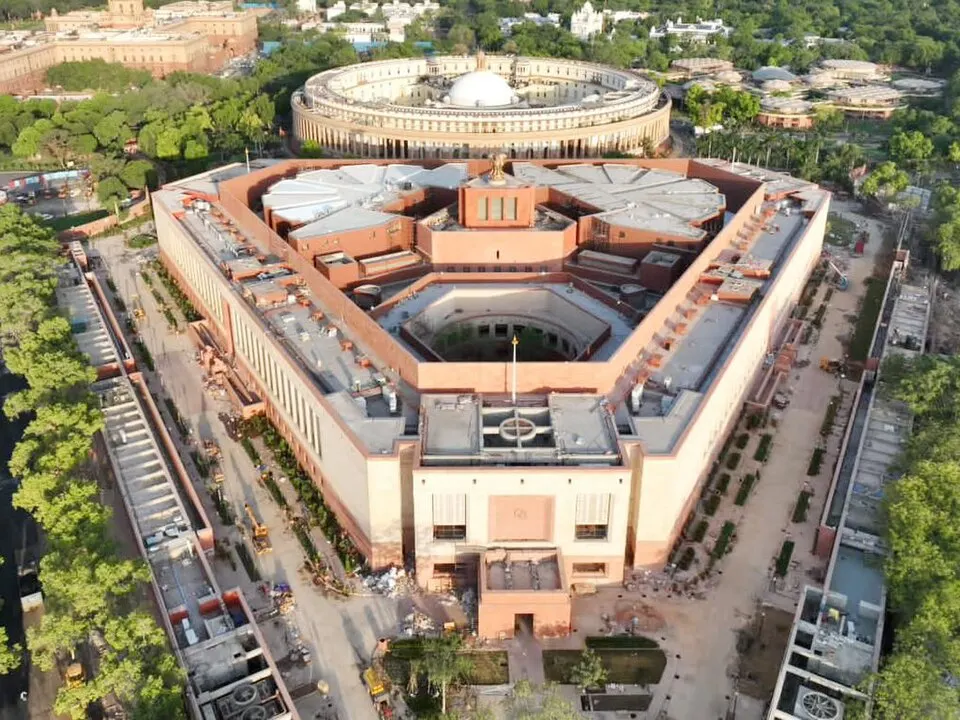
The Parliament of India functions as the nation’s supreme legislative body, composed of the Lok Sabha and the Rajya Sabha, with the responsibility of overseeing the administration of the country. The process of delimitation involves redrawing the boundaries of parliamentary constituencies based on shifting population demographics. This process is highly sensitive as it directly impacts the political influence of various regions. The current legislative tension is set against a broader landscape of domestic policy debates, including recent legal and political controversies in Tamil Nadu regarding the lighting of the Tirupparankundram Deepam and the evolving role of emerging political entities like the TVK. All political maneuvers are currently occurring as the nation manages a population of 1.46 billion, according to World Bank data for 2025, with an economic profile characterized by a GDP of $3.96 trillion and a 2025 unemployment rate of 4.2 percent.
What is still unclear?
It remains uncertain how the internal divisions within the INDIA bloc will affect the final voting outcome on November 30. While the NCP-SP has declared its intent to support the bill, the degree of participation from key leaders like Supriya Sule—who is scheduled to arrive in Delhi only on the day of the session—remains a subject of speculation. Additionally, while reports indicate that the Cabinet has approved the legislation, the specific text of the constitutional amendment has not been fully transparent to all coalition partners. The media has not confirmed whether the government has definitively secured the two-thirds majority required for the constitutional amendment, nor is it clear if the Opposition will finalize a unified, formal strategy during their scheduled meeting on Saturday. There is also no consensus between the ruling and opposition benches on whether the women's reservation policy could be implemented without a broad, 50 percent increase in the total number of parliamentary seats.

Sources: This report draws on coverage by India Today, The New Indian Express, NDTV, The Hindu, INDToday, ETV Bharat, The Week, Madhyamam. The wording is our own.