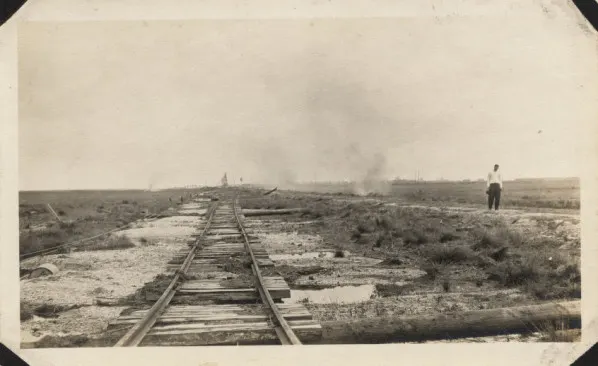
The Rajasthan Anti-Terrorism Squad, in a joint operation with Punjab security agencies, has arrested 21-year-old Mahakdeep Kaur and 22-year-old Devendra Singh in Gurdaspur, Punjab, for their alleged involvement in an explosion on a railway track in Rajasthan's Sri Ganganagar district on November 3. The blast, which occurred at approximately 9:45 p.m. near Ramsinghpur, caused significant damage to railway infrastructure, including the destruction of two sleepers and the creation of a crater roughly two-and-a-half feet deep. While an Anupgarh-Suratgarh passenger train had passed the site roughly 75 minutes before the detonation, no injuries were reported, though investigators believe the objective was to target a moving train and incite public panic.
What evidence links the suspects to the operation?
Law enforcement officials recovered two foreign-made pistols and a cache of 46 live cartridges from the suspects during their apprehension. Discrepancies exist in official reports regarding the amount of currency seized, with the Deccan Chronicle reporting the recovery of Rs 46,000, while other sources, including the Clarion India and INDToday, reported the figure as Rs 30,000. Beyond the physical evidence, authorities have detained three additional individuals suspected of providing critical logistical assistance, including transportation, motorcycle access, and safe harbor for the primary suspects. Investigators confirm that the pair made several scouting trips to the Sri Ganganagar site prior to the detonation as part of a coordinated effort to execute the attack.
How were the suspects recruited?
According to Rajasthan Police disclosures, the investigation indicates the incident was orchestrated by Pakistan-based handlers identified by the pseudonyms 'Shah' and 'Chacha,' who are believed to be linked to Pakistan's Inter-Services Intelligence. Investigators suggest these handlers employed a deliberate strategy to recruit Mahakdeep Kaur by establishing romantic connections and offering monetary rewards. Police records note that Kaur is estranged from her husband, Karanveer Singh, who is presently incarcerated for his role in a narcotics smuggling case under the Narcotic Drugs and Psychotropic Substances Act. Officials theorize that the handlers exploited her social and emotional vulnerability to facilitate the operation. This alleged methodology mirrors a previous case identified in Rajasthan's Gangapur City, where a woman named Babita was similarly apprehended following recruitment by foreign-based operatives, prompting security agencies to investigate whether a broader, systematic pattern is targeting vulnerable individuals across the region.
The investigation has brought to light a suspected trend of using romantic relationships and financial inducements to recruit women for subversive criminal activities, with handlers potentially operating through coded communication channels.
What is the broader context of the incident?
Rajasthan, a sprawling state in northwestern India covering 342,239 square kilometers, remains a focal point for national security monitoring due to its extensive border with Pakistan's Sindh and Punjab provinces. The region is served by the Indian Railways network, which manages a massive, electrified infrastructure critical to the national economy and public transport. As of late 2025, the government reports an unemployment rate of 4.2 percent and an annual inflation rate of 2.4 percent, conditions that experts note can sometimes be exploited by criminal networks seeking recruits for illicit tasks. Security operations in the state are handled by units like the Anti-Terrorism Squad, which works alongside local district police to maintain order across the border-adjacent territories that constitute a significant portion of India's desert landscape.

What remains unclear and what is the next step?
While the identities of the two primary suspects have been confirmed, the full extent of the alleged network remains subject to ongoing interrogation. Authorities have not yet publicly disclosed the specific date for the next court hearing or the duration of the requested remand for the suspects. It remains officially unverified whether the handlers identified as 'Shah' and 'Chacha' are their real identities or merely operational aliases. Furthermore, while the police have expressed suspicion regarding a connection to the ISI, they have not provided independent corroborative evidence to definitively link these specific handlers to official state intelligence structures. The investigation continues to focus on tracing the origin of the seized funds and determining the total number of individuals involved in the logistical support chain that enabled the railway sabotage.
Sources: This report draws on coverage by Deccan Chronicle, The New Indian Express, Clarion India, India Today, INDToday, NDTV, Telegraph India, The Observer Post. The wording is our own.