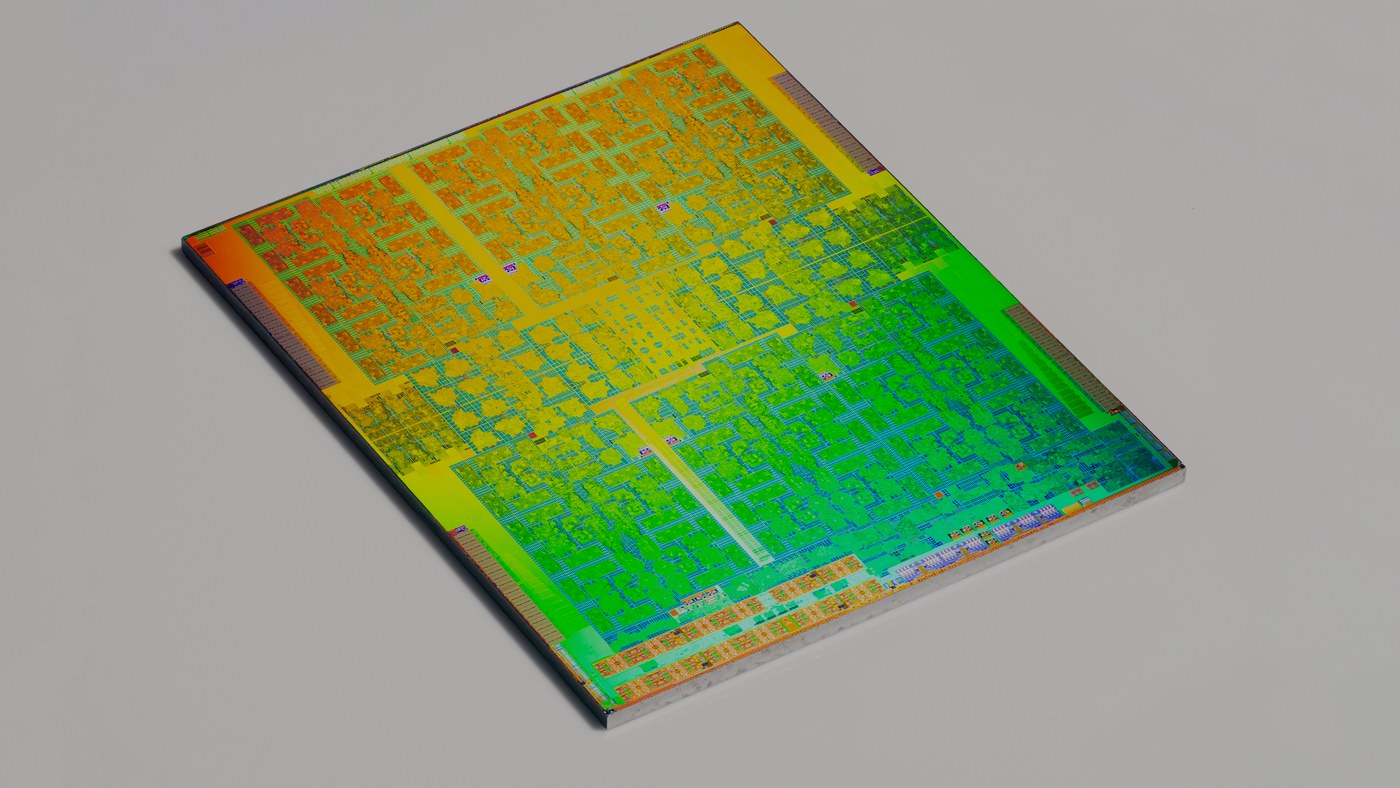
Optimizing matrix multiplication for GPU acceleration traditionally consumes weeks of engineering time, as experts manually iterate on tile sizes, memory layouts, and precision settings. The AutoKernel framework, detailed in a 2026 study, transforms this manual toil into an automated, overnight agent loop that identifies performance bottlenecks and benchmarks hundreds of Triton or CUDA kernel iterations without human intervention.
While this is a technical development rather than a medical breakthrough, the impact reaches deep into critical infrastructure. Modern AI systems, from protein folding models to high-resolution medical imaging, rely on these same GPU kernels. When a kernel is inefficient, latency increases and cloud compute costs escalate, making the task of doubling kernel performance a significant engineering priority.
- AutoKernel is an open-source framework that profiles PyTorch models and prioritizes bottleneck kernels using Amdahl's law.
- Testing on an NVIDIA H100 showed a 5.29x speedup for RMSNorm compared to eager execution and a 2.83x improvement over torch.compile.
- Each optimization candidate undergoes a rigorous five-stage accuracy test before performance benchmarks are recorded.
- Matrix multiplication remains a challenge where cuBLAS maintains a lead, representing the primary limitation of the agent.
How does the AutoKernel optimization process function?
As outlined in the arXiv preprint by Jaber and Jaber, AutoKernel functions by profiling a model, measuring execution time for every kernel, and ranking them by their potential impact. The system then enters a repeating 90-second loop: 30 seconds for accuracy testing, 30 seconds for performance benchmarking, and 30 seconds for agent reasoning. This cycle generates forty experiments per hour, exceeding three hundred iterations over a single night. Each trial is linked to a git commit, allowing the agent to commit successful optimizations while automatically reverting failures. The system targets nine standard transformer operations including softmax, LayerNorm, RMSNorm, cross-entropy, and rotary embeddings.
Where does AutoKernel provide the most significant speed improvements?
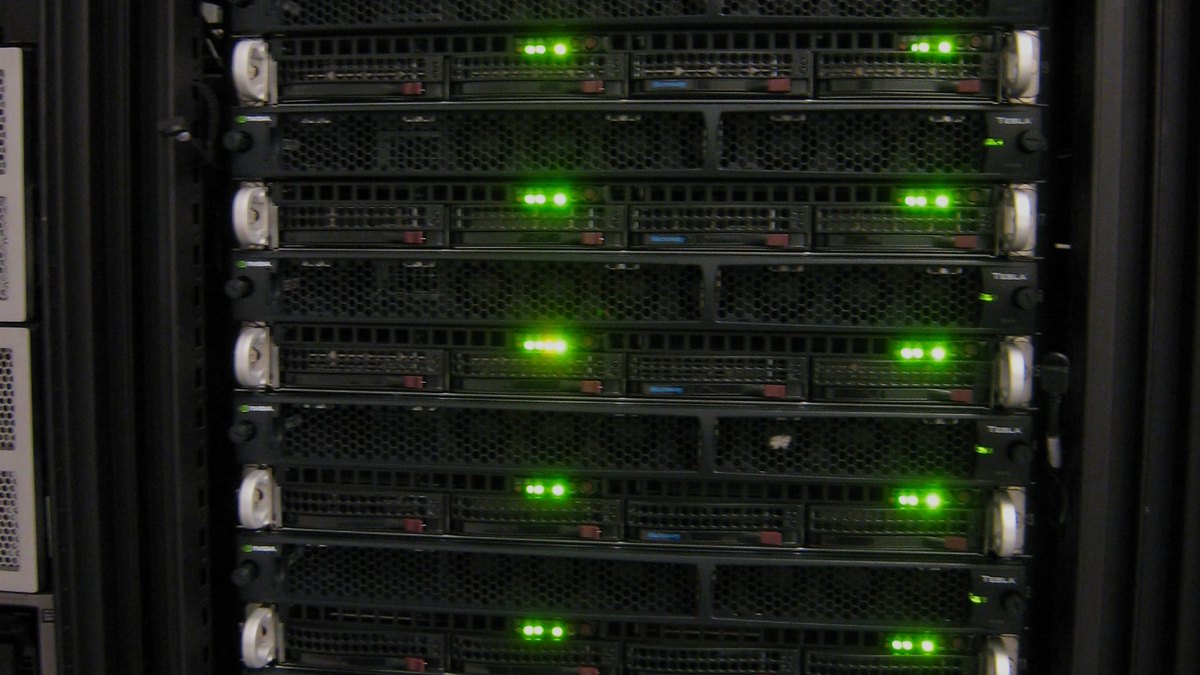
Performance measurements conducted on an NVIDIA H100 80GB using FP16 and CUDA event timing highlight clear gains in memory-bound kernels. For RMSNorm, AutoKernel achieved a 5.29x speedup over PyTorch eager mode and was 2.83x faster than torch.compile with max-autotune. Similarly, softmax and cross-entropy showed significant gains of 3.44x and 2.94x respectively over torch.compile. In bandwidth-intensive scenarios, RMSNorm reached 2,788 GB/s, representing 83 percent of the theoretical peak of the H100. Much of this efficiency stems from collapsing fragmented ATen operations into single-pass Triton kernels, which minimizes costly HBM data movement.
How is the accuracy of optimized kernels verified?
The most critical component of the AutoKernel system is its five-stage accuracy verification. Initial smoke tests detect compilation and shape errors, while subsequent scans identify size-dependent bugs. The process subjects kernels to adversarial inputs to test for extreme dynamic ranges and potential race conditions in atomic operations. Only after passing these tests is performance data recorded. In validation trials, all 34 configurations passed with zero errors. Furthermore, community-led benchmarks have shown AutoKernel-optimized Triton kernels taking top spots on B200 leaderboards, outperforming traditional CUTLASS templates in specific scenarios.
What are the current limitations of AutoKernel?
AutoKernel is currently constrained to single-device, single-kernel optimization, meaning it does not address distributed memory or multi-device kernels. While it frequently outperforms torch.compile in memory-bound tasks, it has yet to consistently surpass the performance of vendor-optimized libraries like cuBLAS for matrix multiplication. The framework provides a pragmatic engineering tool rather than a universal panacea, helping teams reduce cloud costs and improve latency by identifying whether their specific workload is limited by memory bandwidth or raw computational throughput. The code is available via the RightNow-AI/autokernel repository on GitHub.
Notes and Sources
- Jaber, J. & Jaber, O. (March 22, 2026). "AutoKernel: Autonomous GPU Kernel Optimization via Iterative Agent-Driven Search". arXiv:2603.21331. The paper details model profiling, Amdahl's law application, dual-backend support (Triton/CUDA), and verification protocols. Performance metrics cited reflect H100 FP16 benchmarks. Source code available at github.com/RightNow-AI/autokernel.