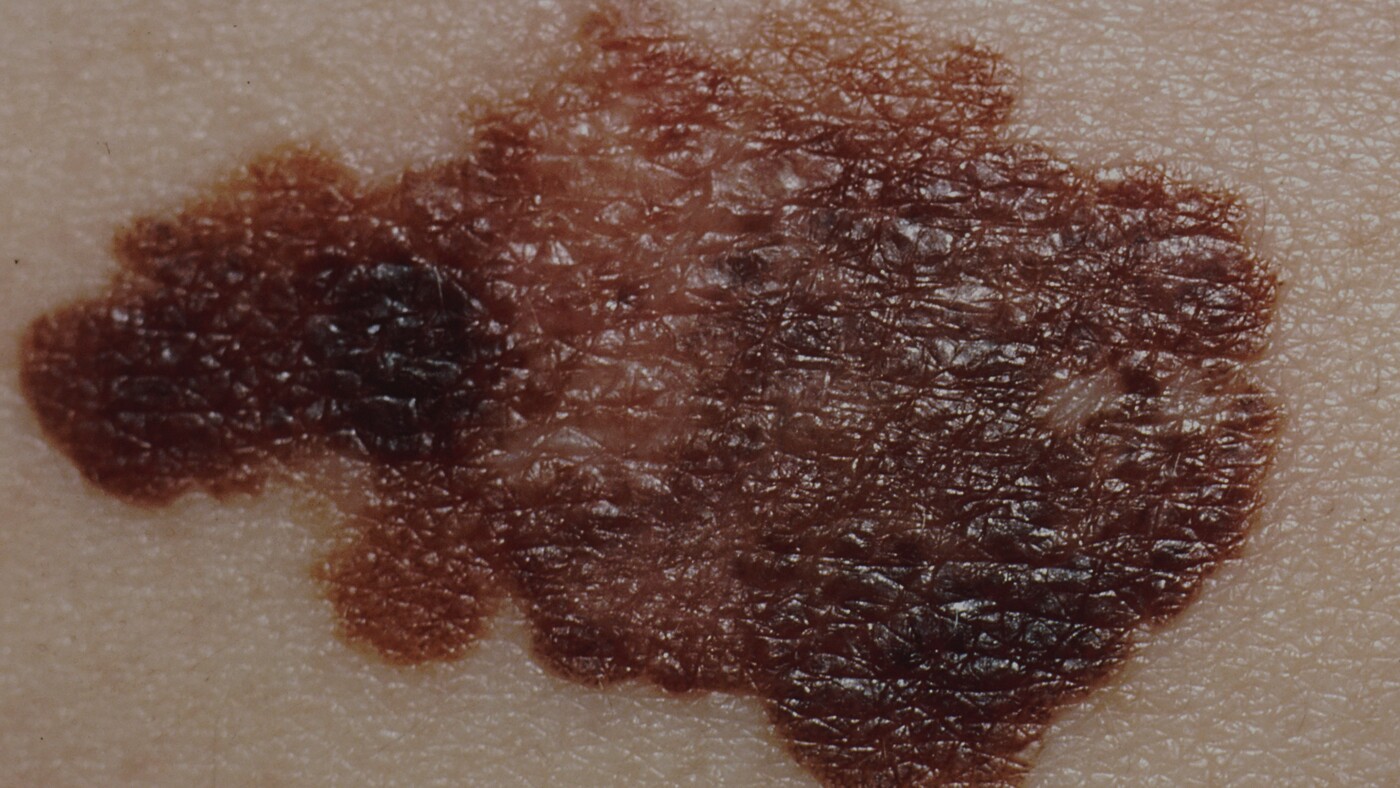
On the morning of August 19, 2026, Moderna shares rose by more than 60 percent following a breakthrough in oncology. The company and its partner, Merck, announced that a personalized mRNA vaccine has successfully completed a Phase 3 clinical trial for patients recovering from melanoma surgery. The trial, designated INTerpath-001, tested the vaccine known as intismeran autogene, or V940. While the comprehensive data set is forthcoming, the study met its primary endpoints for recurrence-free survival and distant metastasis-free survival.1
Melanoma is a aggressive form of cancer caused by the uncontrolled growth of pigment-producing cells, carrying a high risk of recurrence even in early stages. Even after surgical excision, a significant portion of stage III and IV patients face the return of the disease within years, often spreading to distant organs such as the lungs, liver, or bones. The current standard of care is pembrolizumab, marketed as Keytruda, which functions by inhibiting the mechanisms cancer cells use to evade detection by the immune system. While Keytruda is effective, it does not provide sufficient protection for every patient.
- The personalized vaccine intismeran achieved primary endpoints for recurrence-free and distant metastasis-free survival in 1,137 patients.
- This represents the first major Phase 3 success for an mRNA-based cancer therapy tailored to a patient’s specific tumor mutations.
- Previous Phase 2b data indicated a 49 percent reduction in recurrence risk over five years; the Phase 3 results corroborate these findings.
- The treatment is not yet FDA-approved; clinical teams await final overall survival data.
How is the personalized mRNA vaccine produced for individual patients?
The core concept of intismeran is not mass production, but rather a bespoke approach tailored to the individual. Following surgery, the patient’s tumor DNA is sequenced to identify unique mutations, or neoantigens. Up to 34 of these specific mutations are selected and encoded into synthetic mRNA, which is then injected into the muscle. The patient's body reads this mRNA, produces the corresponding antigens, and trains T-cells to identify and destroy those specific cancer cells.1
This methodology differs significantly from COVID-19 mRNA vaccines. While those vaccines targeted a standardized viral protein for a broad population, intismeran is written based on the genetic fingerprint of a single patient’s tumor. Consequently, production time and costs are substantial, as each batch is specific to one individual.
What did the Phase 3 clinical trial demonstrate?
The INTerpath-001 study enrolled 1,137 adults who had undergone complete surgical resection for stage IIB, IIC, III, or IV melanoma and had not received prior systemic treatment. Participants were randomized at a 2-to-1 ratio to receive either intismeran in combination with Keytruda or Keytruda monotherapy. The vaccine was administered in up to nine doses every three weeks, while Keytruda was administered every six weeks for approximately one year.1
Interim analysis revealed that the combination therapy group showed a statistically significant improvement in both recurrence-free survival and distant metastasis-free survival compared to the monotherapy group. Companies have yet to release full hazard ratios, but these data are expected to be presented at an upcoming medical conference, at which point regulatory filings will follow.1
This outcome is a milestone for several reasons. It is the first positive Phase 3 readout for personalized neoantigen therapy and the first successful Phase 3 trial for any mRNA-based cancer treatment. Furthermore, it marks the first time an adjuvant combination has meaningfully improved upon the efficacy of Keytruda alone in resected melanoma.
What insights did the Phase 2b trial provide?
Prior to the Phase 3 success, the KEYNOTE-942 study, a Phase 2b trial, provided the foundational data. This study followed 157 patients over an average period of approximately three years. Published in The Lancet, the findings showed that the combination group experienced a 44 percent reduction in the risk of recurrence or death, and a 65 percent reduction in the risk of distant metastasis.2
A five-year update, presented at the 2026 ASCO congress, confirmed that these benefits were sustained, with a 49 percent reduction in recurrence or death risk and a 59 percent reduction in distant metastasis or death risk.1 The Phase 3 trial has now validated these signals across a much larger, more diverse patient population.
What are the remaining questions regarding this treatment?
As per the trial protocol, overall survival data continue to be monitored. While the Phase 2b trial showed a trend toward improvement in this metric, it was not statistically conclusive. The safety profile appears consistent with previous studies, with no new safety signals reported.1
Practical challenges persist regarding the logistics and pricing of a personalized therapy manufactured for each patient. Merck and Moderna have stated they will continue discussions with regulatory agencies regarding the formal approval process. The companies are currently testing this same platform in nine ongoing Phase 2 and Phase 3 trials for other cancers, including lung, bladder, and kidney cancers.1
Notes and Sources
- Merck & Moderna (2026). "Merck and Moderna Announce Phase 3 INTerpath-001 Trial of Intismeran Autogene Plus KEYTRUDA Met Endpoints of Recurrence-Free Survival and Distant Metastasis-Free Survival in Patients With Completely Resected Stage IIB-IV Melanoma." Press release, August 19, 2026. Clinical trial registration: NCT05933577.
- Weber, J.S., Carlino, M.S., Khattak, A. et al. (2024). "Individualised neoantigen therapy mRNA-4157 (V940) plus pembrolizumab versus pembrolizumab monotherapy in resected melanoma (KEYNOTE-942): a randomised, phase 2b study." The Lancet. DOI: 10.1016/S0140-6736(23)02268-7.
- Moderna & Merck (2024). "3-Year Data For mRNA-4157 (V940) in Combination With KEYTRUDA Demonstrated Sustained Improvement in Recurrence-Free Survival & Distant Metastasis-Free Survival." Press release, June 3, 2024.