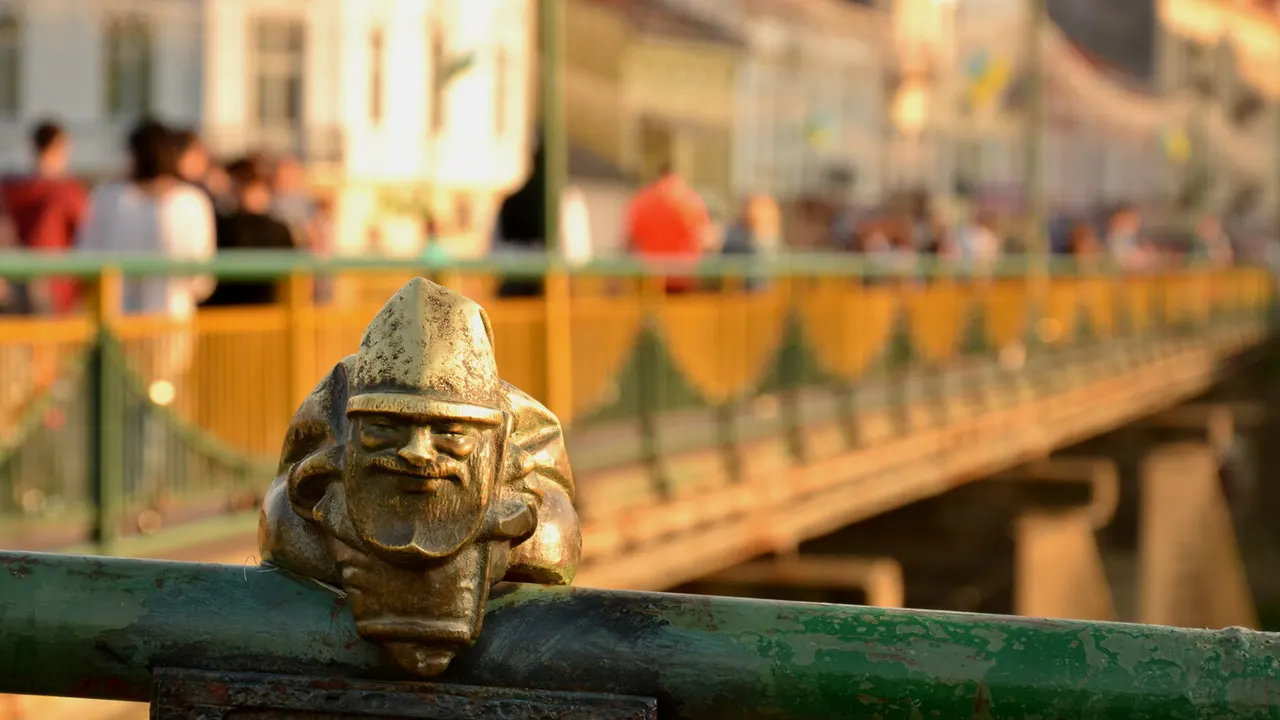
The city of Uzhhorod in Western Ukraine is home to a growing collection of 82 miniature bronze statues that serve as a living record of the region’s history, culture, and legends. What began in December 2010 with a single 16-centimeter figure of Saint Nicholas—known locally as Mykolaichyk—has transformed into a sprawling urban gallery that spans bridge railings, staircases, and streetlamps across the city. By April 24, 2026, the collection reached its 82nd installment with a piece dedicated to the Union of Uzhhorod, placed within the castle courtyard near the Slovakian border.1,2
- The origins of Uzhhorod’s miniature statues and the shift from guerrilla art to official recognition.
- The 1866 Knyahinya meteorite and its commemorative bronze figure.
- Local traditions and the science of why certain statues exhibit polished bronze surfaces.
- The succession of sculptors who have expanded the collection following the founder's move to Budapest.
Why did a sculptor start placing miniature statues without permission?
Mihaylo Kolodko, an Uzhhorod-born sculptor and graduate of the Lviv National Academy of Arts, began placing miniature statues without permission because they offered a cost-effective and legally flexible way to tell grand stories in a post-Soviet landscape.1,3 In a 2018 interview with the BBC, Kolodko explained that casting small figures is cheaper and easier, and their size allows them to be installed as "guerrilla art" without the bureaucratic hurdles of large-scale monuments. These figures are deeply rooted in local history; for instance, a miniature of escape artist Harry Houdini was installed in 2015 because his grandmother reportedly lived in the nearby village of Storozhnytsia.4 While the early works were clandestine, the 2018 installation of a statue for Hungarian composer Ferenc Erkel marked the first time a miniature was placed with official municipal authorization.5
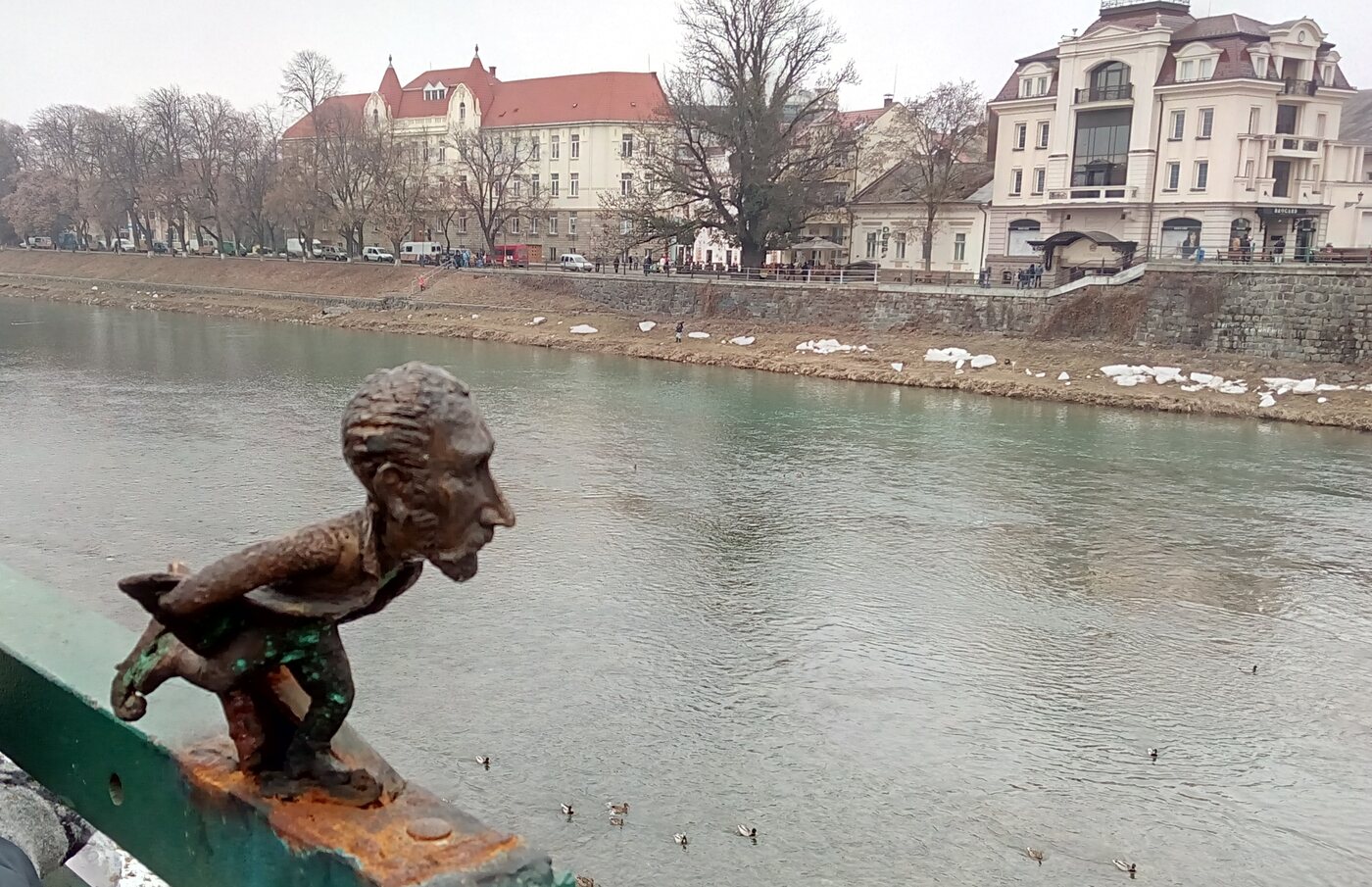
How does the Knyahinya meteorite connect to Uzhhorod’s public art?
The Knyahinya meteorite is commemorated in Uzhhorod through a miniature statue of a peasant named Vasyl Kryvyanik, who discovered the largest fragment of the space rock in 1866.6 On June 9, 1866, a meteorite exploded over the village of Knyahinya, north of Uzhhorod; Kryvyanik later found a 279-kilogram piece buried over two meters deep in a hay field. While that specific fragment is now a centerpiece at the Natural History Museum in Vienna, Uzhhorod honors the event with a bronze figure standing atop a meteorite fragment, accompanied by a symbolic bus stop sign.4,7
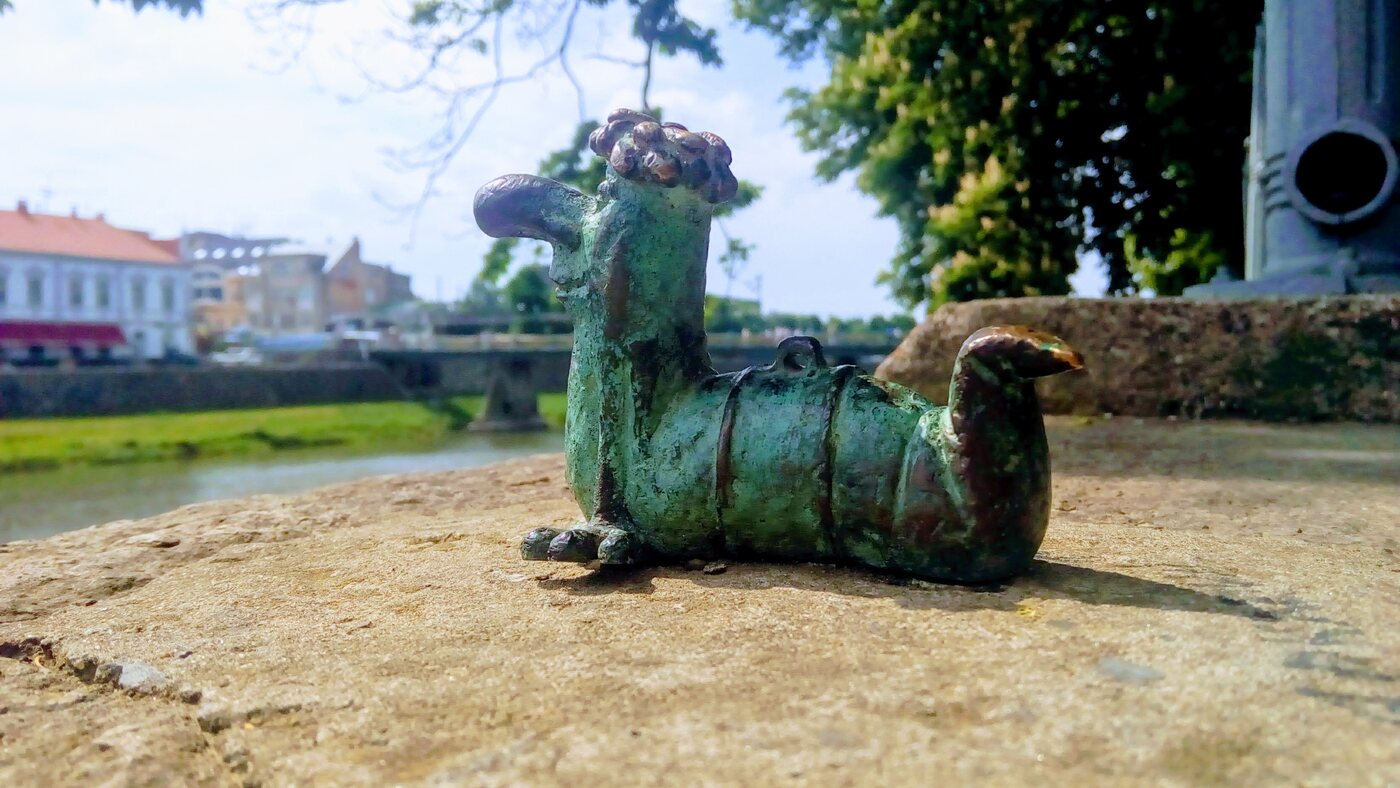
Many of these statues have become tactile landmarks. It is locally believed that rubbing the hat of the Saint Nicholas figure brings luck, while a bronze worm named Kukots, installed near the philharmonic building, is rubbed by fishermen for a bountiful catch.4
The polished appearance of these high-contact areas is a result of the chemistry of bronze corrosion. Outdoor bronze naturally develops a patina of copper sulfate (brochantite) or copper oxide (cuprite) over time. However, as noted in conservation guides from the Getty, frequent handling wears away this corrosion layer to reveal the bright metal underneath.8,9 This is clearly visible on the Saint Nicholas statue, where the most-touched areas appear significantly lighter than the surrounding bronze.
Who maintains the collection after the original sculptor moved?
The Uzhhorod miniature collection is currently maintained and expanded by sculptors Roman Murnyk and Stepan Rusnak following Mihaylo Kolodko's move to Budapest.3,10 While early statues were cast abroad, the 2019 installation of a Transcarpathian "kifli" (a crescent-shaped pastry) was the first to be produced in a local Uzhhorod foundry.4 According to city maps, Murnyk is responsible for 35 of the first 79 statues, surpassing Kolodko's 33. The pace of installation has accelerated, with ten new statues added in 2023 and another ten in 2024.10
Modern additions often reflect contemporary life or specific anniversaries. On January 26, 2026, the 80th statue—depicting a customs officer and his dog—was unveiled on Sobranetska Street at the site of a historic city tax gate.11 The ongoing war has also influenced the collection; a 2022 miniature depicts a professor from Uzhhorod National University teaching his students from a trench.4 Despite their popularity, the statues face risks: several have been stolen or vandalized over the years, including a figure of Peter I that was removed with a grinder in June 2023.12 The newest addition, a bronze church within a travertine arch, commemorates the 380th anniversary of the Union of Uzhhorod.2
Notes and Sources
- "Small and very small: 'guerrilla art' in Transcarpathia," BBC News Ukraine, August 2018.
- "82nd mini-sculpture opened in Uzhhorod: new one dedicated to the Union of Uzhhorod," Sacura News, April 25, 2026.
- "Mihaylo Kolodko," Oles Gonchar Kherson Regional Universal Scientific Library, Art Department Biography; "Mihaylo Kolodko," Ukrainian Wikipedia.
- "Mini-sculptures in Uzhhorod: route, points on the map, photos, description," go-to.rest, installation records (1-64).
- "Mini-sculpture of composer Ferenc Erkel opened in Uzhhorod," RIO News, September 1, 2018.
- "Knyahynya Meteorite," Regional Information Center Carpathians; Meteoritical Bulletin Database no. 12335.
- Naturhistorisches Museum Wien, Hall 5: Meteorites, Knyahinya exhibit.
- H. Kwon and N. Cho, "In-situ non destructive investigation of contemporary outdoor bronze sculptures," Heritage Science, May 28, 2024.
- A. Boulton et al., "Patina," Guidelines for the Technical Examination of Bronze Sculpture, Getty Publications.
- MUSE Travel, Uzhhorod mini-sculpture map (Records 1-79).
- "80th mini-sculpture dedicated to customs officer installed in Uzhhorod," Suspilne Uzhhorod, January 26, 2026.
- "Statue of Peter I installed in 2015 cut down in Uzhhorod," Espreso.Zahid, June 12, 2023.