Governments worldwide are establishing divergent regulatory frameworks for artificial intelligence, with the European Union enforcing strict transparency mandates as of August 2, 2026, while the United States prioritizes the removal of barriers to innovation. These two capitals represent fundamentally different philosophies on how to manage the risks of a technology that is evolving faster than the laws designed to contain it.1
- The EU AI Act categorizes risk into four tiers; prohibitions began in 2025, followed by general-purpose model rules in 2025 and transparency requirements in August 2026.
- Full compliance for high-risk systems was rescheduled to 2027-2028 via the Digital Omnibus to allow for technical standard development.
- The U.S. revoked the Biden-era executive order on AI safety in early 2025, shifting toward a federal policy of minimal regulatory burden.
- Industry-led forums and voluntary pledges provide a baseline for safety but lack the rigor of independent, enforceable audits.
How does the EU AI Act classify and regulate risk?
The European Union Artificial Intelligence Act (Regulation 2024/1689) utilizes a tiered hierarchy to regulate technology based on its potential for harm. Applications deemed to pose "unacceptable risk"—including social scoring, emotion recognition in the workplace, and specific biometric surveillance—have been prohibited since February 2, 2025. For general-purpose models, requirements for documentation and copyright compliance took effect on August 2, 2025. As of August 2, 2026, transparency rules now mandate that chatbots and deepfakes must be clearly disclosed to users as machine-generated content.1
The most stringent regulations target high-risk systems used in recruitment, credit scoring, education, critical infrastructure, and justice. These sectors require rigorous risk assessments, data quality standards, and human oversight. However, the Digital Omnibus (Regulation 2026/1744) adjusted the implementation timeline: independent high-risk systems must comply by December 2, 2027, while AI embedded into products has until August 2, 2028. The European Commission maintains that this shift is a strategic delay to finalize technical standards rather than a retraction of the rules.2
How has the United States shifted its AI policy?
United States AI policy underwent a significant reversal in early 2025, moving away from the centralized safety oversight established during the previous administration. In 2023, the White House secured voluntary safety commitments from major tech firms regarding external testing and watermarking, followed by Executive Order 14110. This order was rescinded on January 23, 2025, by Executive Order 14179, which aimed to eliminate regulatory barriers and reassert American leadership in AI development.3
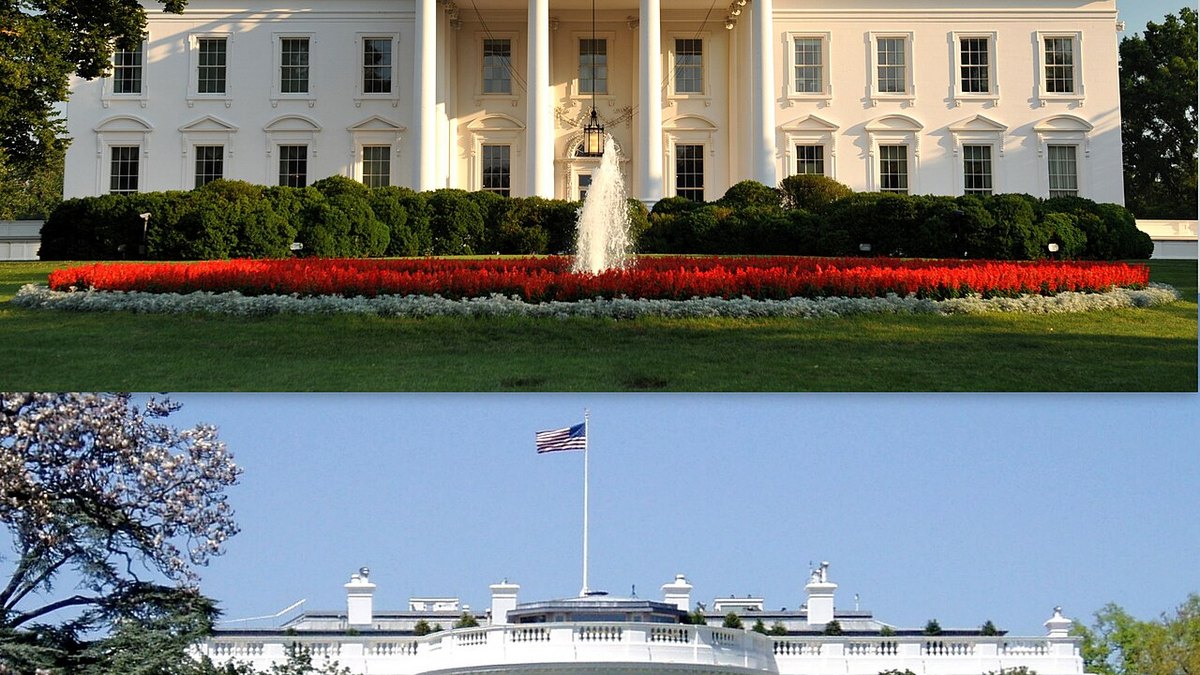
A subsequent national framework order issued in December 2025 introduced mechanisms to challenge state-level AI laws that impose a "disproportionate burden" on the industry. While proponents argue that a unified federal approach prevents a patchwork of conflicting state rules that could stifle startups, critics warn that the lack of a permanent federal law passed by Congress leaves AI governance to the whims of executive orders and judicial interpretations.4
What role do corporate safety forums play in AI governance?
Corporate safety forums, such as the Frontier Model Forum founded by Anthropic, Google, Microsoft, and OpenAI, have emerged to fill the regulatory vacuum. These organizations, later joined by Amazon and Meta, focus on developing safety benchmarks and sharing best practices for large-scale models. During the Seoul Summit, these companies committed to publishing safety frameworks for managing extreme risks, a move seen as an effort to demonstrate self-regulation to global authorities.5
Despite these initiatives, independent analysis suggests that voluntary compliance is inconsistent across the industry. A 2025 study published on arXiv evaluated companies on their adherence to White House safety pledges, finding that founding members of industry forums typically scored higher than later signatories. This indicates that transparency and external auditing remain heavily dependent on individual corporate cultures rather than industry-wide standards. Consequently, the EU’s approach remains more rigid, utilizing the AI Office to oversee general-purpose models and enforcing penalties for non-compliance.6
Where is the balance between innovation and accountability?
The central challenge for regulators is finding the equilibrium between technological speed and public accountability. Overly permissive environments risk allowing biased recruitment software or flawed credit algorithms to proliferate as "product features." Conversely, premature or hyper-rigid regulations could stifle small laboratories and open-source development before international standards are even established. The decision to delay the high-risk compliance calendar in Europe reflects an acknowledgment of this ongoing tension.
The efficacy of AI governance ultimately depends on whether claims of safety and human oversight are verifiable by third parties. While governments write the rules and companies train the models, true balance is found in the ability to contest and correct algorithmic decisions. The current global timeline emphasizes this: transparency requirements are now active as of August 2026, while the more complex mandates for high-risk systems in the EU will phase in through late 2027 and 2028.
Notes and Sources
- European Commission, "AI Act" policy page (updated August 3, 2026): Regulation (EU) 2024/1689; entry into force August 1, 2024.
- AI Omnibus / Digital Omnibus: Regulation (EU) 2026/1744, entry into force July 27, 2026. Deadlines for Annex III (Dec 2, 2027) and Annex I (Aug 2, 2028).
- Biden EO 14110 (Oct 30, 2023) and Trump EO 14179 (Jan 23, 2025), "Removing Barriers to American Leadership in Artificial Intelligence".
- White House (Dec 11, 2025), "Ensuring a National Policy Framework for Artificial Intelligence"; Analysis by Baker Botts (Jan 2026).
- Frontier Model Forum (July 26, 2023) and AI Seoul Summit Frontier AI Safety Commitments (May 2024).
- Longpre et al. (2025), "Do AI Companies Make Good on Voluntary Commitments to the White House?", arXiv:2508.08345.