On October 17, 2015, a ten-round super welterweight bout took place on the undercard at the EagleBank Arena in Virginia. Prichard Colón was only 23 years old, boasting an undefeated record of sixteen wins, thirteen by knockout. His opponent was Terrel Williams, who entered the ring with a 14-0 record. The match was a late addition to the card following the withdrawal of Andre Dirrell. Only a month prior, Colón had defeated the experienced Vivian Harris in Toronto. This was his fifth fight of the year and his third in just three months.1
Born in Florida, Colón moved to Puerto Rico at age ten. He was a decorated amateur with 170 victories and a gold medal at the 2010 Pan American Youth Championships. Known as "Digget," he maintained a grueling professional pace: five fights in 2013 and seven in 2014.2
Colón walked to his dressing room with his mother after the fight. Once inside, he vomited and collapsed. An ambulance rushed him to Inova Fairfax Hospital. A computed tomography scan revealed a 1.5-centimeter subdural hematoma on the left side of his brain, causing a 1.2-centimeter midline shift.3
- A 23-year-old undefeated boxer finished his match on his feet but collapsed in the dressing room shortly after.
- Imaging revealed a 1.5-centimeter blood clot and a 1.2-centimeter brain shift.
- Subdural hematomas involving the tearing of bridging veins remain a leading cause of boxing-related fatalities.
- Walking out of the ring does not guarantee that a brain hemorrhage has ceased.
What occurred during the match?
Colón led on the scorecards in the opening rounds. However, from the first round, he repeatedly signaled to referee Joe Cooper, complaining about blows to the back of his head. These strikes, known as "rabbit punches," are illegal in boxing. Named for the method hunters use to kill rabbits by striking the base of the skull, these blows target the spinal cord and respiratory centers.4
Cooper dismissed the complaints, reportedly telling Colón to handle the situation himself. Colón lost two points for low blows, and Williams was eventually penalized for a rabbit punch. A right hand to the back of the head in the seventh round stunned Colón. In the ninth round, he suffered the first knockdown of his career. Despite complaining of dizziness in his corner, ring physician Richard Ashby allowed him to continue.5
When the ninth round ended, his corner removed his gloves, believing the fight had been stopped by disqualification. The team later stated that Colón appeared incoherent. He never returned for a tenth round, and his condition deteriorated rapidly in the dressing room.
Why does walking out of the ring not mean the brain is safe?
Acute subdural hematoma is the most common cause of death in boxing, occurring when blood accumulates between the dura mater and the arachnoid membrane. A 2008 study in the Journal of Trauma highlighted that boxing-related hematomas differ from those caused by accidental falls or vehicle collisions. Boxers are typically younger and often exhibit a "lucid interval," where they remain conscious, talking and walking, before a sudden, rapid decline. In these cases, there is often no bruising of the brain tissue itself; rather, the bleeding originates from the rupture of bridging veins.6
Bridging veins are delicate vessels that anchor the brain to the dura mater. When the head undergoes rapid rotation or deceleration, the brain shifts within the skull, stretching and tearing these vessels. As the clot grows, it exerts pressure on the brain, measured by the midline shift. In Colón's case, this shift was 1.2 centimeters. The study identified the location of the hemorrhage and the magnitude of the midline shift as the two most critical predictors of a boxer's prognosis.
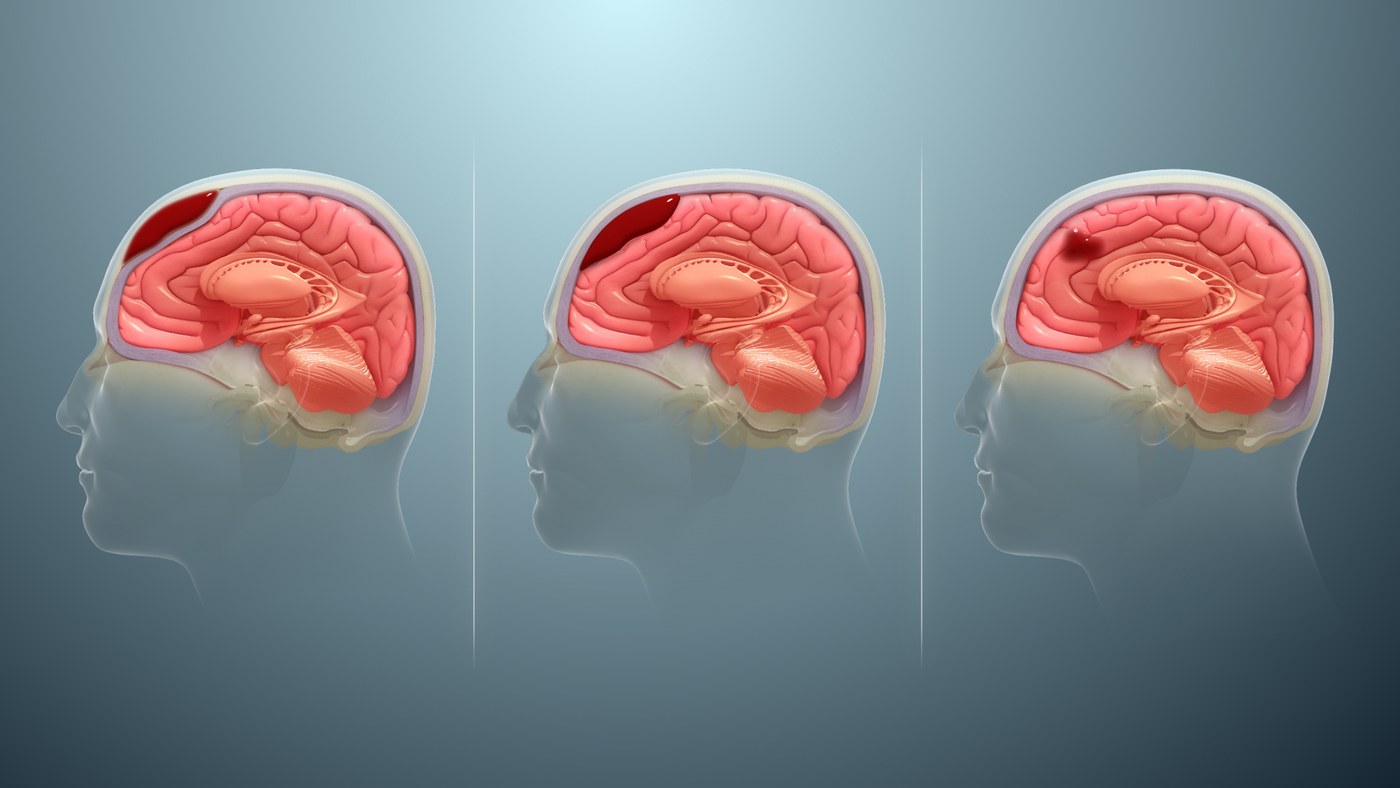
A 1987 review by Guterman and Smith established that vascular damage in boxing primarily results from shear stress. A punch forces the head to rotate while the brain lags behind, stretching the bridging veins. The subsequent impact of the head against the canvas creates an additional deceleration force. While imaging cannot pinpoint which specific blow caused the rupture, both mechanisms likely occurred that night.7
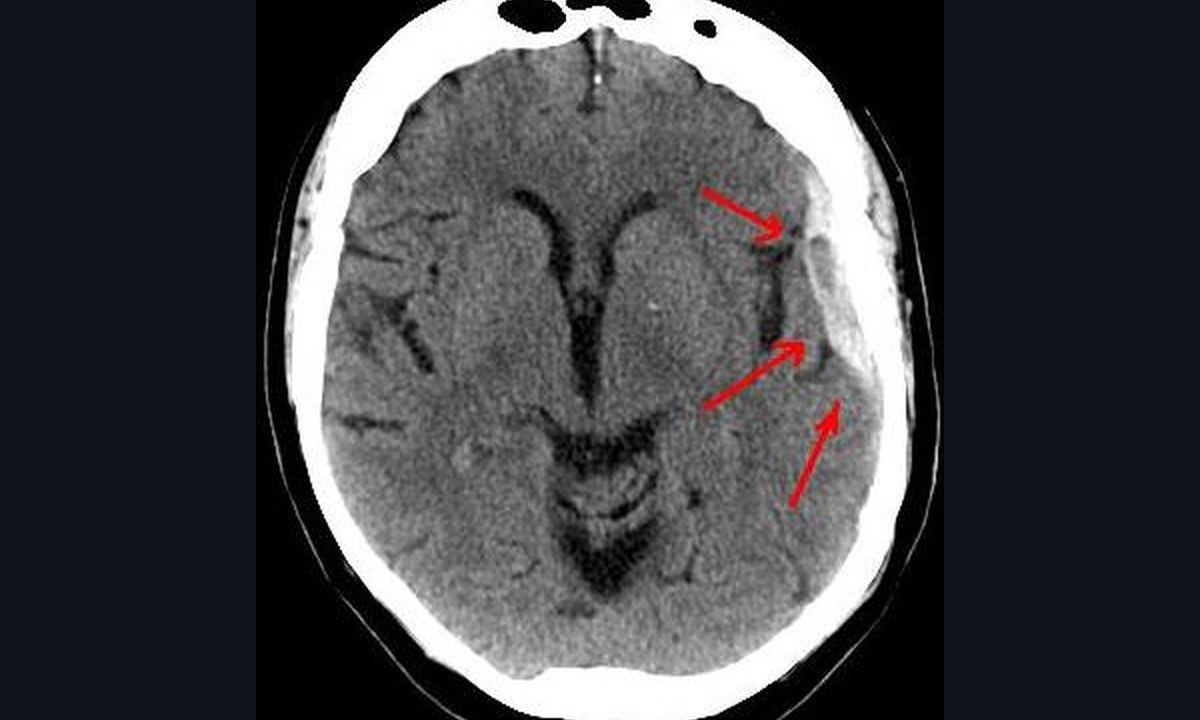
The "lucid interval" explains why Colón was able to walk to his dressing room. A 1996 Japanese series classifying hematomas in professional boxers identified a type that progresses between ten minutes and an hour. In these instances, the clot is thicker, the shift is more pronounced, and surgery is almost always mandatory. Outcomes range from survival to persistent vegetative states or death. This series noted that such hematomas occurred most frequently in ten-round matches, the exact length scheduled for Colón's fight.8
Why is the back of the head a specific rule violation?
The prohibition against the "rabbit punch" is not incidental. The base of the skull sits adjacent to the point where the spinal cord connects to the brainstem. The brainstem controls vital functions including heart rhythm, breathing, and wakefulness. A blow here can damage the cervical vertebrae, the spinal cord, and the medulla oblongata, potentially forcing lower brain structures toward the foramen magnum. Rotational trauma occurring simultaneously can tear the bridging veins. Thus, a single illegal strike can cause both immediate neurological catastrophe and a delayed, lethal hemorrhage.4
Colón signaled to the referee multiple times, but the match was not stopped. The ringside physician mistakenly interpreted his dizziness as transient. In boxing, a "dazed" state is dangerous because it slows reaction times, relaxes neck muscles, and leaves the head more vulnerable to further rotation. The lucid interval serves as a trap; because the athlete is speaking and walking, onlookers assume the danger has passed, unaware that the internal bleeding continues unabated.
What happened after 221 days?
Surgeons performed an emergency hemicraniectomy, removing a portion of the skull to drain the clot and accommodate the swelling brain. Colón remained in a coma for 221 days. He was moved from Inova to the Shepherd Center in Atlanta and eventually to his mother’s home in Orlando. He could not speak or walk. By 2017, he was diagnosed as being in a permanent vegetative state. The World Boxing Council (WBC) named him an honorary world champion and, in 2016, introduced the "Prichard Colón Rule," which mandates zero tolerance for rabbit punches, with warnings, point deductions, or disqualifications enforced immediately.9 On August 13, 2026, his father announced that his 33-year-old son had passed away.10
Colón's family filed a $50 million lawsuit against the doctors and organizers in 2017. As of 2025, the case had not yet reached a verdict. Williams has publicly denied any intent to cause harm and stated he has prayed for Colón. While the question of intent remains a matter for the courts, the medical reality is clear: walking out of the ring does not mean that intracranial bleeding has stopped.
Notes and Sources
- BoxRec and PBC fight card: Colón–Williams, October 17, 2015, EagleBank Arena, Fairfax. Reuters, October 18, 2015; Premier Boxing Champions match summary.
- Amateur record and Puerto Rico: 170–15, 2010 Pan American Youth gold medalist. Wikipedia "Prichard Colón" (citing PRBoxea reports).
- Inova Fairfax: left subdural hematoma 1.5 cm, midline shift 1.2 cm; emergency hemicraniectomy. Washington Post, October 17, 2015.
- Rabbit punch: strikes to the nape and base of the skull; prohibited in all major combat sports. El-Gazzar, H. A. (2023), "Dangerous rabbit punches in boxing".
- Weinbaum, W. (2017). "Shattered dreams", ESPN. Documentation regarding referee Joe Cooper and physician Richard Ashby.
- Kawai, N. et al. (2008). "Acute Subdural Hematoma Because of Boxing", Journal of Trauma, 64. DOI: 10.1097/TA.0b013e3181715dba.
- Guterman, P. & Smith, R. W. (1987). "Neurological sequelae of boxing", Sports Medicine, 4(3). PMID: 3296090.
- Nishimura, K. et al. (1996). "Acute subdural hematoma caused by professional boxing", Japanese series. Europe PMC: 8914149.
- WBC "Prichard Colón Rule" (2016): Zero tolerance for rabbit punches. TUDN/Notimex reports; WBC 2026 tribute statement.
- Death: August 13, 2026, age 33. Announcement by Richard Colón. BBC Sport; The Athletic / NYT, August 14, 2026. Lawsuit: Weinbaum, ESPN, May 3, 2017.