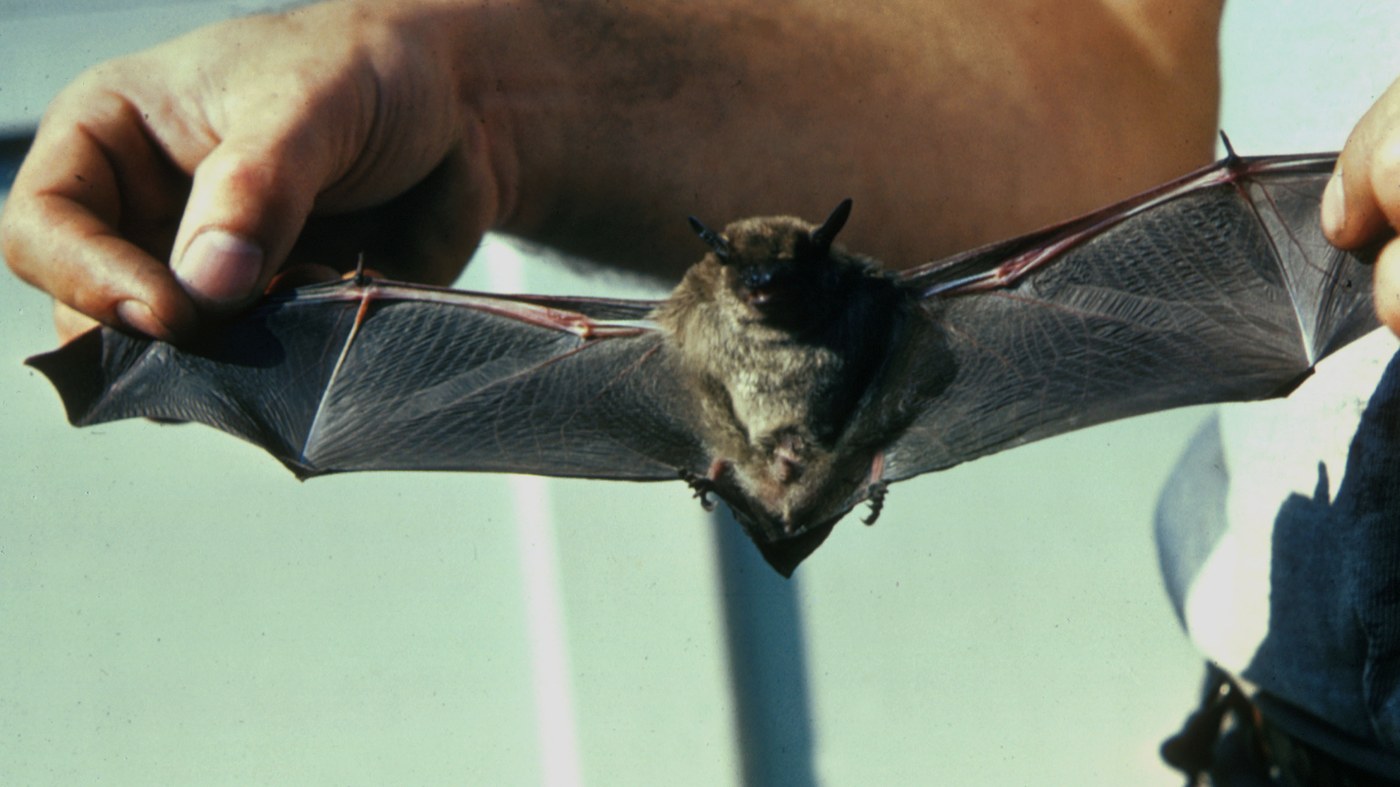
On August 26, 2026, Nature published a comprehensive genomics package shedding light on why a mouse-sized bat can live for decades. The title is straightforward: Insights into longevity and virus-driven adaptation from Myotis bat genomes. Co-led by Juan "Manny" Vazquez from Penn State and Elise Lauterbur from the University of Vermont, the study brings together near-complete genomes of eight North American Myotis species along with primary cell cultures derived from wing tissue.1
Biology operates on a rough rule: among mammals, larger animals live longer. Bats defy this curve. The little brown bat (Myotis lucifugus) is as light as a field vole, yet according to a Penn State press release, it can live up to 34 years in the wild. A mouse of the same size is limited to a lifespan measured in months. UC Berkeley summaries also note that a banded Brandt's myotis (M. brandtii) was recaptured approximately 50 years later. This is not about the myth of the flying mouse, but rather a measured and stark longevity gap.2
- Lifespans within the Myotis genus range from 7 years to over 40 years, while body size remains nearly identical.
- Near-complete genomes of eight closely related species reveal an adaptation pattern against DNA and RNA viruses that differs from other mammals.
- In the longest-lived North American sample, damaged cells are not repaired; they are cleared out.
- Longevity and immunity genes cluster within the same biological pathways rather than appearing at random.
How do closely related bat species achieve a sixfold difference in lifespan despite having the same skeleton?
Myotis is one of the most populous genera among bats, having diverged roughly 33 million years ago and encompassing over 139 species across six continents. While shape and size remain closely matched, their lifespan ranges wildly. As the Berkeley team notes, the black myotis (M. nigricans) of Central and South America lives for about 7 years, whereas other members of the same genus exceed decades of life. Vazquez describes this as an internal disparity as absurd as a Neanderthal living nine times longer than a modern human. The absurdity lies strictly in the numbers themselves.3
What did the genomic analysis reveal about viral adaptation in Myotis bats?
The research team obtained samples from the wing tissue of bats captured and safely released during nighttime mist-netting. They assembled some of the most detailed Myotis genomes to date for eight closely related species and subsequently scanned for virus-interacting proteins (VIPs), which are host proteins utilized by viruses to bind, replicate, or suppress.
Their findings diverge from the typical patterns observed in humans and rodents. While primates and many large mammals display signs of rapid selection against fast-changing RNA viruses like the influenza family, Myotis and other bats show much more pronounced positive selection in proteins interacting with DNA viruses. On the RNA front, the team highlighted copy number variations, meaning multiple copies of the same gene. A central example is PKR (gene name EIF2AK2), an antiviral stress factor found in all mammals. Some Myotis lineages carry one, two, or even three copies of this gene, with these copies circulating among species as an ancient polymorphism.1
Why do long-lived bats clear damaged cells instead of repairing them?
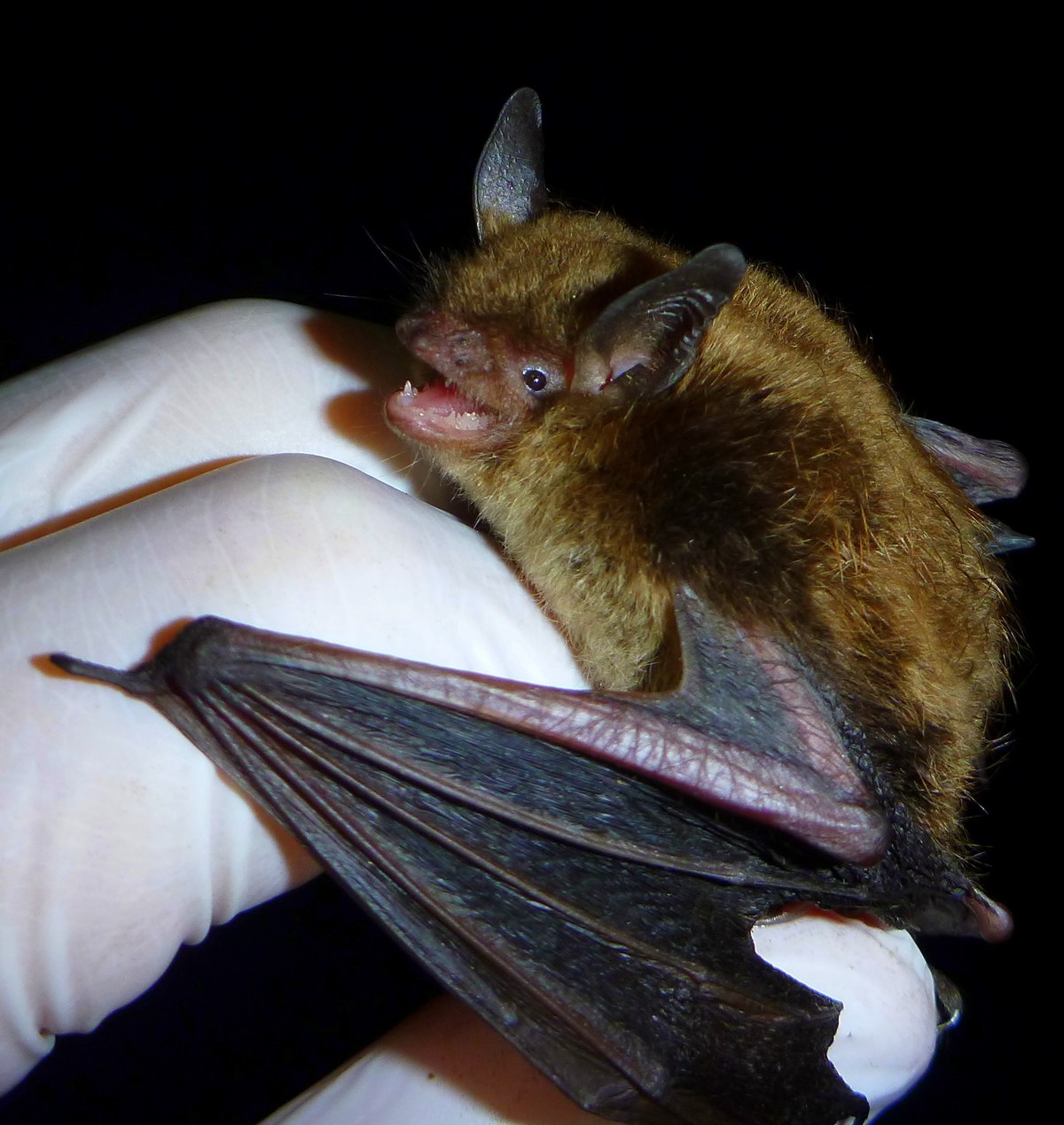
Genomics alone does not finish the story. Vazquez introduced DNA-damaging toxins to cells in culture, expecting the standard biological response of activating repair genes. In cells from the longest-lived North American sample, M. lucifugus, high doses produced the exact opposite reaction. Instead of the repair pathway dominating, genes promoting programmed cell death were upregulated. Vazquez summarizes the strategy simply in a Berkeley interview: if the ship cannot be saved, eliminate the damaged parts. A similar strategy occurs in elephants, and comparable clearance tendencies are documented in other long-lived species such as the naked mole rat and the bowhead whale.3

Cancer risk typically increases with both body mass and lifespan, meaning a long-lived small animal defies this mathematical equation twice. The study demonstrates that as lifespan increases across the Myotis phylogenetic tree, positive selection along cancer-suppression pathways also strengthens. This indicates that immunity and aging genes do not sit on separate shelves. Vazquez and Lauterbur note that a large majority of the genes they associated with lifespan also appeared on the virus-interaction list, representing a shared selective pressure rather than a random overlap.
What are the primary limitations of these longevity findings?
This research does not provide a list of pharmaceutical drugs capable of extending human lifespans. The data relies on genomes from eight species, cell lines derived from wing tissue, and statistical selection models, meaning organ aging across a living animal was not directly measured. Testing PKR copies in a laboratory setting using a DNA virus from the poxvirus family supports the underlying mechanism, but there is no direct clinical translation. Furthermore, the ability of bats to carry high viral loads involves separate ecological factors, and the study's objective is not to establish medical treatment protocols.
The core takeaway for readers is precise: the Nature article published on August 26, 2026, links lifespans of up to 34 years in the mouse-sized Myotis lucifugus to an immunity-cancer intersection that clears damaged cells rather than repairing them.
Notes and Sources
- Vazquez, J.M., Lauterbur, M.E., Sudmant, P.H., Etienne, L., Enard, D. et al. (2026). "Insights into longevity and virus-driven adaptation from Myotis bat genomes", Nature. DOI: 10.1038/s41586-026-10932-7. Published August 26, 2026. Eight Myotis genomes, PKR (EIF2AK2) copy number, DNA/RNA VIP adaptation, M. lucifugus DNA damage response. ↩
- Yu, C. / Penn State University (August 26, 2026). "The secret to bats' longevity linked to immune response to viruses and cancer". Lifespan up to 34 years for M. lucifugus; field vole comparison; prevent, repair, clear triad. ↩
- Anwar, Y. / UC Berkeley News (August 26, 2026). "Clues to longevity may reside in the genomes of long-lived bats". Brandt's myotis banding record (~50 years), M. nigricans ~7 years, cell culture toxin response, elephant-like kill-if-unsalvageable strategy. ↩
This article is for informational purposes only and does not constitute medical advice. Contact with bats, wildlife, and zoonotic risks involve separate public health considerations, and this text contains no treatment or supplement recommendations.