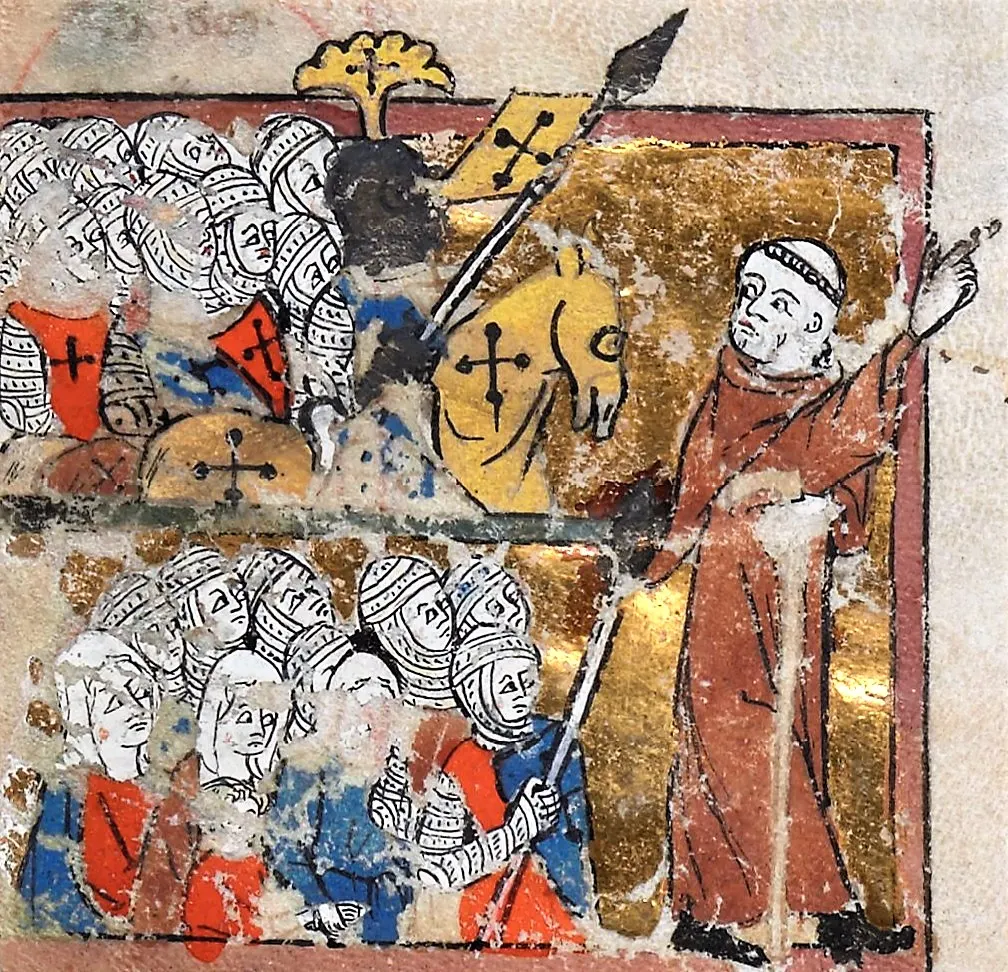
On November 27, 1095, Pope Urban II concluded the Council of Clermont, a pivotal synod of ecclesiastics and laymen held in Auvergne. In a climactic address, the Pope issued a formal call for Western Christians to embark on an armed pilgrimage to liberate Jerusalem and provide military aid to the Byzantine Empire. This momentous declaration marked the formal initiation of the First Crusade, setting in motion a series of religious conflicts that would dominate the medieval era.
What forces drove the Pope to call for a holy war?
The call for the First Crusade was prompted by an urgent request from Byzantine Emperor Alexios I Komnenos, who sought military support to counter the encroaching Seljuk-led Turks. By the 11th century, the Byzantine Empire faced an existential threat, and pilgrimages from the West were increasingly imperiled by the practices of Seljuk rulers in the Holy Land. Pope Urban II, already motivated by the Gregorian Reform movement and the desire to assert papal authority, recognized this crisis as an opportunity to unify the warring factions of the European nobility under a single Christian banner.
In the century leading up to the First Crusade, approximately two-thirds of the land once held by Christians had been conquered by Muslim forces, significantly altering the religious map of the Mediterranean.
The social climate of 11th-century Europe also played a decisive role. As agricultural innovations led to a population boom, a burgeoning warrior caste—trained in the arts of feudal combat—often turned their violence inward. The papacy, seeking to mitigate this internal instability, promoted the idea that violence could be sanctified if used in service of the Church, particularly for the recovery of lost territories. This concept of holy war, rooted in the teachings of Augustine of Hippo, was further refined by theologians like Anselm of Lucca, who argued that service in such a cause could lead to the remission of sins.

Who answered the call to arms?
The papal appeal received an enthusiastic response across all social strata of Western Europe. The first to answer were the common people, led by the French priest Peter the Hermit, in what became known as the People's Crusade. This poorly organized contingent traveled through Germany, engaging in tragic anti-Jewish violence in the Rhineland before eventually suffering total annihilation at the hands of Seljuk forces under Kilij Arslan I at the Battle of Civetot in 1096.
Following the failure of the commoners, the more structured Princes' Crusade gathered a large feudal host of approximately 100,000, including non-combatants. This noble coalition featured prominent leaders such as Raymond IV of Toulouse, Godfrey of Bouillon, Bohemond of Taranto, and Robert II of Flanders. These leaders arrived in Constantinople between late 1096 and early 1097, prepared to engage in a sustained military campaign to reach Jerusalem.

How did the crusaders achieve their military objectives?
The Crusader forces demonstrated unexpected effectiveness once they reached Anatolia. Utilizing a mix of Frankish shock tactics and support from the Byzantine navy, the Crusaders achieved a significant victory during the Siege of Nicaea in June 1097. This success was followed by a tactical triumph at the Battle of Dorylaeum against Turkish mounted archers. Despite the hardships of the terrain, the army marched forward, capturing the city of Antioch in June 1098 after a grueling siege.
The ultimate goal was reached in June 1099, when the crusader armies arrived at Jerusalem, which was then under the control of the Fatimids. The Siege of Jerusalem culminated on July 15, 1099, when the city was stormed and captured. The subsequent massacre of the city’s residents stood as a brutal testament to the fervor of the campaign. Shortly thereafter, the Crusaders repulsed a Fatimid counterattack at the Battle of Ascalon, effectively bringing the First Crusade to a close.

What were the enduring consequences of the movement?
The legacy of the First Crusade was defined by the establishment of four Crusader states: the Kingdom of Jerusalem, the County of Edessa, the Principality of Antioch, and the County of Tripoli. These territories became the focal points for continued, albeit dwindling, Christian presence in the region for nearly two centuries. The Crusades fundamentally altered the relations between the Latin Church and the Eastern Orthodox Church, already strained by the 1054 Great Schism.
While the Crusades eventually concluded with the loss of the final stronghold at Acre in 1291, the movement had already reshaped Western European society, accelerating trade and introducing new intellectual and cultural exchanges between the East and the West. The ideological framework established by Urban II at Clermont proved to be one of the most durable and divisive policies in the history of the Catholic Church, shaping the relationship between Christendom and the Islamic world for generations to come.

The First Crusade was not an isolated event but a culmination of centuries of shifting power dynamics in the Mediterranean, including the early stages of the Reconquista in the Iberian Peninsula.
Despite the significant presence of noble armies, the initial wave of the movement, the People's Crusade, consisted primarily of poor, ill-equipped volunteers who were devastated in their first major engagement.
Pope Urban II, a native of Châtillon, was formerly known as Otho de Lagery before ascending to the papacy and igniting the era of the Crusades.
Watch: First Crusade, 1095-1099 CE
From the Thersites the Historian channel.
Sources and further reading: Wikipedia — First Crusade, Pope Urban II, Council of Clermont (CC BY-SA). Images: Wikimedia Commons.