On November 26, 1922, the archaeologist Howard Carter and his patron, George Herbert, the 5th Earl of Carnarvon, broke through the sealed entrance of a tomb in Egypt’s Valley of the Kings. This moment marked the first time human eyes had gazed upon the burial chambers of the 18th Dynasty pharaoh Tutankhamun in more than three millennia, revealing a tomb that had remained remarkably intact despite two ancient robberies. The discovery, officially designated as KV62, stands as the most famous archaeological find in history, offering a rare window into the material culture and funerary practices of ancient Egyptian royalty.
How did Carter and Carnarvon find the hidden entrance?
Howard Carter and the Earl of Carnarvon spent years meticulously clearing the valley floor of debris down to the bedrock. Their search was guided by previous discoveries in the area, specifically pits containing objects bearing the name of Tutankhamun that had led earlier excavators like Theodore M. Davis to incorrectly conclude they were close to the burial site. The breakthrough began on November 4, 1922, when the team uncovered a single step at the top of an entrance staircase. After weeks of careful excavation, Howard Carter and Lord Carnarvon finally reached the antechamber on November 26, finding it filled with a dense, breathtaking array of furniture, clothing, jewelry, and coffins.
Why had this royal tomb remained undiscovered for so long?
The tomb of Tutankhamun survived the centuries because of its low position, which allowed it to be hidden by debris from both flash floods and the later construction of other tombs. While other pharaonic burials in the Valley of the Kings were stripped of their valuables during the Third Intermediate Period, the entrance to KV62 was buried under layers of alluvium and later by the debris mounds and worker huts associated with the cutting of the tomb of Ramesses VI. This accidental preservation meant that while the tomb had been entered twice by robbers in the immediate aftermath of the burial, the mummy and the vast majority of the funerary items remained untouched.

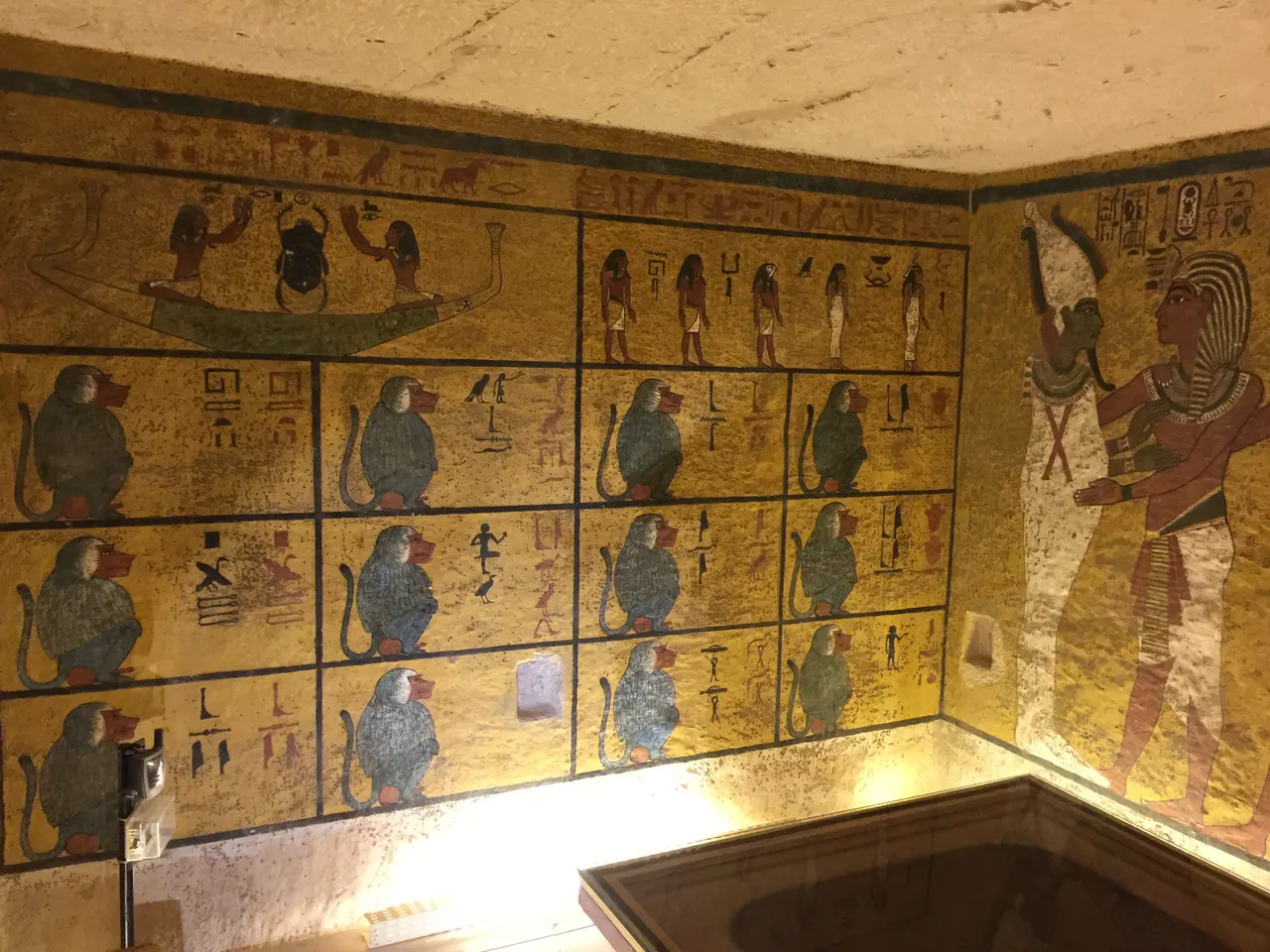
The tomb of Tutankhamun consists of only four chambers and an entrance staircase, likely originating as a non-royal tomb that was hastily adapted for the pharaoh following his premature death around 1323 BC.
What did the tomb reveal about the life of Tutankhamun?
The discovery of the burial goods provided limited historical evidence regarding the reign of Tutankhamun and the turbulent Amarna Period that preceded it, but the contents revealed much about his restoration of traditional Egyptian religion. After succeeding the radical pharaoh Akhenaten, who had championed the worship of the deity Aten, Tutankhamun restored the traditional pantheon and changed his own name from Tutankhaten to honor the god Amun. Despite the historical debates surrounding his political life, the tomb became most famous for its spectacular material wealth, including the iconic golden funerary mask that remains one of the world's best-known works of art.
Recording the treasures within the tomb proved to be a task of unprecedented scale, requiring ten full digging seasons. Howard Carter was supported by a dedicated team, including chemist Alfred Lucas, who was instrumental in the conservation of delicate items, and photographer Harry Burton, who documented every artifact in situ. The team of four foremen—Ahmed Gerigar, Gad Hassan, Hussein Abu Awad, and Hussein Ahmed Said—also played a vital role in the long process of emptying the densely packed chambers.

The media frenzy that followed the announcement of the find was dubbed "Tutmania," creating a worldwide fascination with the young pharaoh known as "King Tut." This global interest sparked a lasting fad for ancient Egyptian-inspired motifs in Western design and architecture. The sheer quantity and quality of the burial goods transformed Tutankhamun from an obscure, short-reigning king into the most recognizable figure of ancient Egypt.
Today, the legacy of the tomb continues to evolve as archaeologists and conservators work to protect the site from environmental damage. Flooding and the pressure of mass tourism have necessitated significant conservation efforts, including the construction of a nearby replica of the burial chamber to preserve the original site. While most of the artifacts have been moved to the Grand Egyptian Museum in Giza, the tomb itself remains a place of profound historical gravity.

Did you know that Tutankhamun’s tomb was likely originally built for his advisor, Ay, who became pharaoh after Tutankhamun's death?
Did you know that the entrance to the tomb was hidden for centuries by the workers' huts built for those excavating the nearby tomb of Ramesses VI?

Watch: Tutankhamun's Tomb: The Moment Howard Carter Found The Steps Into The Tomb | Odyssey
From the Odyssey - Ancient History Documentaries channel.
Sources and further reading: Wikipedia — Tomb of Tutankhamun, Howard Carter, George Herbert, 5th Earl of Carnarvon (CC BY-SA). Images: Wikimedia Commons.