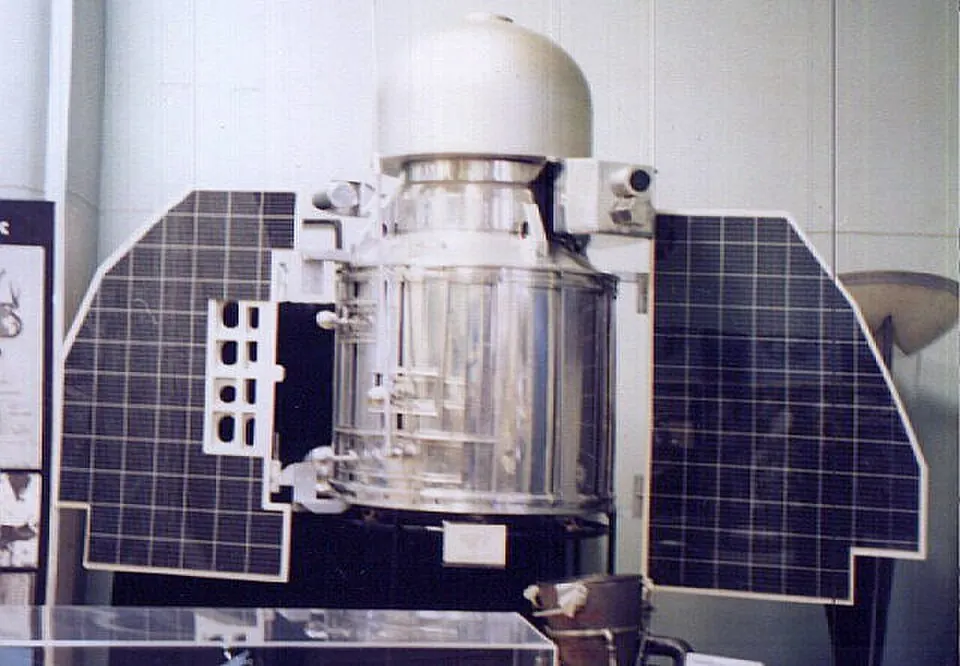
On November 27, 1971, the Soviet Union achieved a landmark feat in interplanetary exploration when the Mars 2 orbiter successfully deployed a descent module that reached the surface of Mars. While the probe malfunctioned during its landing sequence and ultimately crashed, it solidified the Soviet space program's position in history as the first nation to place a human-made object onto Martian soil. This mission was part of an ambitious broader Soviet effort to study the fourth planet from the Sun through a series of complex orbiters and landers.
What was the scope of the Soviet Mars program?
The Soviet Mars program consisted of a series of uncrewed spacecraft launched between 1960 and 1973. These missions were designed to explore the enigmatic Red Planet, utilizing a combination of flyby probes, orbiters, and landers to gather data. The program served as a vital component of the Soviet Union's claim to superpower status during the intense competition of the Space Race. Unlike the centralized structure of NASA in the United States, the Soviet space program operated through a complex web of competing design bureaus led by influential figures such as Korolev, Kerimov, Keldysh, Yangel, Glushko, Chelomey, Makeyev, Chertok, and Reshetnev, all operating under the Ministry of General Machine-Building.

The Mars 2 descent module reached the surface of Mars on November 27, 1971, marking the first time a human-made object physically impacted the Martian landscape.
Why was Mars such a difficult target for engineers?
Mars presented an immense challenge due to its harsh, desert-like environment and the extreme distance involved in communication and navigation. Mars is a rocky planet with an atmosphere so tenuous that its surface pressure is only about six-thousandths of Earth's average. The environment is further complicated by dramatic temperature fluctuations, ranging from -153 to 20 degrees Celsius, and intense cosmic radiation. For the engineers of the Soviet space program, landing a probe meant accounting for surface gravity roughly one-third that of Earth's and a surface area comparable to all of Earth's dry land combined.

What defined the environment of the destination?
Mars is distinguished by its orange-red appearance, which has long captivated human imagination. While the planet lacks bodies of liquid surface water, it retains moisture in the form of ground-based permafrost, polar ice caps, fog, frost, and thin cirrus clouds. The Martian atmosphere is primarily composed of carbon dioxide, offering little protection for the sensitive electronics contained within early space probes. Navigating these atmospheric conditions required a level of precision that remained at the very edge of technological possibility in 1971.

The descent module of Mars 2 was tasked with traversing this atmosphere to reach the surface. When the probe encountered the planet, the hardware malfunctioned, leading to a catastrophic impact rather than a controlled landing. Despite the crash, the mission proved that humanity possessed the capability to reach and influence the environment of another world. The impact cemented the Soviet Union's legacy as a pioneer in deep-space exploration, demonstrating that their machinery could successfully travel the millions of miles between our home world and its celestial neighbor.

Reflecting on the mission today, the Mars 2 descent module stands as a testament to the persistent ambition of the Soviet space program. While the technology was still in its infancy, the effort pushed the boundaries of what was known about the Martian environment. The program remains a historical pillar, highlighting how the internal competition between design bureaus under the Ministry of General Machine-Building drove rapid, albeit risky, innovation in the face of the unknown.
Did you know that Mars is approximately half the diameter of Earth, yet it features a surface area roughly equal to all of Earth's combined landmass?
Did you know that the Soviet space program was active from 1951 until the dissolution of the Soviet Union in 1991?
Watch: M71 - Маrs 2 , Mars 3 1971 (ENGLISH DUB)
From the MOONFIGHT! channel.
Sources and further reading: Wikipedia — Soviet Mars program, Soviet space program, Mars (CC BY-SA). Images: Wikimedia Commons.