On November 25, 1915, Albert Einstein presented the final form of the Einstein field equations (EFE) to the Prussian Academy of Sciences in Berlin. This event marked the culmination of Einstein’s development of the general theory of relativity, a new framework for understanding gravitation as the warping of spacetime rather than a mysterious force. By revealing the mathematical relationship between the geometry of the universe and the distribution of matter and energy, Einstein fundamentally reshaped modern physics and paved the way for the study of black holes, the Big Bang, and the expanding universe.
Before this cold November Thursday in Berlin, the world relied on Sir Isaac Newton’s 17th-century laws to describe the motion of the heavens. Newton saw gravity as an invisible force acting instantaneously across a distance—a concept that troubled Einstein because it seemed to violate his own 1905 finding that nothing can travel faster than the speed of light. Between 1907 and 1915, Einstein labored to reconcile these ideas, seeking a theory that would show gravity was not an external force but an intrinsic property of space and time itself.
The journey to the Prussian Academy of Sciences was an arduous one. Einstein, a German-born theoretical physicist already famous for his mass–energy equivalence formula (E = mc²), found himself in an intellectual race. As he neared the final formulation of general relativity, he was haunted by mathematical setbacks and competition from other brilliant minds, including the mathematician David Hilbert. The equations he sought had to be precise enough to explain anomalies in the orbit of Mercury that Newtonian physics could not account for, yet robust enough to encompass the entire cosmos.

How do the Einstein field equations describe reality?
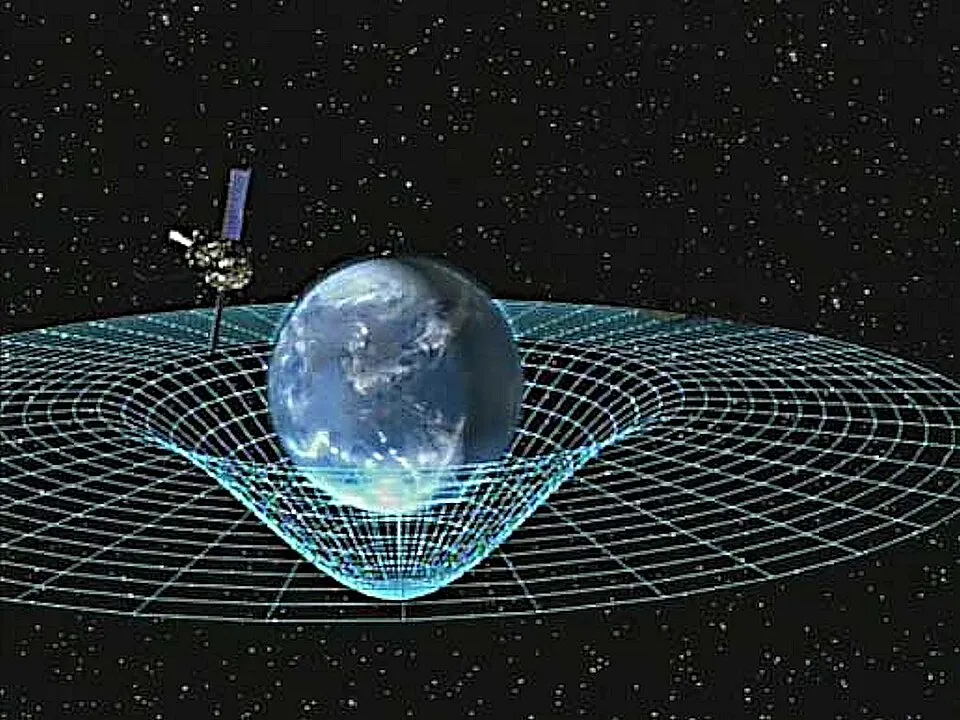
The Einstein field equations describe a universe where the geometry of spacetime is inextricably linked to the distribution of matter-energy, momentum, and stress within it. In the mathematical form presented by Albert Einstein, the equations relate the local spacetime curvature—expressed by the Einstein tensor—with the local energy and momentum—expressed by the stress–energy tensor. To put it simply, mass tells spacetime how to curve, and the curvature of spacetime tells mass how to move. This relationship is defined through a set of ten coupled, nonlinear, hyperbolic-elliptic partial differential equations.
These equations are significantly more complex than the linear equations found in Maxwell’s electromagnetism or the Schrödinger equation of quantum mechanics. Because the equations are nonlinear, gravity effectively interacts with itself. While the equations reduce to Newton’s law of gravitation in instances of weak gravitational fields and low velocities, they offer a radically different picture of high-energy phenomena. The inertial trajectories of particles and radiation, known as geodesics, are calculated within this geometry, proving that light itself would bend as it passed through the warped space near a massive object.

The Einstein field equations are a system of ten coupled, nonlinear partial differential equations that determine the metric tensor of spacetime for a given arrangement of stress–energy–momentum.
What were the consequences of Einstein’s "biggest blunder"?
Albert Einstein later added a term containing the cosmological constant (Λ) to his equations to allow for a steady-state universe that was neither expanding nor contracting. At the time, scientific consensus held that the universe was static. However, after Edwin Hubble provided observational evidence that the universe was indeed expanding, Einstein abandoned the constant, reportedly telling physicist George Gamow that its introduction was the "biggest blunder" of his life. He believed the term was an unnecessary parameter that marred the elegance of his original theory.
Interestingly, Einstein’s "blunder" has seen a massive resurgence in contemporary physics. While he originally included the cosmological constant to maintain stability, modern astronomical observations show that the expansion of the universe is actually accelerating. To explain this phenomenon, physicists have returned to a positive value of Λ. Today, the cosmological constant is often used interchangeably with the concept of "vacuum energy," representing a density and pressure that exists in the vacuum of space itself, driving the universe apart at an increasing rate.

How did this presentation change the course of modern science?
The presentation to the Prussian Academy of Sciences immediately provided the tools to explore gravitational phenomena that were previously unthinkable. By approximating the spacetime as having only small deviations from flatness, scientists used the linearized field equations to predict the existence of gravitational waves—ripples in the fabric of spacetime. Furthermore, exact solutions for the equations, found under specific conditions like symmetry, eventually allowed for the theoretical modeling of rotating black holes and the early stages of the expanding universe.
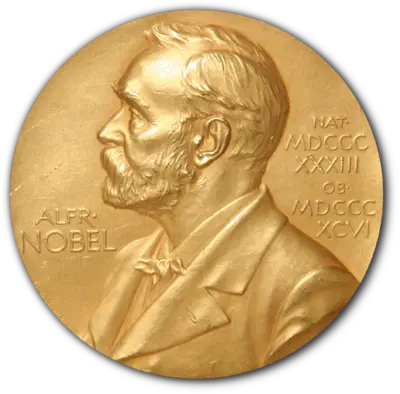
Einstein’s work also established the correspondence principle, ensuring that the new theory did not discard the old but rather refined it. By demonstrating that his equations reduced to Newtonian gravity in the weak-field limit, Einstein proved that general relativity was a more universal truth that could still explain the familiar world. His discovery of the law of the photoelectric effect would eventually win him the 1921 Nobel Prize in Physics, but it was the presentation on November 25, 1915, that cemented his legacy as the architect of our modern understanding of the cosmos.

General relativity posits that the observed gravitational effect between masses results from their warping of spacetime, a theory Einstein refined over eight years of research.
In the decades since 1915, the Einstein field equations have stood up to every experimental test. From the bending of starlight during a 1919 eclipse to the modern detection of gravitational waves and the imaging of black holes, Einstein’s mathematical description of the universe remains the gold standard. The German-born physicist did more than just provide a new set of numbers; he gave humanity a new way to see the stars—not as points of light in a void, but as heavy weights resting on a vast, flexible, and ever-changing fabric.
Did you know that the Einstein gravitational constant (κ) is approximately 2.07665 × 10⁻⁴³ N⁻¹, a value that incorporates both the speed of light and the Newtonian constant of gravitation?
Did you know that while the equations were formulated for a four-dimensional theory, modern theorists still refer to them as Einstein field equations even when exploring their consequences in n-dimensions?
Watch: Einstein's Field Equations of General Relativity Explained
From the Physics Videos by Eugene Khutoryansky channel.
Sources and further reading: Wikipedia — Einstein field equations, Albert Einstein, Introduction to general relativity, Prussian Academy of Sciences (CC BY-SA). Images: Wikimedia Commons.