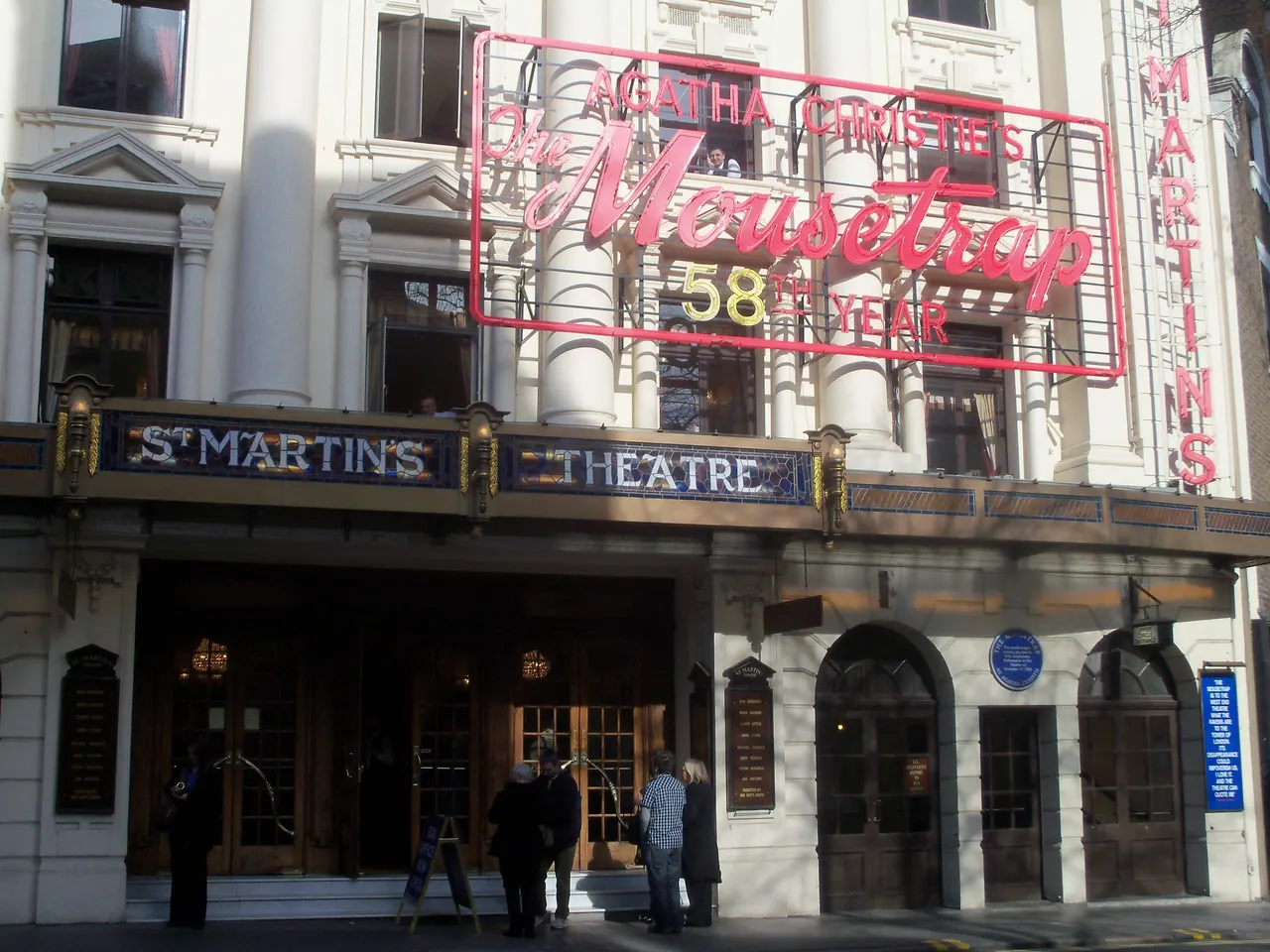
On November 25, 1952, Agatha Christie’s murder mystery play The Mousetrap opened at the Ambassadors Theatre in London’s West End. This production would go on to become the longest-running play in the history of the world, captivating over 10 million spectators in London alone. Originally expected to run for a mere eight months, the play has endured for decades, transcending its origins to become a permanent fixture of British culture.
The play first took form as a radio drama titled Three Blind Mice, written by Agatha Christie as a birthday gift for Queen Mary in 1947. The narrative was deeply rooted in the tragic 1945 case of Dennis and Terence O'Neill, two brothers subjected to horrific abuse in foster care. Though Agatha Christie later adapted the story for the stage, she famously insisted that the short story version remain unpublished in the United Kingdom as long as the stage play continued its London run.
How did a modest birthday gift become a global phenomenon?
Agatha Christie originally gifted the rights to the play to her grandson, Mathew Prichard. When the production moved from its initial premiere in Nottingham to the West End, Agatha Christie remained characteristically pragmatic about its prospects. In a conversation with the original producer, Peter Saunders, the author famously predicted that the show would close within eight months. The play defied these expectations, shattering attendance records and eventually forcing the production to move from the Ambassadors Theatre to the larger St Martin's Theatre in 1974, a transition that allowed the play to maintain its status as an uninterrupted, continuous run.

The original cast featured Richard Attenborough as Detective Sergeant Trotter and his wife, Sheila Sim, as the guesthouse owner Mollie Ralston. Both actors were astute enough to negotiate a 10 percent profit-participation deal, a move that proved immensely lucrative as the play’s popularity skyrocketed. Richard Attenborough later recalled this investment as the wisest financial decision of his life, even as he eventually liquidated his share to fund other ventures, including his film work on the historical figure Gandhi.
The Mousetrap has been seen by over 10 million people in London, with its run spanning from 1952 through to the present day, surviving even a 14-month closure during the global pandemic of 2020.
Why is the identity of the killer never revealed?
The play is a quintessential whodunit, known for a twist ending that has become a matter of theatrical legend. Following the tradition established over seven decades ago, audiences are requested by the cast not to reveal the identity of the murderer after leaving the theatre. This aura of secrecy has served as a powerful marketing tool, drawing generations of tourists who are eager to experience the suspense firsthand without the plot being spoiled in advance.

The play’s enduring success led to significant legal hurdles regarding film adaptations. Because of a strict contractual clause requiring the play to be closed for six months before a film could be produced, the rights have remained in a state of purgatory. Producer John Woolf acquired the film rights in 1956, yet his heirs have never been able to produce an adaptation because the production at St Martin's Theatre has never actually concluded its run.
How has the production maintained its vitality for over 70 years?
The Mousetrap maintains its freshness through the annual tradition of changing the cast, a practice initiated by Sir Peter Saunders. Each year, usually in late November to coincide with the anniversary of the opening, a new group of actors assumes the roles, often marked by the theatrical tradition of the outgoing and incoming leads cutting a "Mousetrap cake" together. This revolving door of talent has allowed hundreds of actors, including icons like Julie Walters and Patrick Stewart, to leave their mark on the production.

The physical environment of the play remains a bridge to 1952, though it has evolved slightly. While the set was updated in 1965 and 1999, the clock on the mantelpiece in the main hall of Monkswell Manor is an original prop that has been on stage since opening night. Similarly, the voice of the late Deryck Guyler remains a constant, as his pre-recorded radio news bulletin continues to be heard by audiences during every performance.
The influence of the play has permeated popular culture, leading to both direct parodies and creative reimaginings. Tom Stoppard’s 1968 play The Real Inspector Hound was built entirely on the foundations of mocking the tropes of this specific murder mystery. More recently, the 2022 film See How They Run utilized the 1953 production of the play as the setting for its own murder mystery, proving that the fascination with this specific piece of theatre shows no signs of waning even as it heads toward its 75th year.

The play's 30,000th performance was celebrated on March 19, 2025.
Agatha Christie received a telegram from playwright Noël Coward in 1957, which stated, "Much as it pains me I really must congratulate you," upon the play becoming the longest-running production in West End history.
The Colwinston Charitable Trust, established by Mathew Prichard in 1995, continues to support arts charities in Wales using the substantial proceeds generated by the play.
Watch: 25th November 1952: Agatha Christie’s play The Mousetrap opens in London
From the HistoryPod channel.
Sources and further reading: Wikipedia — The Mousetrap, Agatha Christie, Ambassadors Theatre (London), List of the longest-running West End shows (CC BY-SA). Images: Wikimedia Commons.