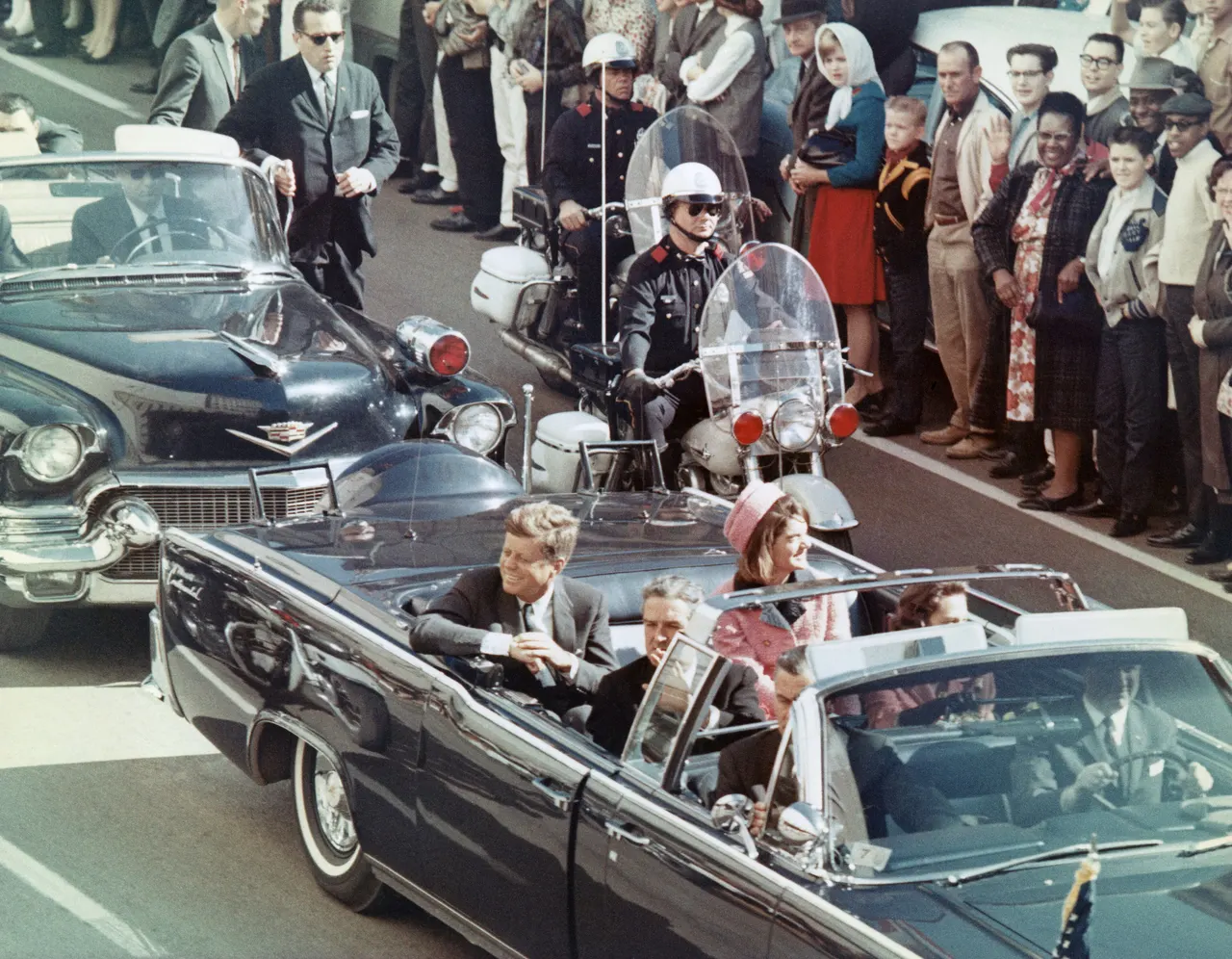
On November 22, 1963, President John F. Kennedy was assassinated as his motorcade traveled through Dealey Plaza in Dallas, Texas. The 35th president of the United States was struck by gunfire while riding in an open-top limousine alongside First Lady Jacqueline Kennedy and Texas Governor John Connally, who was also seriously wounded. Lee Harvey Oswald, a former U.S. Marine who had defected to the Soviet Union and returned, was arrested shortly thereafter. The assassination serves as a defining moment of the 1960s, marking the sudden, violent end of the Kennedy administration and the beginning of a profound era of public questioning regarding the stability and security of the American presidency.
Why did Kennedy choose to visit Dallas?
President John F. Kennedy traveled to Texas in November 1963 primarily to smooth over frictions within the state's Democratic Party. Tensions existed between liberal Senator Ralph Yarborough and conservative Governor John Connally, and the president sought to foster unity ahead of the 1964 election cycle. Kennedy and his inner circle viewed the trip, which had been planned since a meeting in El Paso the previous June, as an essential, informal launch of his reelection campaign. The route through Dallas was carefully designed to ensure maximum public exposure, winding through suburban sections and downtown streets before heading toward a luncheon at the Trade Mart.
How did the peaceful motorcade turn into a site of national tragedy?
The motorcade entered Dealey Plaza at 12:30 pm, where the atmosphere was initially jubilant. Nellie Connally, sitting in the same vehicle as the president, turned to him and remarked that the people of Dallas clearly loved him. Kennedy responded with what would be his final words: “No, they sure can't.” Moments later, the silence of the afternoon was shattered by three rifle shots fired from the Texas School Book Depository. Most witnesses later recalled the second and third shots were grouped closely together. The president was fatally struck, and the limousine raced toward Parkland Memorial Hospital, where he was pronounced dead just thirty minutes later.

In its 1979 report, the United States House Select Committee on Assassinations concluded there was a high probability that two gunmen fired at the President, though this conclusion was based on audio evidence later debunked by the U.S. Justice Department.
Who was Lee Harvey Oswald?
Lee Harvey Oswald was a complex figure with a history of ideological shifts and erratic behavior. Born in 1939, Oswald served in the U.S. Marine Corps before defecting to the Soviet Union in 1959, where he lived in Minsk and married his wife, Marina. Upon returning to the United States in 1962, Oswald settled in the Dallas area and continued to express pro-communist sympathies, including establishing a one-man chapter of the Fair Play for Cuba Committee. On the morning of November 22, Oswald entered the Texas School Book Depository carrying a long package he claimed contained curtain rods; the Warren Commission later concluded this package held the rifle used to assassinate the president.
What happened in the immediate aftermath of the shooting?
The chaos following the assassination was immediate and widespread. Shortly after leaving the scene, Lee Harvey Oswald shot and killed Dallas police officer J. D. Tippit, who had encountered him while he was fleeing. Oswald was apprehended by police approximately 70 minutes after the assassination of the president. Only two hours and eight minutes after the gunfire in Dealey Plaza, Vice President Lyndon B. Johnson was sworn in as the 36th president of the United States aboard Air Force One at Dallas Love Field. The cycle of violence continued two days later when Jack Ruby, a local nightclub operator, fatally shot Oswald in the basement of Dallas Police Headquarters while live television cameras captured the scene.

The legacy of the assassination remains etched in the American psyche, as it was the first of four major political assassinations during the 1960s, preceding the deaths of Malcolm X, Martin Luther King Jr., and Robert F. Kennedy. While the Warren Commission determined that Lee Harvey Oswald acted alone, public skepticism persisted for decades. Various federal probes, including the Church Committee, eventually scrutinized the initial findings, reflecting the enduring difficulty the nation faced in coming to terms with the loss of a president who served during the height of the Cold War. John F. Kennedy remains the most recent U.S. president to have died in office, leaving behind a presidency defined by both the crisis of the Cuban Missile Crisis and the abrupt, shocking finality of that November afternoon in Texas.
John F. Kennedy was the youngest elected president in American history, taking office at the age of 43.

The 1979 report by the United States House Select Committee on Assassinations is the only major federal investigation to suggest the possibility of a conspiracy involving two gunmen.
Jack Ruby, who killed Oswald on live television, died in prison in 1967 while waiting for a new trial after his initial conviction was overturned on appeal.

Watch: Assassination of John F. Kennedy (1963)
From the Simple History channel.
Sources and further reading: Wikipedia — Assassination of John F. Kennedy, John F. Kennedy, Texas, John Connally (CC BY-SA). Images: Wikimedia Commons.