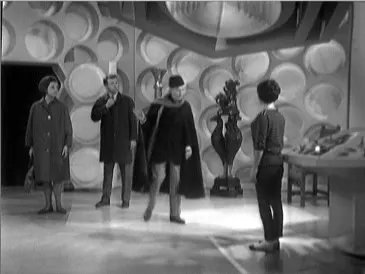
On November 23, 1963, the BBC broadcast the premiere of the television series Doctor Who, introducing a mysterious extraterrestrial traveler and his time-space machine, the TARDIS. Conceived by Sydney Newman, C. E. Webber, and Donald Wilson, the show established a legacy as the longest-running science fiction drama in history. The first serial, titled An Unearthly Child, centered on school teachers Ian Chesterton and Barbara Wright, who uncover the secret lives of a young girl named Susan Foreman and her grandfather, the enigmatic Doctor, in a London junkyard.
How did a gap in the schedule spark a cultural phenomenon?
In early 1963, BBC Controller of Programmes Donald Baverstock identified a strategic void in the Saturday evening schedule between the sports program Grandstand and the music show Juke Box Jury. Head of Drama Sydney Newman was tasked with filling this slot with a program that could capture the attention of children, teenagers, and sports-loving adults simultaneously. Recognizing that science fiction offered the perfect canvas for such an eclectic audience, Newman and his creative team developed the concept of a mysterious traveler and a vessel that defied logic by being larger on the inside than the outside. This bold experiment would eventually evolve into the iconic Doctor Who series.
The road to the screen was fraught with production hurdles. The original plan to open with a serial titled The Giants was abandoned due to complex technical requirements that exceeded the capabilities of the time. Consequently, the production team turned to a script by Australian writer Anthony Coburn. Throughout the process, the creative vision underwent significant transformations, including the characterization of the Doctor. While initial drafts portrayed him as a suspicious and potentially malevolent figure, Sydney Newman insisted on molding the character into a more compassionate, fatherly lead, eventually casting veteran actor William Hartnell in the role.

Who were the architects behind the Doctor's first voyage?
The success of the series relied heavily on the pioneering efforts of its production team, most notably Verity Lambert. As the first female drama producer at the BBC, Verity Lambert faced the immense pressure of launching a show that would redefine the network's offerings. Working alongside director Waris Hussein and story editor David Whitaker, she navigated casting dilemmas and performance refinements to bring the vision to life. The ensemble cast was anchored by William Hartnell as the Doctor, with Carole Ann Ford portraying his granddaughter Susan, and Jacqueline Hill and William Russell as the two teachers drawn into their world.
The series launch was profoundly impacted by external tragedy; the assassination of American President John F. Kennedy on November 22, 1963, overshadowed the premiere, prompting the BBC to repeat the first episode the following week.
The aesthetic of the show was equally intentional. The choice of a police box for the TARDIS exterior was the result of a chance observation by writer Anthony Coburn near his office, providing a grounded, recognizable silhouette that contrasted sharply with the fantastical nature of the time-travel narrative. Recording the inaugural episode proved difficult; initial sessions in September 1963 were marred by technical and performance errors, necessitating a complete re-recording in October before the serial was deemed suitable for broadcast.

What defined the initial journey into time and space?
The debut serial, An Unearthly Child, thrust the characters into a high-stakes narrative across four weekly parts. After discovering the TARDIS in a London junkyard, Ian Chesterton and Barbara Wright are whisked away by the Doctor to the Paleolithic era. In this hostile prehistoric environment, the travelers encounter a power struggle between warring factions, specifically Za and Kal, who are desperate to rediscover the secret of fire. This prehistoric setting allowed the show to move beyond mere science fiction, blending adventure and historical peril with the central mystery of the Doctor's identity.
As the narrative progressed, the Doctor's companions found themselves caught in the tribe's volatile politics. The Doctor himself was threatened with death unless he could demonstrate the mastery of fire, a task that required the ingenuity of Ian and Barbara to overcome. The group's ingenuity, coupled with Susan's clever use of a skull and fire to terrify the tribe, provided them a narrow window to escape back to the TARDIS. Their departure from the Stone Age, only to arrive in a silent, radioactive forest, cemented the show's premise of constant, perilous discovery across the cosmos.

While the serial received mixed reviews upon its initial broadcast, the four episodes drew an average of six million viewers, a significant start for an untried format. The long-term success of Doctor Who speaks to its unique structure, allowing the series to reinvent itself indefinitely. By placing the Doctor in a perpetual state of travel, the writers created a vehicle that could explore any genre, location, or point in time, ensuring its survival long after the initial broadcast of 1963. Today, that legacy is celebrated as a cornerstone of British television history.
The TARDIS's iconic appearance as a police box was inspired by writer Anthony Coburn noticing a real police box near his office.

Verity Lambert holds the distinction of being the first female drama producer in the history of the BBC.
Despite his legendary status today, the Doctor was originally portrayed in early drafts as a suspicious, malign character who harbored a secret hatred for inventors.
Watch: Doctor Who: The First Ever Scene - An Unearthly Child
From the DoctorWhoClips channel.
Sources and further reading: Wikipedia — An Unearthly Child, Doctor Who, BBC (CC BY-SA). Images: Wikimedia Commons.