On November 17, 2019, a 55-year-old man who had visited a market in Wuhan, Hubei Province, China, became the first identified case of what would eventually be known as COVID-19. This moment serves as the prologue to a global health crisis that necessitated unprecedented social, economic, and scientific mobilization across the world. While the world was quiet on that day in November, the emergence of the SARS-CoV-2 virus would soon reveal the deep vulnerabilities of a connected society to a novel, highly contagious pathogen.
How did the virus emerge from nature?
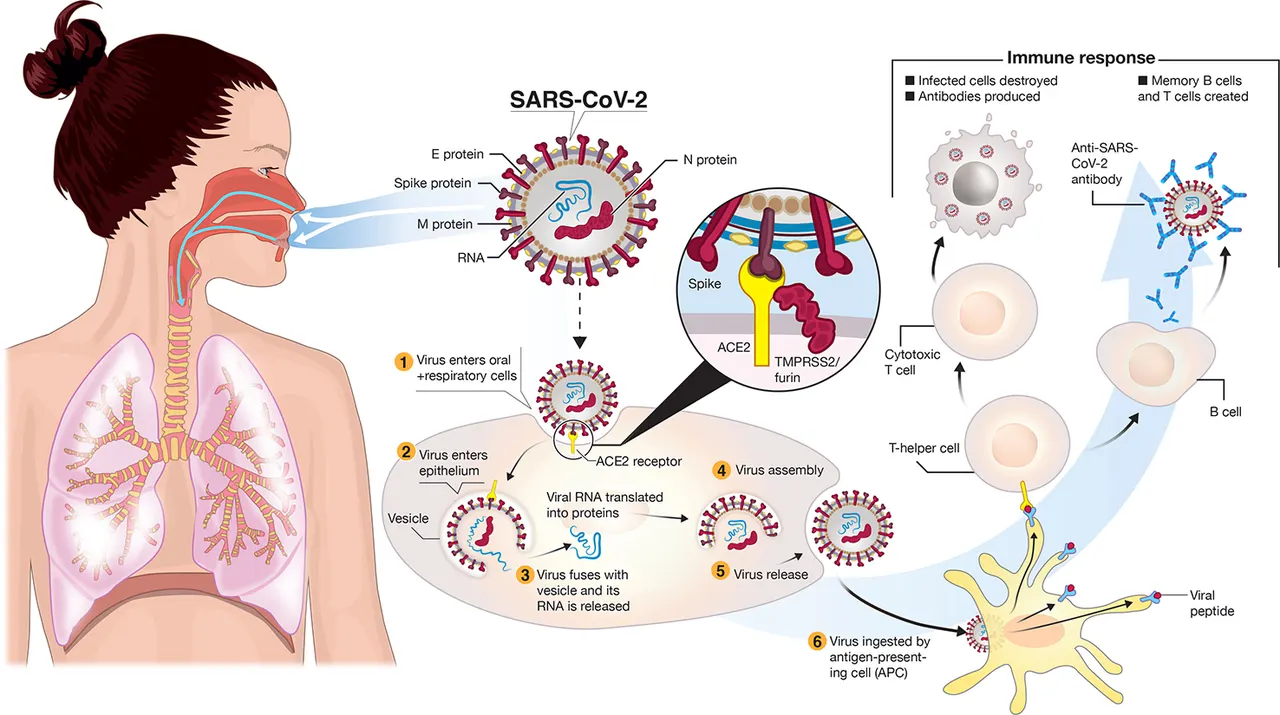
Most scientists believe that the SARS-CoV-2 virus entered into human populations through natural zoonosis, a process where pathogens jump from animals to humans. This phenomenon is consistent with historical outbreaks like SARS-CoV-1 and MERS-CoV, and reflects broader environmental stressors. Human activities, including climate change, the destruction of natural ecosystems, and the wildlife trade, have significantly increased the likelihood of such zoonotic spillover events. The virus is 96% identical at the whole genome level to bat coronavirus samples, specifically those found in the Chinese horseshoe bat, known as Rhinolophus sinicus.
What did the early days of the pandemic look like?
Following the initial identification of the case in Wuhan in late 2019, the virus began a rapid spread that reached every corner of the globe. By January 2020, the outbreak was confirmed as a worldwide transmission event, and by March 2020, the World Health Organization formally declared COVID-19 a global health emergency. For over three years, this emergency defined the daily life of billions, involving measures such as physical distancing, the widespread use of face masks, and mass vaccination campaigns to mitigate the transmission of the virus.

The SARS-CoV-2 virus is 96% identical at the whole genome level to other bat coronavirus samples, specifically BatCov RaTG13.
The virus itself is a novel coronavirus that triggers a disease with highly variable symptoms. While many individuals remain asymptomatic—at least a third of those infected show no noticeable signs—others suffer from severe respiratory failure, multi-organ dysfunction, or persistent complications. The disease is primarily transmitted through infectious particles breathed in or through contact with the eyes, nose, or mouth, particularly when individuals are in close proximity in indoor environments.
How did the virus evolve over time?
The SARS-CoV-2 virus has been in a constant state of evolution, accumulating mutations that have resulted in distinct variants. Early variants of concern, including Alpha, Beta, and Gamma, emerged during 2020 and dominated different regions across the globe. By 2021, the Delta variant became a globally dominant strain, characterized by its increased transmissibility. The subsequent emergence of the Omicron variant at the end of 2021 brought a high number of mutations, allowing the virus to spread rapidly and evade some aspects of existing immunity, though it appeared to cause less severe illness than its predecessors.

The scientific community responded by tracking these changes through the Pango lineage system, which allows researchers to label and monitor specific sub-types of the virus as they emerge. While the World Health Organization stopped naming new variants of concern after the Greek alphabet system concluded with Omicron, the surveillance of variants such as JN.1 in 2024 and XFG in 2025 demonstrates the ongoing nature of the virus's adaptation. This evolutionary journey highlights the necessity for continued vigilance, testing, and adaptive public health strategies.
Understanding the pathophysiology of COVID-19 remains a critical aspect of modern medicine. Beyond the common symptoms of fever, cough, and fatigue, the virus can lead to complex systemic issues. Complications like acute respiratory distress syndrome, blood clotting, heart inflammation, and neurological manifestations demonstrate the virus's ability to impact nearly every organ system. Furthermore, the phenomenon of long COVID continues to challenge clinicians, as many survivors face persistent cognitive issues and fatigue for months or even years after the initial infection.

The global response to this challenge has been monumental. Laboratory-based PCR tests provide the gold standard for diagnosis, while antigen-based lateral flow tests have enabled home-based monitoring. Vaccines have played a central role in curbing the most severe impacts of the pandemic, with mass vaccination drives fundamentally changing the trajectory of the emergency. Supportive care remains the cornerstone of treatment for those at high risk, alongside antiviral therapies designed to inhibit the virus's ability to replicate within the human host.
As we look back at the origins of the pandemic, the city of Wuhan stands as the central location where this global story began. With a population of over 13 million, Wuhan is one of China’s most important national central cities and a hub of activity. The events of November 17, 2019, serve as a stark reminder of how rapidly health landscapes can shift and how deeply the natural world is intertwined with human development.

Soap is highly effective against the virus because it bursts the protective bubble surrounding the SARS-CoV-2 particle, rendering it inactive.
COVID-19 was originally referred to by several names, including the 'Wuhan coronavirus' and 'Wuhan pneumonia,' before the World Health Organization officially designated it as COVID-19 on February 11, 2020.
While the emergency phase was declared over on May 5, 2023, the virus continues to circulate and evolve, necessitating ongoing global public health monitoring.
Watch: The First COVID-19 Documentary: How the Pandemic Began#coronavirus #documentary #pandemic
From the World Documentaries channel.
Sources and further reading: Wikipedia — COVID-19, Wuhan (CC BY-SA). Images: Wikimedia Commons.