A Mirror for the Modern Age
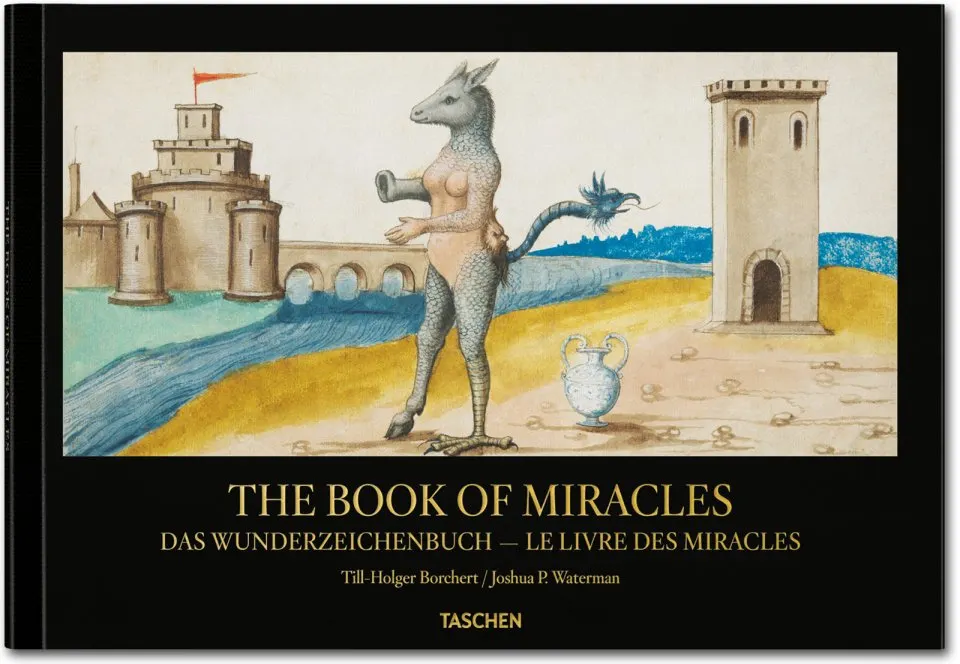
Imagine, for a moment, the act of 'doomscrolling.' You stare into a glowing screen, swiping through a relentless stream of images detailing rising temperatures, volatile storms, and societal upheaval. It feels distinctly modern, a byproduct of our hyper-connected digital age. Yet, as a 16th-century illuminated manuscript known as the Augsburg Book of Miracles prepares to hit the auction block with an estimated price of £1m, we are reminded that this compulsion to witness the catastrophic is as old as the printing press itself.
This remarkable wonderbook, currently emerging from the private collection of Mickey Cartin, is more than a relic; it is a vivid, hand-painted repository of fears. In one startling illustration, five suns blaze simultaneously in the sky above a terrified populace—a vision of extreme environmental instability that feels unnervingly resonant in 2026. For the Renaissance observer, these visions were not mere metaphors; they were prophetic warnings of a world teetering on the edge of divine judgment.
The World of the Wonderbook
To understand the Augsburg Book of Miracles, one must first understand the city that birthed it. Augsburg, in the 16th century, was a bustling, high-stakes capital of early capitalism. Home to the legendary Fugger and Welser banking dynasties, the city served as a pivotal node for the Holy Roman Empire’s communication networks, including the Kaiserliche Reichspost. It was a place of immense wealth and cosmopolitan exchange, where the humanist philosophies of the Renaissance met the deep-seated anxieties of a society in religious and political flux.

The manuscript functions as an apocalyptic survey, weaving together biblical narratives and accounts of bizarre, unexplained phenomena—volcanoes, floods, and celestial anomalies—that were interpreted as signs of the End Times. This was an era transitioning from the medieval to the Early Modern, where the revival of classical learning collided with an increased, often fearful, awareness of the natural world.
In an apocalypse, a supernatural being reveals cosmic mysteries or the future to a human intermediary through dreams, visions, and heavenly journeys, often featuring symbolic imagery and esoteric numerology.
Artistic Vision and Human Fragility
The beauty of the manuscript lies in its stark, direct visual language. Renaissance art during this period was increasingly concerned with a more individualistic view of humanity, and this is reflected in the way these miracles are depicted. The artists do not shy away from the visceral impact of disaster. Whether it is the surging waters of a flood or the terrifying appearance of multiple suns, the imagery serves as an unveiling—the very literal definition of an apocalypse. It is the revealing of things that could not be known by human intellect alone.

These pages capture a collective psychology. By documenting 'miracles'—which, in the 16th-century context, often meant catastrophic portents—the creators of the book sought to impose order on a chaotic world. They believed that by categorizing and illustrating these events, they might comprehend the divine plan that dictated the fate of empires and individuals alike.
Why the Apocalypse Still Speaks to Us
Why does a 16th-century collection of visions feel so essential today? Perhaps because, despite our scientific advancements, we remain as vulnerable to the unpredictability of nature as the citizens of Augsburg were five centuries ago. We see our own environmental anxieties mirrored in their ink and pigment. We, too, look to the skies and the landscape for signs of whether our 'world'—our climate, our stability, our civilization—is nearing a threshold.
As public institutions clamor for the chance to acquire this treasure, its value lies not just in its age or its artistry, but in its persistence as a testament to the human condition. The Augsburg Book of Miracles stands as a bridge between two eras of uncertainty. It serves as a haunting reminder that while the nature of our crises may shift from the theological to the meteorological, the human impulse to document the storm, to stare into the face of the unknown, and to seek meaning in the midst of catastrophe, remains fundamentally unchanged.
Sources: This report draws on coverage by The Guardian Art & Design, ARTnews. The wording is our own.