Dawn breaks soft and green across the lowlands of Tuy Phước, where the morning mist clings to endless emerald fields. Here in the central coastal region of Vietnam, the coastal plain stretches flat against the horizon, unbroken save for the gentle rhythm of rural life. Then, rising almost unexpectedly from the lush, verdant expanse of a quiet village, an ancient silhouette emerges from the palm fronds. It is not a natural peak, but a soaring monument of weathered red brick, standing silent in the tropical air as it has done for over a thousand years.
This is the Binh Lam Champa Tower, a stunning tenth-century sanctuary that remains almost entirely unknown to the international trail of travellers. While millions flock to the famous coastal bays and bustling modern cities of Vietnam, this secret architectural wonder rests in peaceful isolation, offering a rare, uncrowded glimpse into a lost world.
A Sanctuary Built on the Flat Plains
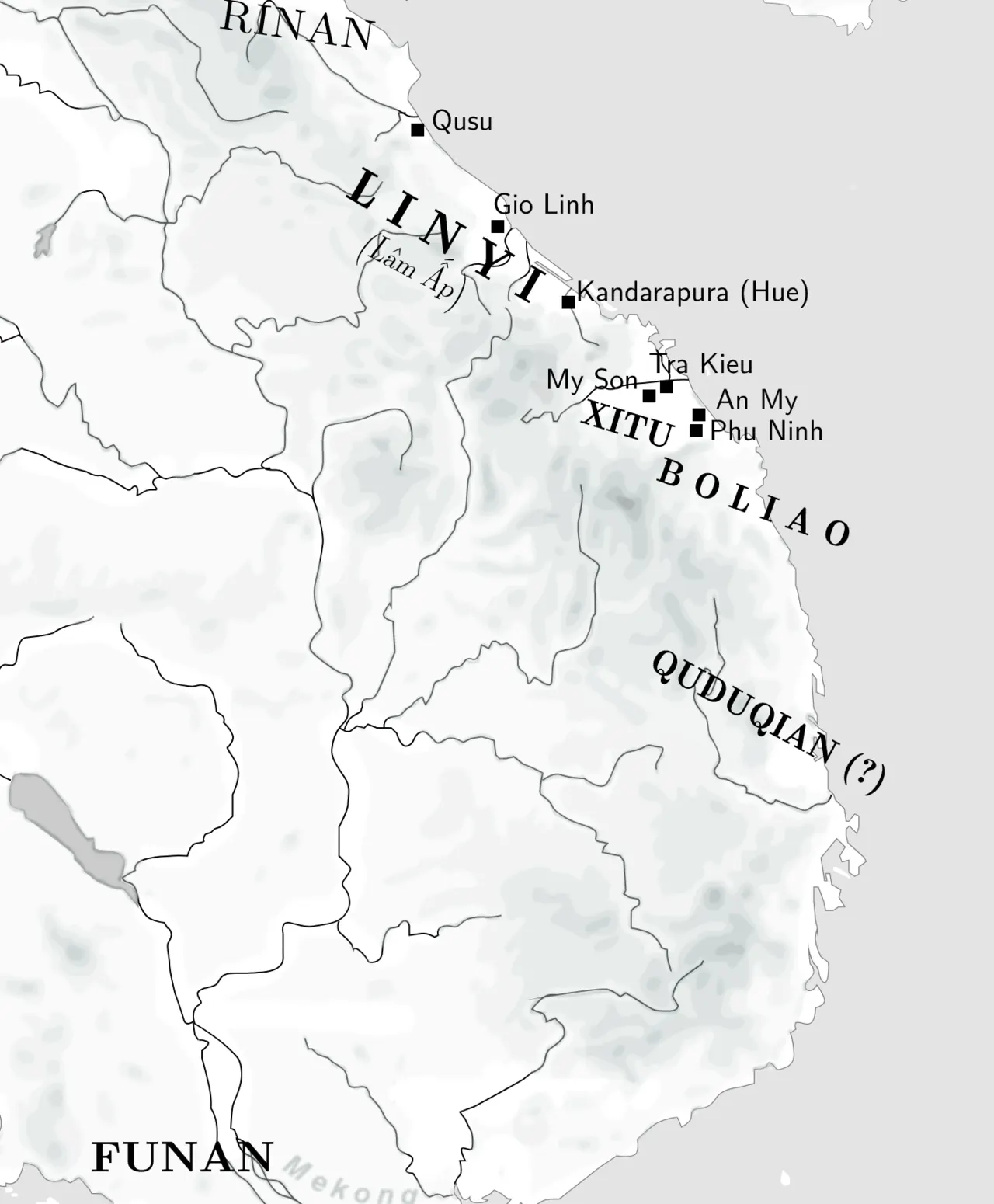
To understand the wonder of Binh Lam is to understand the historic realm of Champa. From approximately the second century AD until its final annexation by Emperor Minh Mạng of the Nguyễn dynasty in 1832, Champa was a vibrant collection of independent Cham polities that spanned the coast of what is present-day central and southern Vietnam. Originating in the wake of Khu Liên's historic rebellion against the Eastern Han dynasty, the Cham people cultivated a rich cultural and architectural legacy strongly tied to the sea and the surrounding trade routes.
Across the historical landscape of Bình Định province—a coastal territory bounded by Quảng Ngãi to the north, Phú Yên to the south, Gia Lai to the west, and the South China Sea to the east—numerous Cham monuments survive. Yet, Binh Lam occupies a uniquely enchanting niche. Unlike most surviving Cham towers that crown dramatic hilltops to dominate the skyline from afar, Binh Lam Tower rises unexpectedly from the flat, low-lying village ground. Constructed around the late tenth century, its position amidst the quiet agrarian lowlands makes its sudden appearance feel less like a public monument and more like a private discovery.
Why Binh Lam Stayed off the Map
Why has such a magnificent relic remained shrouded in secrecy? For centuries, the shift in political power and the historical expansion of the Nam tiến policy gradually absorbed the Cham principalities into the modern nation of Vietnam. As time passed, larger urban centres and major transportation corridors grew elsewhere, bypassing the quiet pockets of Tuy Phước.
Because Binh Lam does not sit atop a prominent peak visible from main highways, it escaped the notice of casual tourism. It relies on no grand modern infrastructure, no commercial ticket booths, and no swelling crowds. It simply exists within the fabric of daily village life, protected by the very fields that surround it and the local community that lives in its ancient shadow.
Without the dramatic heights of a mountain peak, Binh Lam relies on sheer quiet majesty, rising from the flat earth like a forgotten memory of the Champa Kingdom.
The Journey into the Quiet Countryside
Reaching Binh Lam is an exercise in slow, immersive travel. The journey takes you deep into the rural heart of central Vietnam's coastal plain, where narrow village paths replace busy highways. As you navigate the lowlands, the modern world rapidly recedes. The air smells of rich earth, growing rice, and the distant salt breeze of the South China Sea.
Approaching the site on foot or by bicycle allows the landscape to reveal itself gradually. You weave past traditional homesteads and verdant gardens until the massive brick facade of the tower comes into focus. Up close, the late tenth-century craftsmanship is breathtaking. The intricate brickwork, laid without visible mortar by master builders a millennium ago, glows warm in the sunlight. Standing at the base of the tower in absolute stillness—with only the sound of rustling foliage and distant birdsong—you experience a profound sense of temporal isolation that popular heritage sites can no longer provide.
Navigating the Coastal Relic
For those seeking to explore this hidden pocket of Bình Định province, a little thoughtful planning goes a long way. The central coastal region experiences distinct seasonal shifts, making the drier months ideal for navigating the flat lowland tracks surrounding Tuy Phước. Visiting early in the morning or during the late afternoon offers the best light for appreciating the deep orange hues of the ancient brick against the vivid green fields.
Travel light, as facilities around the immediate village site are wonderfully minimal. Bring ample drinking water, sun protection, and sturdy walking shoes suitable for unpaved country paths. Respect for the local community is essential; remember that you are stepping into a living village where history and everyday life are seamlessly intertwined.
Why Secret Places Still Matter
In an era where global travel often feels homogenous and hurried, places like Binh Lam Champa Tower serve as vital reminders of why we set out to explore in the first place. This silent sentinel of the Champa Kingdom proves that true discovery still exists for those willing to venture off the beaten path. Rising quietly from the coastal plains of Vietnam, Binh Lam does not demand attention with loud fanfare; instead, it offers something far more precious—a solitary moment of wonder, held gently in the passage of time.
Sources: This report draws on coverage by Atlas Obscura. The wording is our own.