
In 1975, researchers began tracking a group of children born to low-income mothers in Minneapolis as part of the Minnesota Risk and Resilience Longitudinal Study. For decades, the team meticulously recorded significant life events, including housing instability, familial turnover, and parental job loss.1
When these individuals reached the age of 37, 51 participants were invited to a laboratory. They were divided into two groups: one read a news article about an impending economic crisis, while the other read a neutral story about someone searching for a lost key. Participants were then tasked with sorting shapes on a screen, with the sorting rule—color or shape—changing unexpectedly. The researchers found that among those who read the crisis report, the individuals who had faced the most turbulent childhoods were significantly faster at adapting to new rules than their peers.
- Adults who experienced childhood instability often excel at rapid task-switching under pressure.
- Traditional academic assessments using abstract shapes may disadvantage students from high-adversity backgrounds.
- Learning outcomes for Tsimané children in the Bolivian Amazon are tied to school quality rather than just cognitive potential.
- Early adversity creates cognitive trade-offs rather than uniform developmental deficits.
Which cognitive skills improve for those who grew up in unpredictable environments?
The Minnesota experiment was the final study in a four-part research project published by Chiraag Mittal and Vladas Griskevicius in 2015. The initial three studies, involving 103, 58, and 181 participants respectively, measured two core skills: impulse control, such as ignoring a distracting light, and task switching, which requires shifting rapidly between rules. Participants who described their childhoods as unpredictable—marked by frequent moves or inconsistent parental employment—performed worse at impulse control but excelled at task switching. These advantages only appeared after exposure to a cue of environmental instability, such as a news report on an economic crisis. Consistent family income, measured from infancy to age 16, proved to be a less reliable predictor than the degree of environmental instability.
How does early adversity affect working memory and learning?
In 2018, Ethan Young and his colleagues expanded on these findings by categorizing working memory into updating, which involves discarding old information for new data, and maintenance, which involves holding information despite distractions. They discovered that individuals from unstable childhood backgrounds excelled at updating information after reading a crisis report, but faltered in maintenance tasks. In a 2022 study involving 618 middle school students, researchers used two versions of a cognitive task: one using abstract shapes and another using everyday items like city buses or currency. Students who had been exposed to violence or poverty lagged behind peers in the abstract task, but the gap significantly narrowed when the tasks featured relatable, real-world imagery.3
Why would evolutionary biology favor these cognitive patterns?
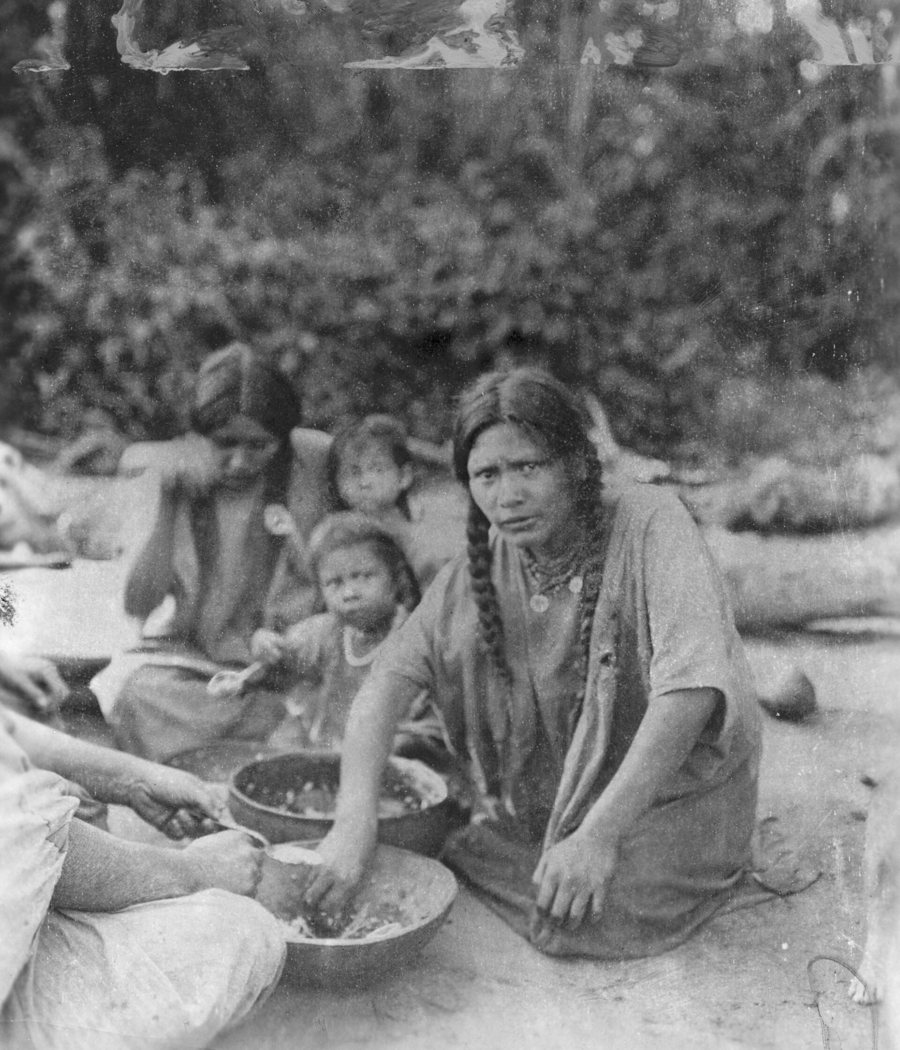
Bruce Ellis of the University of Utah argues that natural selection often favors phenotypic plasticity, the ability of a single genome to produce different behaviors based on the environment. Rather than evolving a single "best" way to think, humans appear to have developed flexible strategies. According to life history theory, development involves a series of trade-offs where investing heavily in one skill necessarily limits another. For example, the Tsimané people of the Bolivian Amazon, who navigate harsh foraging environments, demonstrate that schooling quality significantly influences performance in abstract logic tests. Children in high-quality schools showed a 47 percent improvement in abstract reasoning over four years, while those in low-quality schools showed a slight decline.7
What are the limitations of the current research on hidden talents?
Not all studies support the hypothesis that early adversity uniformly enhances certain cognitive skills. A study of orphans in Nigeria showed no significant differences in task switching or impulse control compared to children raised by biological parents. Furthermore, researchers like Willem Frankenhuis have acknowledged that the evidence remains mixed, with some findings supporting the theory and others refuting it. The field is currently transitioning toward a more nuanced understanding, focusing on how these adaptations might serve as assets in specific professional or social contexts rather than viewing them solely as developmental deficits.10
Notes and Sources
- Chiraag Mittal, Vladas Griskevicius, Jeffry A. Simpson, Sooyeon Sung, Ethan S. Young (2015). "Cognitive adaptations to stressful environments: When childhood adversity enhances adult executive function", Journal of Personality and Social Psychology 109(4): 604-621.
- Ethan S. Young, Vladas Griskevicius, Jeffry A. Simpson, Theodore E. A. Waters, Chiraag Mittal (2018). "Can an unpredictable childhood environment enhance working memory? Testing the sensitized-specialization hypothesis", Journal of Personality and Social Psychology 114(6): 891-908.
- Ethan S. Young, Willem E. Frankenhuis, Danielle J. DelPriore, Bruce J. Ellis (2022). "Hidden talents in context: Cognitive performance with abstract versus ecological stimuli among adversity-exposed youth", Child Development 93(5): 1493-1510.
- Willem E. Frankenhuis, Sarah A. de Vries, J. Bianchi, Bruce J. Ellis (2020). "Hidden talents in harsh conditions? A preregistered study of memory and reasoning about social dominance", Developmental Science 23(4): e12835.
- Bruce J. Ellis, J. Bianchi, Vladas Griskevicius, Willem E. Frankenhuis (2017). "Beyond risk and protective factors: An adaptation-based approach to resilience", Perspectives on Psychological Science 12(4): 561-587.
- Bruce J. Ellis, Laura S. Abrams, Ann S. Masten, Robert J. Sternberg, Nim Tottenham, Willem E. Frankenhuis (2022). "Hidden talents in harsh environments", Development and Psychopathology 34(1): 95-113.
- Helen E. Davis, Jonathan Stieglitz, A. M. Tayo, Hillard Kaplan, Michael Gurven (2021). "The formal schooling niche: Longitudinal evidence from Amazonia, Bolivia demonstrates that higher school quality augments differences in children's abstract reasoning", PsyArXiv.
- Helen E. Davis, Elizabeth Cashdan (2019). "Spatial cognition, navigation, and mobility among children in a forager-horticulturalist population, the Tsimané of Bolivia", Cognitive Development 52: 100800.
- Willem E. Frankenhuis, Ethan S. Young, Bruce J. Ellis (2020). "The hidden talents approach: Theoretical and methodological challenges", Trends in Cognitive Sciences 24(7): 569-581.
- L. Porter, E. Handley (2025). "A systematic review of stress-adapted skills and hidden talents in individuals who faced early adversity", Development and Psychopathology, 1-16.