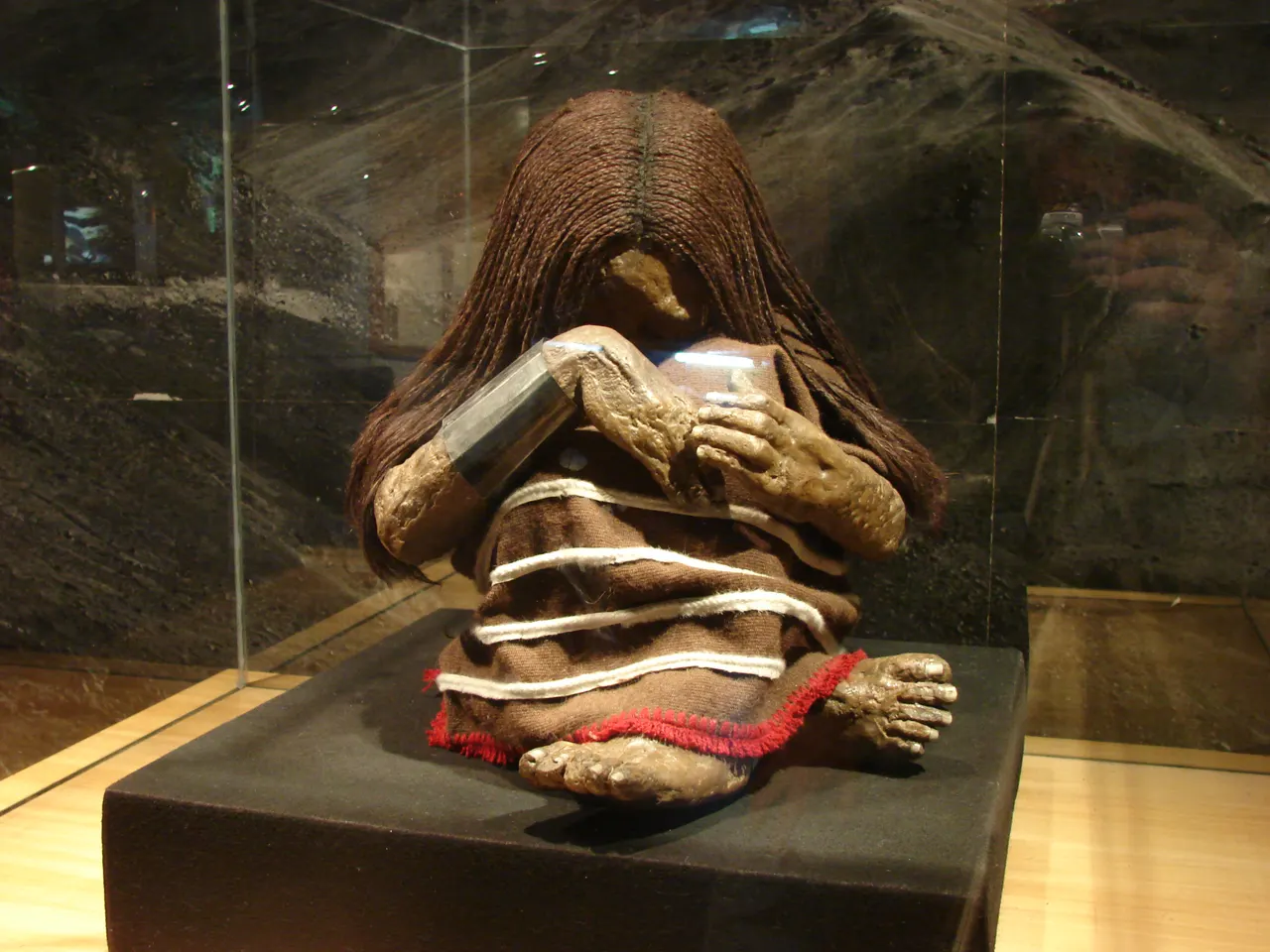
High in the thin, crystalline air of the Andes, the frozen summits have long held secrets of a civilization that viewed the peaks not merely as stone and ice, but as living deities. For centuries, the 'ice mummies' of the Inca Empire remained silent witnesses to the Capacocha—a sacred sacrificial rite intended to appease the gods and ensure prosperity. Now, through the meticulous lens of modern toxicology, these children are finally speaking. New evidence has revealed that their final weeks and months were shaped by a sophisticated, state-mandated cocktail of chemical substances designed to alter their consciousness and state of mind.
The Chemistry of the Capacocha
Researchers reported that forensic analysis performed on eight frozen mummies discovered on Andean volcanoes has yielded striking results. According to studies highlighted by the New York Times and CNN, every child tested showed evidence of having consumed psychotropic substances. The findings, derived from the analysis of hair and nail samples, provide a molecular timeline of the victims' final journey. This chemical signature confirms that the children were systematically administered a variety of substances, including coca leaves, alcohol, and components of the hallucinogenic brew known as ayahuasca.
The study of eight frozen mummies reveals how coca leaves, alcohol, and a rainforest plant were used to prepare the children for their final moments on the mountaintops.
The presence of these substances suggests a highly regulated ritual process. While the use of coca and alcohol in Inca culture was well-documented by early Spanish chroniclers, the specific inclusion of ayahuasca—a potent psychedelic usually associated with the Amazon rainforest—adds a new layer of complexity to our understanding of Inca religious logistics. The researchers found that the children had been chewing coca leaves and consuming alcohol for weeks or even months prior to their death.
Decoding the Biological Archive
The methodology behind these discoveries relies on the principles of evidence-based toxicology. Because hair grows at a relatively constant rate, it acts as a biological archive, trapping chemicals from the bloodstream into the keratin structure as it develops. By segmenting the hair, scientists can trace exactly what a person ingested and when. The recent tests on the eight mummies revealed that:

- Coca Leaves: Evidence of cocaine metabolites was found in all subjects, indicating the consistent chewing of coca leaves, which helped mitigate altitude sickness and hunger.
- Alcohol: Traces of fermented beverages were present, likely used to sedate the children or induce a trance-like state in the harsh, freezing environment of the high-altitude shrines.
- Ayahuasca: The discovery of specific rainforest plants indicates that the Inca were transporting medicinal and psychotropic materials across vast distances to reach the huacas, or sacred shrines.
This toxicological mapping reveals that the administration of these drugs was not a haphazard act of cruelty, but a carefully calibrated ritual procedure. The combination of substances likely served to reduce the children's anxiety and help them enter a state of spiritual readiness before they were left on the mountain peaks.
A Window into the Realm of the Four Parts
The Inca Empire, or the Realm of the Four Parts, was the largest empire in pre-Columbian America, governed from the central hub of Cusco. The Capacocha was a vital thread in the social and religious fabric of this empire, used to mark major events such as the death of an emperor or a victory in war. By selecting children from across the empire and bringing them to the capital before sending them to the highest peaks, the Inca reinforced their political and spiritual authority.
These findings change our understanding of the Inca’s relationship with the natural and supernatural worlds. It reveals a civilization with an advanced knowledge of pharmacology and a logistical network capable of sourcing rainforest hallucinogens for use on 20,000-foot volcanic summits. Rather than a sudden event, the sacrifice is now understood as a long, chemically-managed transition from the physical world to the divine.

As technology continues to advance, archaeologists and toxicologists hope to uncover more about the specific dosages and the botanical origins of these substances. Each new sample provides a clearer picture of the human experience behind the archaeology, reminding us that these 'ice mummies' were once children caught in the machinery of a vast and complex empire.
Sources: This report draws on coverage by The New York Times Science, The Times of India, The New York Times, Earth.com, Ancient Origins, Archaeology Magazine, CNN, Dagens.com. The wording is our own.