For centuries, the human effort to reach the cosmos was built on an astonishingly wasteful ritual. Giant engines would roar into life, lift a payload toward the heavens, and then drop their spent, glowing hulls into the ocean, discarded forever. This week, among the coastal wetlands of Starbase, Texas, that paradigm shifted in a display of mechanical precision that felt less like traditional rocketry and more like a predatory bird snatching prey mid-flight.
In a historic achievement for aerospace engineering, SpaceX successfully returned the upper stage of its colossal Starship vehicle from orbit and caught it in mid-air using giant mechanical arms nicknamed "chopsticks." The dramatic capture brings humanity one step closer to the long-sought holy grail of space exploration: a completely reusable megarocket.
A Steel Falcon Snatching Fire
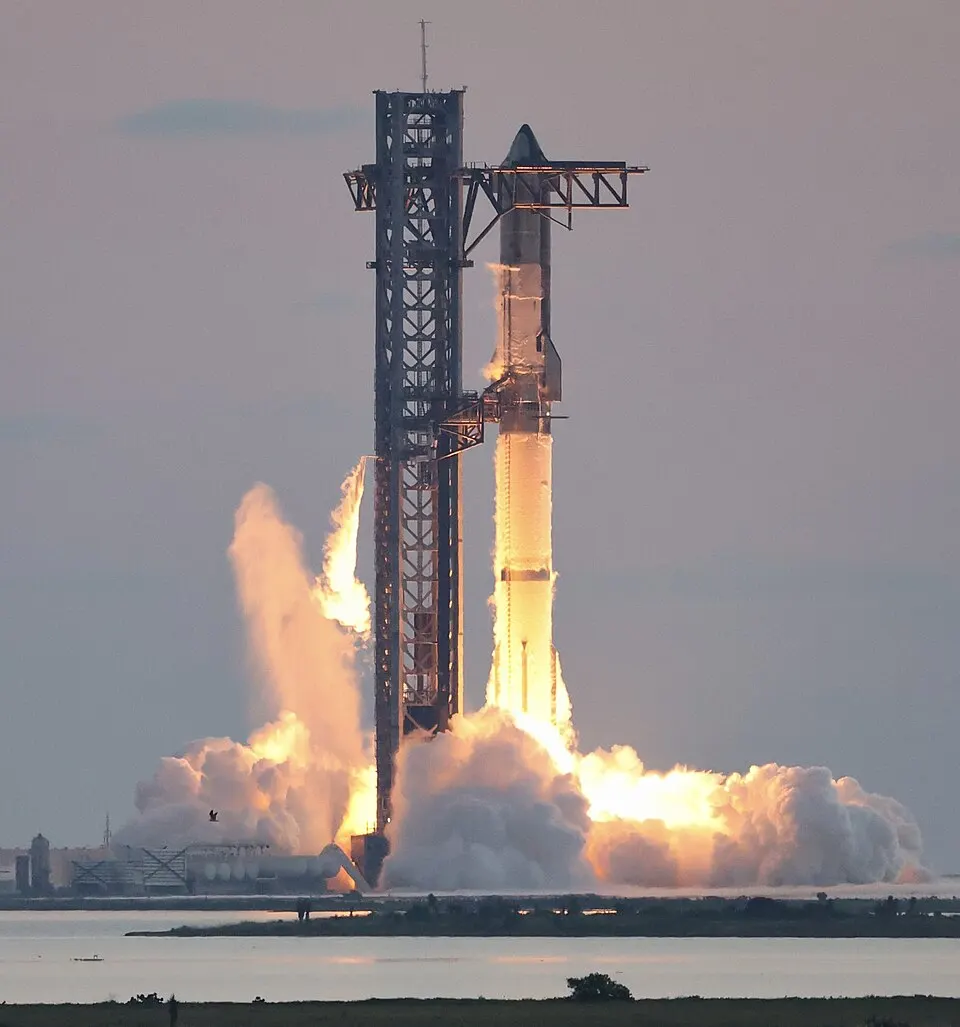
The maneuver marked the culmination of the 15th test flight for the Starship program. The flight path, however, began with mixed fortunes. Outlets including Phys.org and The Guardian reported that during the initial phase of the test, the rocket's massive lower booster suffered a malfunction, diverting to an explosive splashdown in the Gulf of Mexico. That setback thwarted an unprecedented double-catch attempt, which had aimed to retrieve both stages of the launch system at once.
Yet as the upper Starship spacecraft continued its journey around Earth, technicians confirmed the vehicle remained healthy. Hours later, the spacecraft dropped back down through the atmosphere toward the Texas coastline. As it descended toward the launch pad, massive mechanical arms extending from the tower moved to intercept it. In a flurry of metal and controlled thrust, the launchpad structure snared the returning rocket stage before it could touch the ground.
"Although booster exploded, company caught upper stage for first time in campaign to make megarocket reusable."
The Physics of Total Reusability
To understand why aerospace engineers are willing to risk multi-million-dollar vehicles on such high-wire maneuvers, one must look at the economics of spaceflight. A reusable launch vehicle is designed so that its primary components can be recovered and reflown rather than built anew for every mission. While smaller components like payload fairings or first-stage boosters have been routinely recovered in recent years, snaring a massive orbital upper stage right back at its launch site represents an entirely new level of recovery hardware.
By using the ground tower's mechanical arms to catch the vehicle mid-air, SpaceX eliminates the need to install heavy landing legs on the rocket itself. Saving that weight allows the rocket to carry significantly heavier payloads to orbit. The primary trade-off, as aerospace analysts note, is that the immense cost and complexity are shifted from the disposable vehicle to the recovery infrastructure on the ground.
A New Chapter for Coastal Skies
The successful capture opens up vast new possibilities for how humans reach space. If both stages of the super heavy-lift rocket can be routinely caught, refurbished, and mounted back on the launchpad within days or hours, the cost of accessing Earth orbit could drop significantly. Starship is envisioned as the eventual successor to the Falcon 9 and Falcon Heavy systems, designed to carry unprecedented payloads into orbit and lay the groundwork for long-duration deep space missions.
As the smoke cleared over the Texas launch site, the successful capture of the Starship upper stage demonstrated that even the most audacious engineering concepts can take root. The road to full reusability remains complex, but the sky above Texas now belongs to a new kind of flying machine—one that comes home to roost.
- Launch Vehicle: SpaceX Starship (Two-stage super heavy-lift launch system)
- Key Achievement: First successful mid-air capture of the upper stage rocket using launch tower mechanical arms
- Location: Starbase launch facility in Texas
- Program Record: 15 test flights completed to date
Sources: This report draws on coverage by The New York Times Science, BBC Science, Phys.org, The Guardian Science, The New York Times, CNBC, Al Jazeera, Spaceflight Now. The wording is our own.