What Just Happened
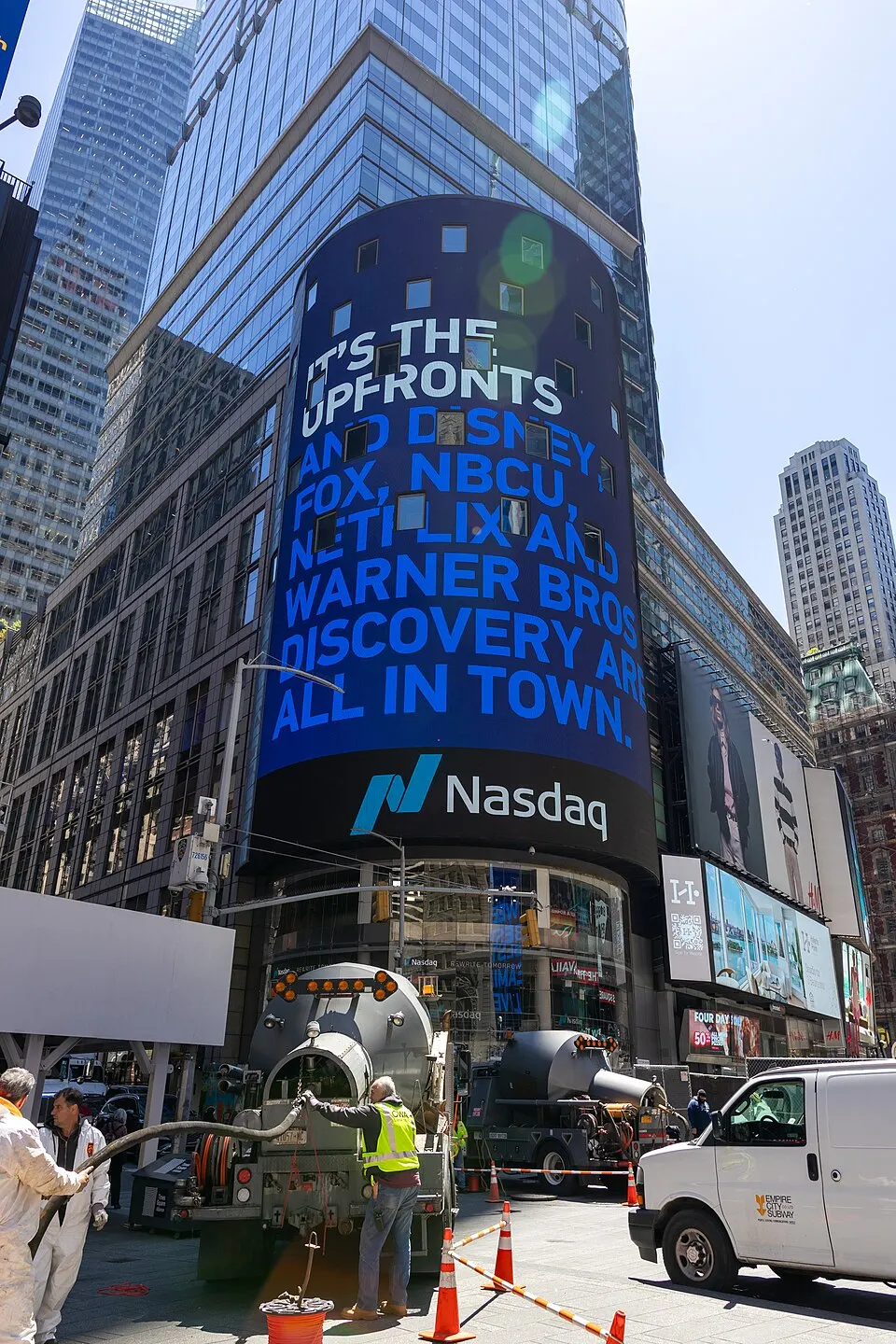
A severe market sell-off triggered by Anthropic’s public market debut has sent shockwaves across Wall Street, erasing trillions of dollars in paper wealth. The Wall Street Journal reports that the turmoil capped a massive $4 trillion AI wipeout, as the Nasdaq lost all of its 2026 gains and dropped 5.3% in a single day following the startup's second day of trading, according to reports from The Guardian and shattered.io. Concurrently, Reuters, NPR, and NBC News report that both the S&P 500—which dropped 3.7%—and the Dow Jones Industrial Average entered correction territory.
The market rupture comes despite extraordinary scientific claims from within the company. According to BBC News, an Anthropic mathematician reported using an artificial intelligence system to prove the famed Riemann hypothesis, a claim that will require time to verify. However, investors focused overwhelmingly on the massive capital expenditure required to sustain the technology, driving a sharp sell-off across the broader tech sector.
How We Got Here
Founded in January 2021 by former OpenAI executives, including siblings Daniela Amodei (President) and Dario Amodei (CEO), Anthropic was established as a public benefit corporation centered on AI safety. The company developed its flagship Claude model family—encompassing Fable, Opus, Sonnet, and Haiku—alongside specialized agent harnesses and restricted enterprise models like Claude Mythos. To train these systems, Anthropic launched Project Panama to buy and destructively scan millions of books, following the 2025 settlement of a copyright infringement lawsuit over pirated training data.
In May 2026, a Series H capital raise valued Anthropic at $965 billion, making it the world's most valuable AI pure play prior to its November 2026 initial public offering. That record valuation fed into a prolonged bull market characterized by elevated price-earnings ratios and heavy capital deployment into infrastructure. However, stock market crashes historically occur when excessive optimism and high leverage collide with shifts in regulatory or economic environments. The sell-off expanded as investors began questioning the astronomical sums poured into AI buildouts, corporate energy needs, and unresolved legal scrutiny.
"The Nasdaq lost trillions in value, with the AI startup’s IPO failing to buoy it as investors question huge sums being poured into AI buildout." — The Guardian
Key Actors and Competing Priorities
The current market debate pits several key global actors and political figures against one another, each pursuing distinct objectives:

- Wall Street Investors and Forecasters: CNBC, Fortune, and Business Insider report that market analysts are sharply split. While some pros advise adjusting portfolios for a short-term correction, forecasters cited by Business Insider worry the entire AI trade is on its last legs. Seeking Alpha analysis suggests the market may only be at phase one of a three-phase bubble burst.
- U.S. Political Leadership: President Donald Trump introduced fresh geopolitical uncertainty by threatening "tremendous penalties" and a potential ban on U.S. technology firms building AI data centers overseas, according to reports from BBC News and The Guardian. Simultaneously, TIME reports that Maryland Senator Chris Van Hollen has placed AI regulation at the center of his political challenge to Senate Democratic leadership.
- Regulators and Global Competitors: The Guardian reports that California state attorneys served an investigative subpoena on Nvidia to determine if chip exports illegally ended up in China or if the firm misled investors. This domestic scrutiny intersects with a fierce bilateral technology competition between Washington and Beijing over hardware and infrastructure dominance, as highlighted by TIME.
- Anthropic Management: Led by the Amodei siblings, the company faces growing scrutiny over the climate impact of its extensive data center infrastructure, an issue TIME notes was minimized during IPO preparation.
Plausible Scenarios Ahead
Market observers and economic analysts outline three primary paths for how this market rupture could resolve:
- Scenario 1: A Structural Bubble Collapse. If corporate earnings fail to demonstrate clear financial returns on massive capital expenditures, and if U.S. export bans or overseas build-out penalties strictly limit infrastructure growth, the sell-off could transition from a market correction into a prolonged, multi-phase valuation reset across the tech sector.
- Scenario 2: A Standard Market Correction. If Anthropic's scientific breakthroughs—such as verified mathematical proofs—translate into immediate commercial software capabilities, and if regulatory investigations like California's Nvidia inquiry resolve without major structural penalties, institutional investors may view the dip as a buying opportunity, stabilizing the S&P 500 and Nasdaq.
- Scenario 3: Segmented Realignment. If global demand for raw compute remains strong despite regulatory friction between the U.S. and China, pure-play AI models may suffer lower valuation multiples while hardware and energy providers recover, shifting capital away from consumer-facing software applications toward core infrastructure.
What to Watch
In the coming weeks, market participants will monitor whether independent peer review confirms Anthropic's claimed proof of the Riemann hypothesis. Attention will also center on formal policy details from the White House regarding overseas data center restrictions, updates on California's subpoena of Nvidia, and earnings guidance from major tech firms to see if capital spending on AI infrastructure begins to decelerate.
Sources: This report draws on coverage by BBC News, The Guardian, TIME, CNBC, Bloomberg.com, WSJ, NBC News, Al Jazeera. The wording is our own.