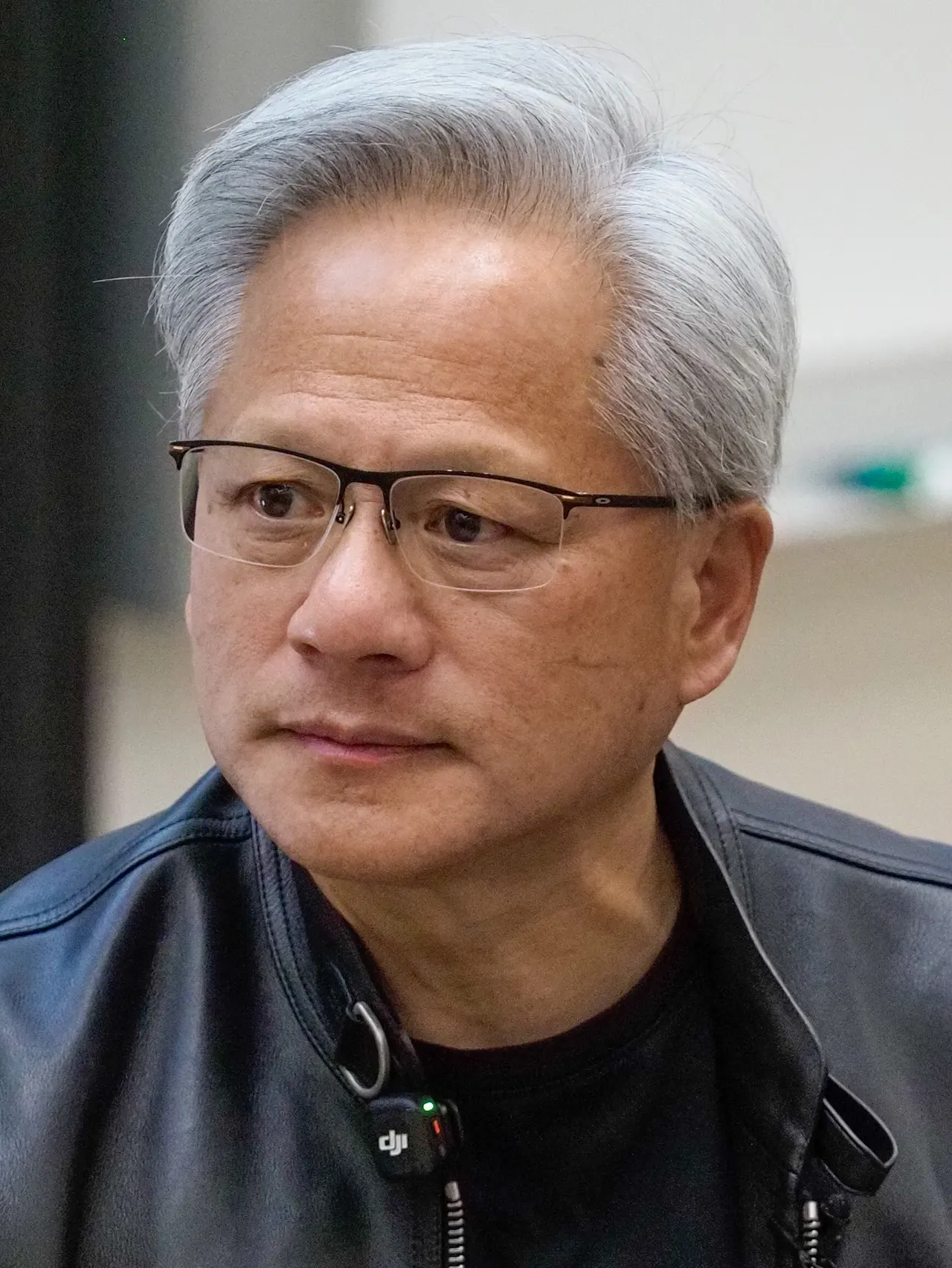
In a sequence of events that has blurred the lines between private corporate governance and federal executive power, Jensen Huang has been reinstated as the CEO of Nvidia. His return comes less than two weeks after a sudden resignation that sent shockwaves through the global technology sector. The reversal was not a simple board-led decision; rather, it was brokered by President Donald Trump, who confirmed he spoke “directly and indirectly” with Nvidia’s board to secure the deal. The move has immediately impacted the global economy, restoring nearly $1 trillion in market value to Nvidia, even as it raises profound questions about the future of American industrial policy and the autonomy of private enterprise.
The Rise, Fall, and Rapid Reinstatement
Nvidia, founded in 1993 by Huang, Chris Malachowsky, and Curtis Priem, grew from a gaming chip manufacturer into the backbone of the global artificial intelligence boom. By October 2025, it became the first company to surpass a $5 trillion market capitalization. However, this trajectory was interrupted roughly 24 hours before the current reporting period when Huang resigned amid a scandal involving an alleged extramarital affair and potential national security risks. According to NBC News, the FBI has been looking into Huang’s relationship with a woman identified as Alice Huang, an alleged Chinese agent.
The 11-day vacuum at the top of the world's most consequential AI firm led to a massive sell-off before Trump intervened. Trump characterized the CEO as a “Great Patriot and National Treasure,” according to TIME. Despite the allegations involving espionage and an extramarital affair, the President’s intervention prioritized the company’s stability and its role in the AI arms race over the internal scandal that forced the board’s initial hand.
“Trump went further: He staked the fortunes of the United States on those of a favored chief executive,” reported The New York Times, noting that while previous presidents have bailed out companies, this intervention in personnel is unprecedented.
Key Actors and Competing Interests
The reinstatement involves three primary sets of actors with divergent goals:
- The Trump Administration: President Trump and Vice President JD Vance view Nvidia as a critical asset in the “Global Economic War.” For Trump, Huang’s leadership is synonymous with American AI dominance. Additionally, The Guardian reports that Trump made up to $15 million on Nvidia stock following the rebound, raising further ethical questions.
- Nvidia’s Board and Executive Staff: The board faced a choice between maintaining traditional standards of corporate conduct and yielding to executive pressure. While the board initially accepted Huang’s resignation due to the scandal, they “closed ranks” after Trump’s intervention to facilitate his return, according to reports on Facebook from The New York Times.
- The Chinese Government: For Beijing, Huang’s return is a “mixed blessing.” As a leading advocate for continued chip sales to China, Huang represents a potential bridge for trade. However, The New York Times reports that the saga may accelerate China’s drive for semiconductor self-reliance to avoid being vulnerable to the whims of the U.S. executive branch.
Plausible Future Scenarios
The current situation creates several potential paths for Nvidia and the broader tech industry. The first scenario is one of integrated industrial policy. If the Trump administration continues to treat major tech firms as state-adjacent entities, we may see more frequent interventions in corporate leadership across the “Magnificent Seven.” This would likely happen if Nvidia remains the sole provider of the hardware required for sovereign AI projects, making its stability a matter of national defense.
A second scenario involves legislative or legal pushback. TIME and AP News report that the move has drawn backlash from both sides of the political aisle in Congress. If Democrats or skeptical Republicans move to codify limits on presidential interference in private boards, or if the FBI investigation into the alleged Chinese agent yields specific evidence of compromised data, Huang’s second tenure could be cut short by legal mandates rather than board decisions.

Finally, there is the market-stability scenario. Al Jazeera reports that the stock “cooled” after the initial reinstatement surge. If the market perceives Huang’s return as a sign that the company is “too big to fail” under Trump’s protection, it could lead to an era of “Nvidia Exceptionalism” where traditional corporate scandals no longer impact the company’s valuation, provided the political alignment remains intact.
What to Watch
In the coming weeks, analysts are closely monitoring the divorce proceedings between Jensen and Lori Huang. Forbes suggests speculation that Lori Huang could walk away with half of his US$143.4 billion fortune, which could lead to significant liquidations of Nvidia stock. Additionally, the progress of the FBI investigation mentioned by NBC News will determine whether the “national security concerns” cited by critics are substantiated or sidelined by the administration’s economic priorities.
Lastly, observers will watch for the reaction from Beijing. If the Chinese government views Huang’s reinstatement as a sign that Trump will use Nvidia as a tool of statecraft, they may move faster to sanction the company or restrict the rare earth minerals necessary for chip production, further escalating the global AI arms race.
Sources: This report draws on coverage by The New York Times, BBC News, Al Jazeera, TIME, CNBC, NBC News, Forbes, Reuters. The wording is our own.