
In 2026, a team led by Lisa Chakrabarti at the University of Nottingham housed fruit flies for the remainder of their lives inside a desktop box constructed from a specialized nickel-iron alloy designed to block out the Earth's magnetic field. The magnetic field measured inside the box was 0.0056 microteslas, whereas the Earth's surface field ranges between 25 and 60 microteslas, meaning the flies lived in an environment roughly 4,000 to 10,000 times weaker. The results were published in 2026 in the journal Aging.
News reports quickly summarized the findings with headlines claiming that shielding oneself from magnetic fields could extend lifespan by 20 percent. In reality, that specific figure applied to only one subset of flies used in the experiment.
- The flies whose lifespans increased inside the Nottingham box shared a specific genetic defect, whereas healthy flies responded differently.
- The flies that lived longer showed a greater difficulty climbing the walls of the test tubes inside the same enclosure.
- An experiment involving mice in China increased the magnetic field thousands of times instead of removing it, and those mice also experienced increased lifespans.
- Researchers have calculated the projected rise in surface radiation if the magnetic field disappeared entirely, a calculation reinforced by Curiosity rover measurements on Mars.
Which flies lived longer inside the magnetic shield box?
The research team utilized two male fruit fly strains. The first was a healthy laboratory control strain. The second strain lacked a functioning gene called Pink1, which is responsible for clearing damaged mitochondria, the energy-producing compartments within cells. When this gene is defective, flies develop a condition resembling early-onset Parkinson's disease, characterized by impaired movement, the death of dopamine-producing nerve cells, and a shortened lifespan.
Groups of 40 to 60 flies from each strain either remained outside the box entirely or were placed inside it starting from either the 10th or 20th day of life until the end of their lifespan. The 20 percent lifespan extension was observed exclusively in the Pink1 mutant flies introduced to the box on the 20th day, where the risk of death dropped to half that of the control Pink1 flies kept outside the box. The difference was not statistically significant for flies introduced on the 10th day. For healthy flies, the risk of death inside the box was calculated to be 38 to 42 percent higher, though this difference was likewise not deemed statistically significant. Nevertheless, the discussion section of the paper notes that the survival probability of healthy flies began to decline shortly after entering the shielded environment.
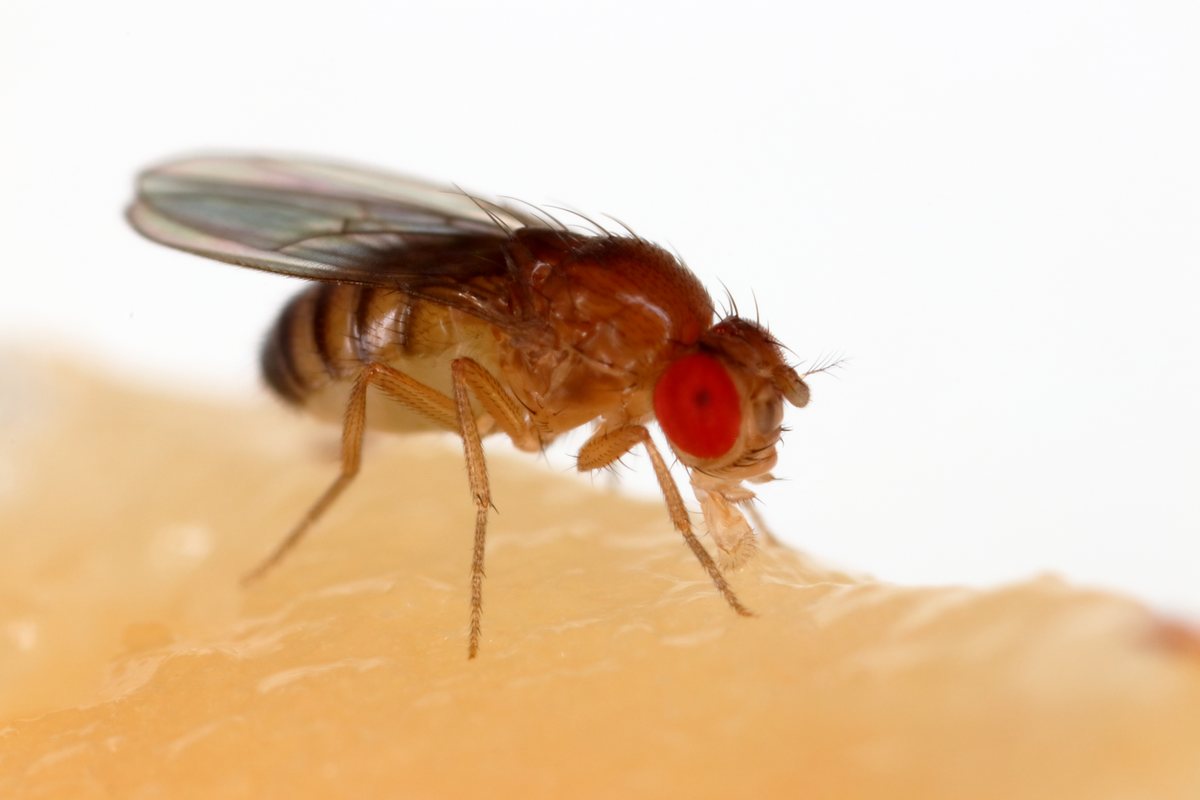
In physical ability tests, the outcome reversed completely. Flies were shaken to the bottom of a test tube, and researchers counted those that crossed a designated reference line within a specified timeframe. Healthy flies housed inside the box demonstrated better climbing performance on days 20, 30, and 40. Conversely, the Pink1 mutant flies inside the box exhibited an even steeper decline in their already impaired climbing ability, despite being the group that lived longer.
Using diamond-based quantum sensors, the research team measured an increase in reactive molecules known as free radicals within the tissues of the flies kept inside the box. Furthermore, the second energy production step in the mitochondria, known as complex II, showed higher activity levels. The authors interpret these changes as a cellular stress response, which proves detrimental in healthy flies but potentially beneficial in flies with compromised mitochondria. This remains an interpretation, as the experiment did not prove the exact underlying mechanism. The research team proposed the shielding box as a potential method for investigating neurodegenerative disorders like Parkinson's disease, though no tests involving this type of magnetic shielding have yet been conducted on humans or any other mammals.
How can a weak magnetic field affect cellular biology?
It has long been established that migratory birds can perceive the Earth's magnetic field. The most widely accepted explanation suggests that light-sensitive proteins in the birds' eyes contain pairs of electrons bound together, where even an extremely weak magnetic field can alter the state of these pairs and influence chemical reaction outcomes. This provides a known mechanism through which a field strength around 50 microteslas can interact with cellular chemistry. However, no evidence currently indicates that human cells experience a comparable effect of a magnitude sufficient to alter lifespan.
Conversely, experiments conducted in the opposite direction have yielded comparable survival outcomes. Researchers from the University of Science and Technology of China and the Chinese Academy of Sciences housed 52-week-old male mice on top of magnetic plates placed beneath their cages until the end of their lives. The magnetic field ranged between 70 and 220 milliteslas, which is one thousand to nine thousand times stronger than the Earth's field. The median lifespan of the mice in the control group was 105.5 weeks, compared to 111.5 weeks for the mice housed above the upward-facing magnetic plates. While the Nottingham experiment nearly eliminated the magnetic field to extend the lifespan of unhealthy flies, the Chinese experiment increased the field thousands of times to extend the lifespan of healthy mice. Consequently, these dual findings indicate that the simplistic rule "magnetic fields cause aging" does not hold true.
Notes and Sources
- Reed, J., Fromhold, M., Moisoi, N., Mather, M. and Chakrabarti, L. (2026). Hypomagnetic fields modulate lifespan, physical ability and mitochondrial metabolism in a Pink1 model of neurodegeneration. Aging. doi:10.18632/aging.206424 ↩
- Wiltschko, R. and Wiltschko, W. (2019). Magnetoreception in birds. Journal of the Royal Society Interface 16: 20190295. doi:10.1098/rsif.2019.0295 ↩
- Fan, Y., Yu, X., Yu, B., Ji, X., Tian, X., Song, C. et al. (2022). Life on Magnet: Long-Term Exposure of Moderate Static Magnetic Fields on the Lifespan and Healthspan of Mice. Antioxidants 12(1): 108. doi:10.3390/antiox12010108 ↩
- UNSCEAR (2010). Sources and Effects of Ionizing Radiation, UNSCEAR 2008 Report, Volume I, Table 1 and Annex B. United Nations. doi:10.18356/cb7b6e26-en ↩
- Lingam, M. (2019). Revisiting the Biological Ramifications of Variations in Earth's Magnetic Field. The Astrophysical Journal Letters 874: L28. doi:10.3847/2041-8213/ab12eb ↩
- Nowaczyk, N. R., Arz, H. W., Frank, U., Kind, J. and Plessen, B. (2012). Dynamics of the Laschamp geomagnetic excursion from Black Sea sediments. Earth and Planetary Science Letters 351-352: 54-69. doi:10.1016/j.epsl.2012.06.050 ↩
- Gao, J., Korte, M., Panovska, S., Rong, Z. and Wei, Y. (2022). Effects of the Laschamps Excursion on Geomagnetic Cutoff Rigidities. Geochemistry, Geophysics, Geosystems 23: e2021GC010261. doi:10.1029/2021GC010261 ↩
- Korte, M. (2022). Geomagnetic Field Polarity Changes. Journal of the Geological Society of India 98: 1629-1632. doi:10.1007/s12594-022-2230-8 ↩
- NASA Goddard Space Flight Center: Mars Fact Sheet and Venus Fact Sheet (surface pressure), accessed October 20, 2026. nssdc.gsfc.nasa.gov ↩
- Hassler, D. M., Zeitlin, C., Wimmer-Schweingruber, R. F. et al. (2014). Mars' Surface Radiation Environment Measured with the Mars Science Laboratory's Curiosity Rover. Science 343(6169): 1244797. doi:10.1126/science.1244797 ↩
- Zeitlin, C., Hassler, D. M., Cucinotta, F. A. et al. (2013). Measurements of Energetic Particle Radiation in Transit to Mars on the Mars Science Laboratory. Science 340(6136): 1080-1084. doi:10.1126/science.1235989 ↩
- Jakosky, B. M. et al. (2015). MAVEN observations of the response of Mars to an interplanetary coronal mass ejection. Science 350(6261): aad0210. doi:10.1126/science.aad0210; NASA press release, November 5, 2015. nasa.gov ↩
- Gunell, H., Maggiolo, R., Nilsson, H. et al. (2018). Why an intrinsic magnetic field does not protect a planet against atmospheric escape. Astronomy & Astrophysics 614: L3. doi:10.1051/0004-6361/201832934 ↩