A microscopic line etched into the femur and ulna of a 236-million-year-old Chiniquodon theotonicus suggests that live birth occurred in mammalian ancestors nearly 90 million years earlier than the fossil record previously indicated. During a graduate seminar in Buenos Aires, researchers examining thin sections of the cat-sized cynodont’s bones identified a distinct transition in tissue density. This mark, known as a neonatal line, is a biological signature created by the metabolic shock of birth, a phenomenon well-documented in modern placental mammals like pigs and vizcachas but rarely seen in such ancient fossils.
The discovery, led by Leandro Gaetano of the University of Buenos Aires and CONICET, utilized paleohistology to decode the life history of specimen CRILAR-PV109. The internal bone structure showed a shift from sparse vascularization to rapid, dense growth—a hallmark of post-birth development. Published in Frontiers in Mammal Science in August 2026, the study challenges the long-held assumption that live birth, or viviparity, evolved only once at the base of the Theria group during the Late Jurassic or Early Cretaceous periods.
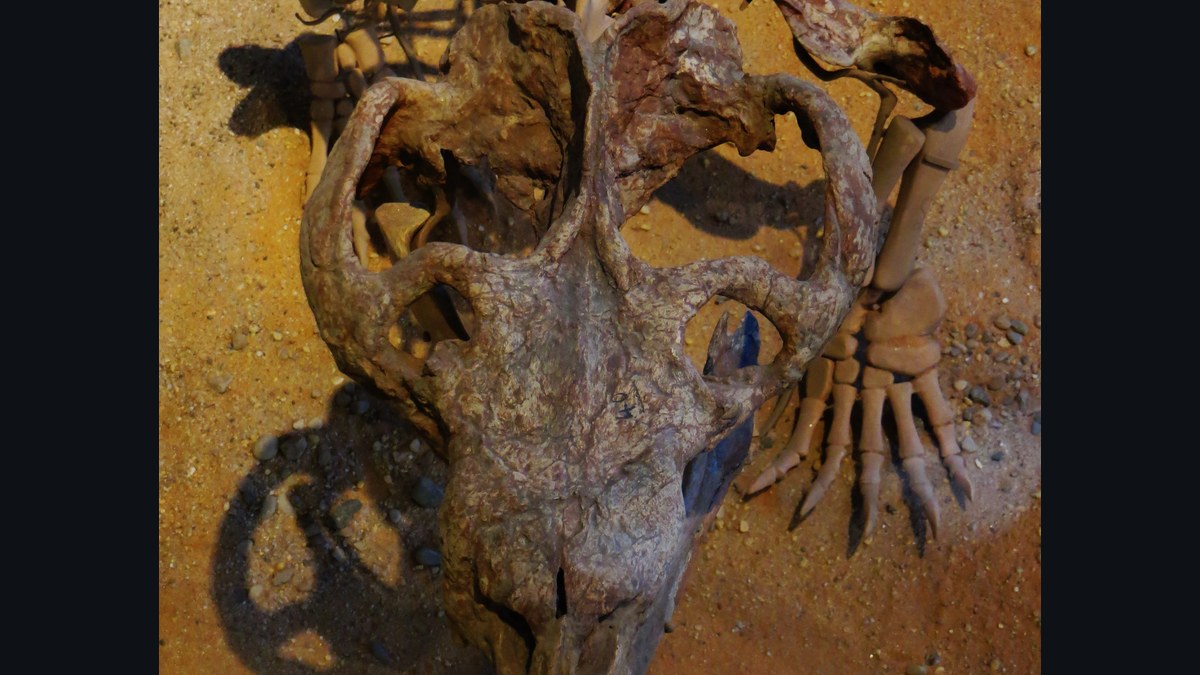
- The neonatal line in the bone acts as a biological growth ring for the moment of birth.
- Chiniquodon lived in present-day Argentina approximately 236 million years ago.
- Its relative mass at birth was closer to modern placental mammals than to egg-laying species.
- The discovery suggests live birth may have evolved independently or much earlier than the common ancestor of marsupials and placentals.
What does the neonatal line prove about cynodont reproduction?
The presence of a neonatal line in Chiniquodon theotonicus indicates a significant metabolic shift at birth, but the primary evidence for live birth lies in the calculated mass of the newborn. While similar lines can form during hatching from an egg, the research team used the circumference of the neonatal ring to estimate the animal's body mass at birth: approximately 1.68 kilograms. Given that the adult weighed roughly 12 kilograms, the offspring was born at 14% of its adult weight. This ratio aligns closely with modern placental mammals, whereas the young of egg-laying monotremes or marsupials are often less than 1% of the adult’s mass.
To confirm these findings, the researchers compared the birth-to-adult mass ratios of thousands of living species. Chiniquodon consistently mapped within the placental cluster rather than the reptile or monotreme clusters. This suggests a strategy where the mother carries the offspring for an extended period, eventually delivering a relatively large, well-developed juvenile capable of supporting its own weight—a sharp departure from the "small egg, small hatchling" strategy typical of early synapsids.
Why does this discovery rewrite mammalian evolutionary history?
The discovery of viviparity in Chiniquodon rewrites evolutionary history because it pushes the timeline for live birth back by roughly 90 to 95 million years. Prevailing theories suggested that non-mammalian cynodonts were strictly egg-layers and that live birth evolved much later in the Mesozoic. Because soft-shelled eggs rarely fossilize, the absence of evidence was often treated as evidence of absence. However, this specimen from the Chañares Formation in northwestern Argentina provides a hard-tissue record of a reproductive strategy previously thought impossible for the Triassic period.
The adult specimen studied was fully mature, with a skull length of 160 millimeters, erupted teeth, and fused joints. This allowed the team to look back through the animal's "bone diary" to its earliest days. While Randall Irmis of the University of Utah notes that more fossils are needed to confirm if this was a universal trait, the data from this single individual is sufficient to disrupt the linear narrative of mammalian reproduction.
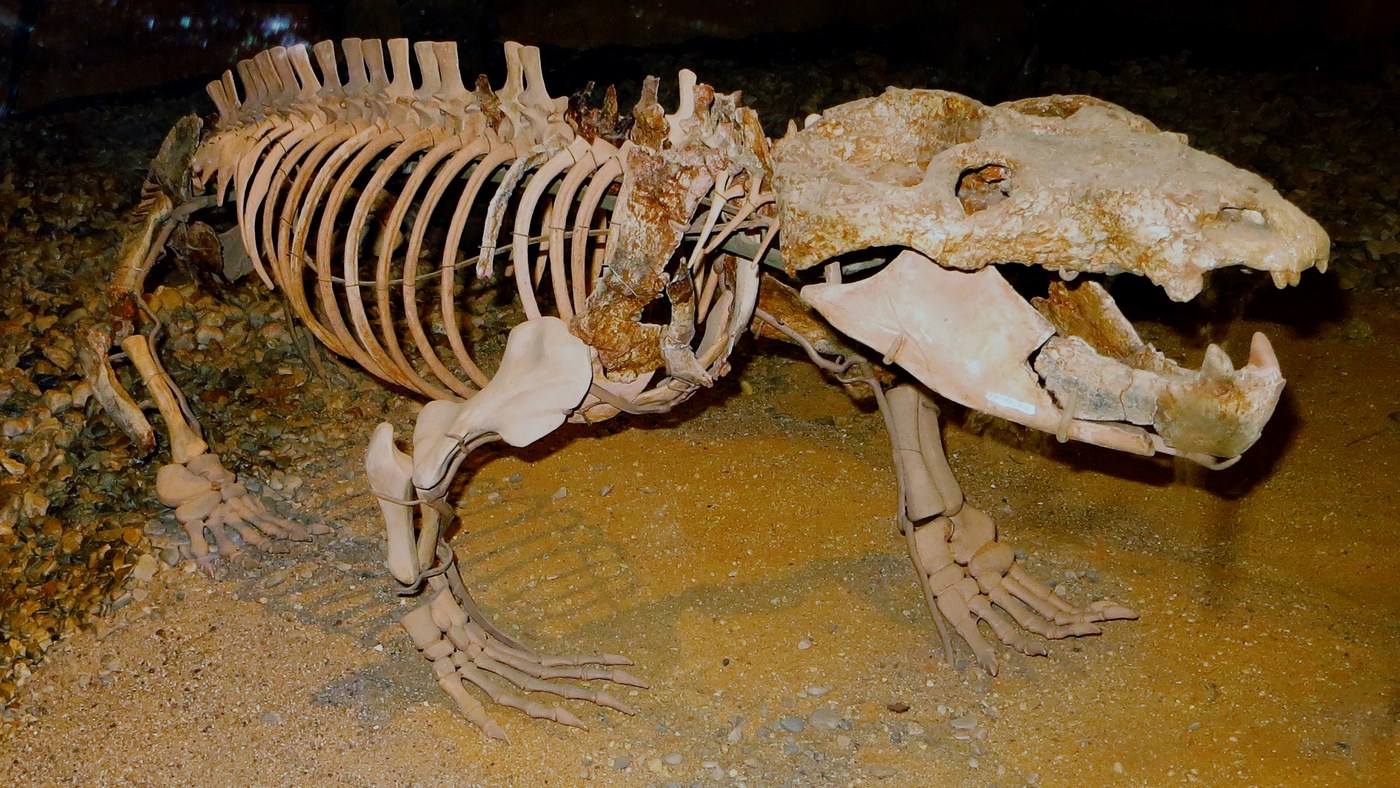
How many times did live birth evolve in the mammalian lineage?
The study of Chiniquodon presents two equally plausible evolutionary scenarios regarding the origins of live birth. In the first scenario, egg-laying remained the ancestral state, and Chiniquodon evolved live birth independently—an evolutionary experiment that mirrored the later development in placental mammals. In the second, more radical scenario, live birth evolved early in the probainognathian lineage, meaning that modern monotremes like the platypus and echidna actually reverted to egg-laying from a live-bearing ancestor.
The researchers acknowledge the limitations of the find, noting that pelvic anatomy in many cynodonts remains poorly understood, preventing a direct measurement of the birth canal. Furthermore, while other cynodonts like Kayentatherium and Lystrosaurus show evidence of small hatchlings or eggs, Chiniquodon stands as a distinct outlier. This suggests that the road to becoming a mammal was not a single path, but a complex web of traits—fur, milk, and live birth—that may have appeared and disappeared across different branches of the Triassic family tree.
Notes and Sources
- Gaetano, L. C., Miceli Baro, M. de los Á., Cerda, I. A., Mancuso, A. C. (2026). Early origin of viviparity in the mammalian lineage. Frontiers in Mammal Science, 5, 1845319.
- Sci.News / Phys.org (August 13, 2026): Reports on the Chañares Formation findings and Gaetano’s analysis of Triassic cynodonts.
- Science News (Thompson, August 2026): Independent commentary by Randall Irmis regarding the placental-like mass ratios of Chiniquodon.