A century-old fossil stored in the Natural History Museum in London has been identified as Invictibellatrix amberina, marking the first record of a megaraptoran dinosaur ever discovered in Europe. The specimen, a small braincase recovered from the cliffs of the Isle of Wight in the early 20th century, reveals that this predatory lineage inhabited the Northern Hemisphere tens of millions of years before massive megaraptors became dominant top predators in ancient South America and Australia.
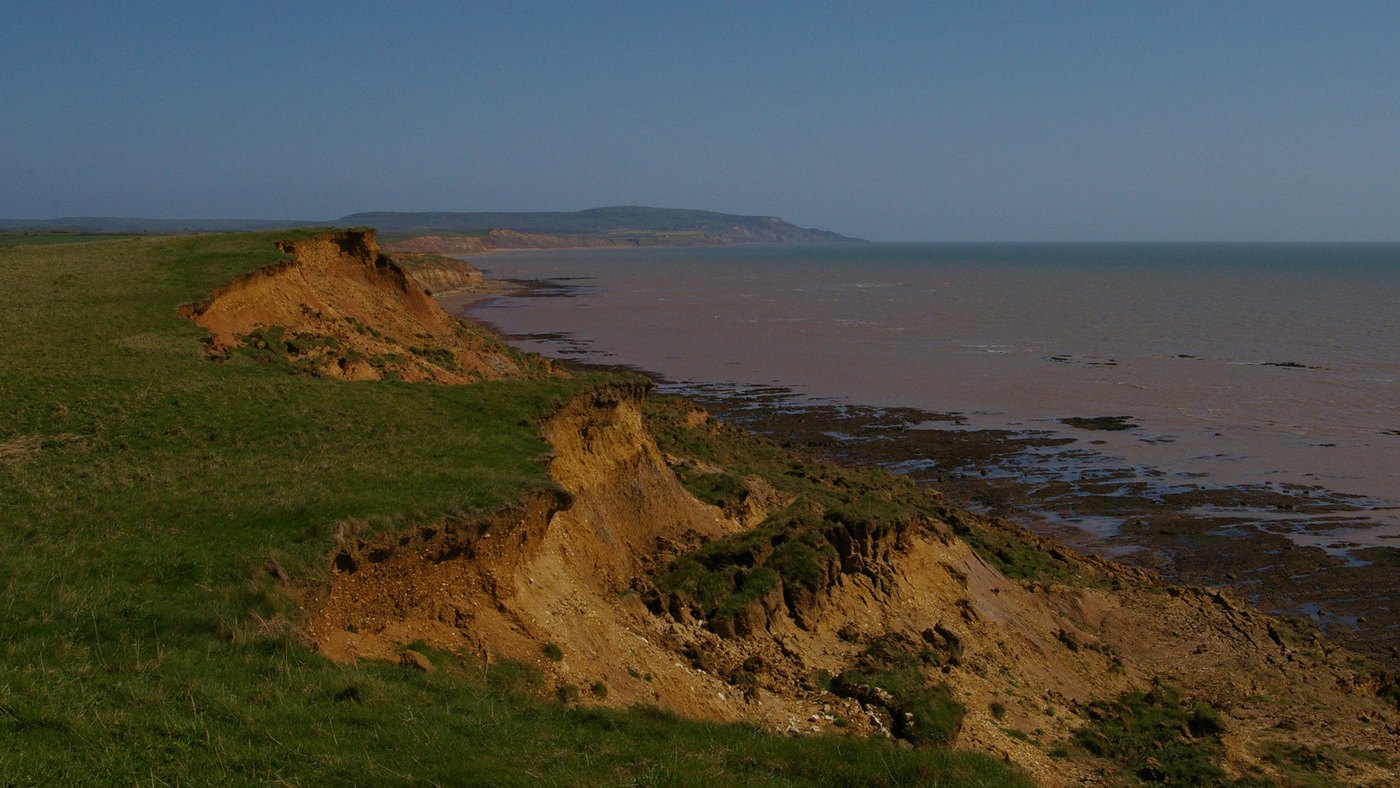
Reginald Walter Hooley, a Southampton wine merchant and avid amateur fossil hunter, spent the late 1880s onward scouring the exposed coastal cliffs of southwest Wight. Following his death in May 1923, his extensive private collection was acquired by the Natural History Museum in May 1924. Tucked among his finds was a small, obscure fragment of fossilized bone retrieved from the base of the Sudmoor Point cliff near the village of Brook. For nearly a century, the specimen sat unstudied in a wooden storage tray.
How was the century-old fossil identified in the museum collection?
In 2020, Natural History Museum paleontologist Paul Barrett identified the overlooked Isle of Wight fossil as a dinosaur braincase—the heavily reinforced rear section of the skull that encases the brain. Museum records confirmed the piece had been collected from the beach at Sudmoor Point. Barrett assigned the detailed analysis of the braincase to Cassius Morrison, a doctoral researcher studying dinosaur cranial anatomy. The initial findings were presented at the 2024 European Association of Vertebrate Palaeontologists conference before the species was formally named in Royal Society Open Science in October 2026.
To analyze the specimen without damaging the fragile bone, the research team performed high-resolution micro-computed tomography (micro-CT) scanning at the museum's imaging facility. The non-destructive X-ray technique captured anatomical details down to one-fifteenth of a millimeter, enabling scientists to render three-dimensional digital models of both the bone matrix and the internal brain cavity cavity. Because the structural sutures between individual cranial bones had fully fused and left no visible trace on the CT scans, researchers determined that the fossil belonged to an adult or near-adult individual.
The identification of Invictibellatrix amberina relied on a distinct combination of anatomical features rather than a single trait. The opening where the spinal cord enters the skull is distinctly oval, and the nuchal crest at the back of the skull—where powerful neck muscles once anchored—is shaped like an hourglass. Additionally, the braincase features paired depressions on its lower sides that do not exist in any other known carnivorous dinosaur group. When the team evaluated the specimen against cranial datasets from tyrannosaurs, spinosaurs, and dromaeosaurid raptors, phylogenetic trees produced across separate data models consistently placed the fossil within the Megaraptora clade.
How large was Invictibellatrix amberina compared to other megaraptors?
Invictibellatrix amberina was a lightweight, tiger-sized predator measuring up to 4 meters in length and weighing between 200 and 300 kilograms. Megaraptors were sleek, bipedal carnivores characterized by long, slender skulls and exceptionally powerful forelimbs armed with massive curved hand claws. While later Late Cretaceous megaraptors in South America reached giant proportions—such as Argentina's Maip macrothorax, which spanned nearly 10 meters and weighed several tons—the Early Cretaceous European species represents one of the smallest and earliest known members of the family.
The braincase of Invictibellatrix amberina is comparable in size to that of Timurlengia euotica, an early tyrannosaur relative discovered in Uzbekistan. By benchmarking the cranial volume of the Isle of Wight specimen against similar theropods, researchers established its modest dimensions. The discovery proves that early megaraptors were agile, medium-sized hunters that occupied distinct ecological niches before their descendants migrated to southern landmasses and evolved into apex predators over 60 million years ago.
Notes and Sources
- "Obituary: Mr. R. W. Hooley", Nature 111: 817 (June 16, 1923). doi:10.1038/111817b0; T. A. Getty, M. D. Crane (1975). "An historical account of the palaeontological collections found by R. W. Hooley (1865-1923)", Newsletter of the Geological Curators Group 4: 170-179.
- Cassius Morrison, Charlie R. Scherer, Philip D. Mannion, Laura B. Porro, Brett Clark, Daniel D. Folkes, Paul M. Barrett (2026). "A new megaraptoran dinosaur from the Lower Cretaceous Wessex Formation, UK, and its implications for theropod evolution and biogeography", Royal Society Open Science 13(10): 260937. doi:10.1098/rsos.260937
- Charlie Scherer, Cassius Morrison (October 20, 2026). "New long-clawed British dinosaur is the first of its kind in Europe", The Conversation. theconversation.com
- C. D. I. Morrison, J. Perkins, C. Scherer, P. D. Mannion, L. B. Porro, B. Clark, P. M. Barrett (2024). "The first reported megaraptoran theropod dinosaur from Europe and the implications for megaraptoran origins", 21st Annual Meeting of the European Association of Vertebrate Palaeontologists, Abstract Book, pp. 37-38.
- Natural History Museum (October 14, 2026). "UK dinosaur fossil identified as new long-clawed predator", Press Release. nhm.ac.uk
- R. W. Hooley (1925). "On the skeleton of Iguanodon atherfieldensis sp. nov., from the Wealden Shales of Atherfield (Isle of Wight)", Quarterly Journal of the Geological Society 81: 1-61. doi:10.1144/GSL.JGS.1925.081.01-04.02