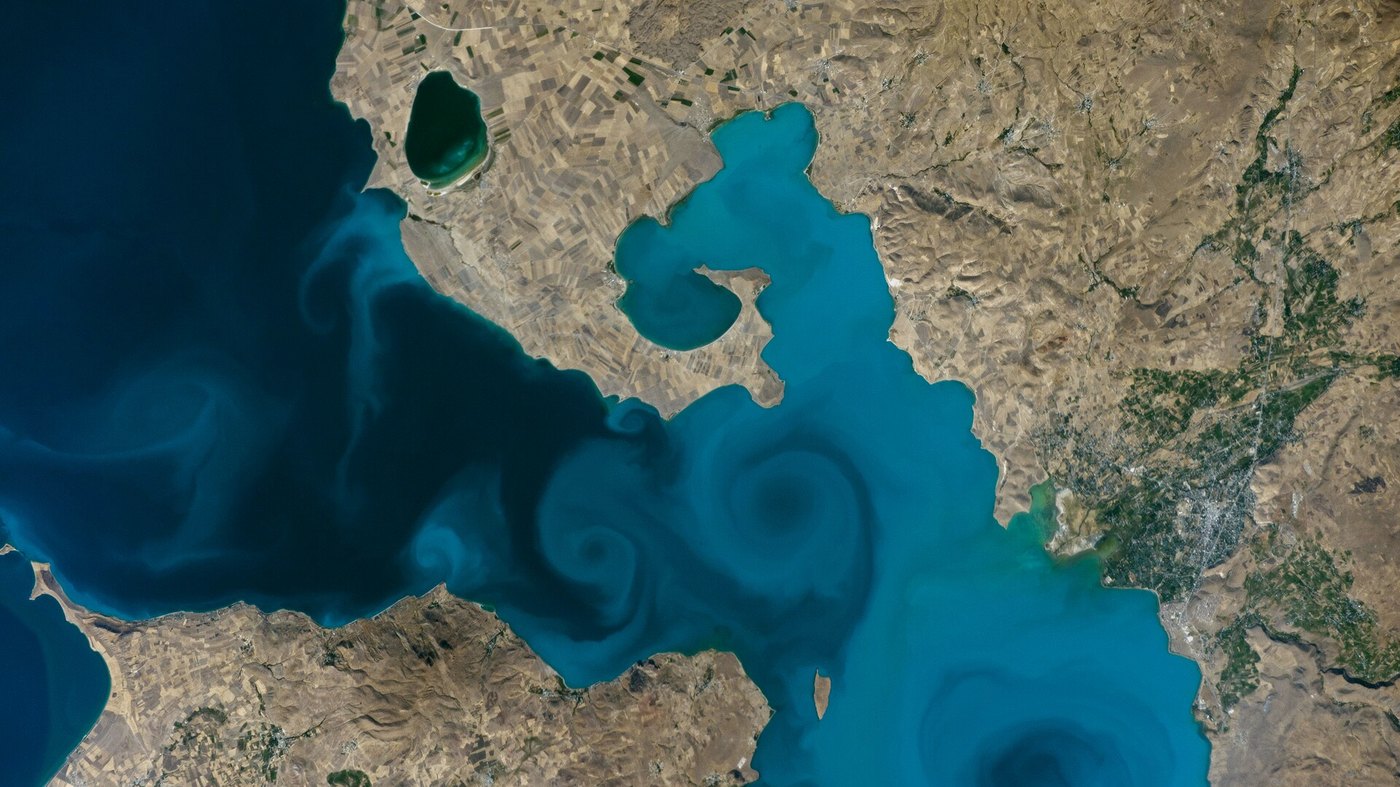
On July 2, 2010, a drilling platform anchored in the center of Lake Van began piercing the lakebed. The PALEOVAN project, led by Thomas Litt of the University of Bonn and supported by the International Continental Scientific Drilling Program (ICDP), operated at two specific sites. The team focused on an underwater ridge known as the Ahlat Ridge. There, beneath 360 meters of water, the team drilled 220 meters into the sediment, reaching the underlying bedrock.1
Drilling crews worked in twelve-hour shifts. Upon each rotation, core samples were transported to the shore and stored in refrigerated containers maintained at 4 degrees Celsius. These samples are currently held at the MARUM repository of the University of Bremen.1 Researchers dated the fine sediment layers and interbedded volcanic ash deposits individually. The resulting timeline, published in 2014, demonstrated that the Ahlat Ridge sequence extends back 600,000 years.2
Key Findings on Ancient Lakes
- The definition of an "ancient" lake is younger than one might assume.
- A tiny fraction of the Earth's surface holds the majority of its liquid freshwater.
- Bacterial towers are rising from the depths of Lake Van.
- Despite long-standing assumptions that the lake was barren, night dives have revealed hundreds of fish.
What defines an ancient lake?
Most of the world's lakes are geologically young. According to a 2018 review led by Stephanie Hampton, the majority of the world's lakes are less than 10,000 years old.3 Over time, sediment transported by rivers fills these basins, transforming them into wetlands and eventually meadows. The research team defined an "ancient" lake as one that has survived at least one glacial cycle, implying an age greater than 130,000 years. Using this criterion, they identified 29 such lakes, with Lake Van entering the list as being more than half a million years old. These lakes cover less than one percent of the land surface yet contain roughly half of the world's unfrozen surface freshwater.3
What are the oldest lakes in the world?
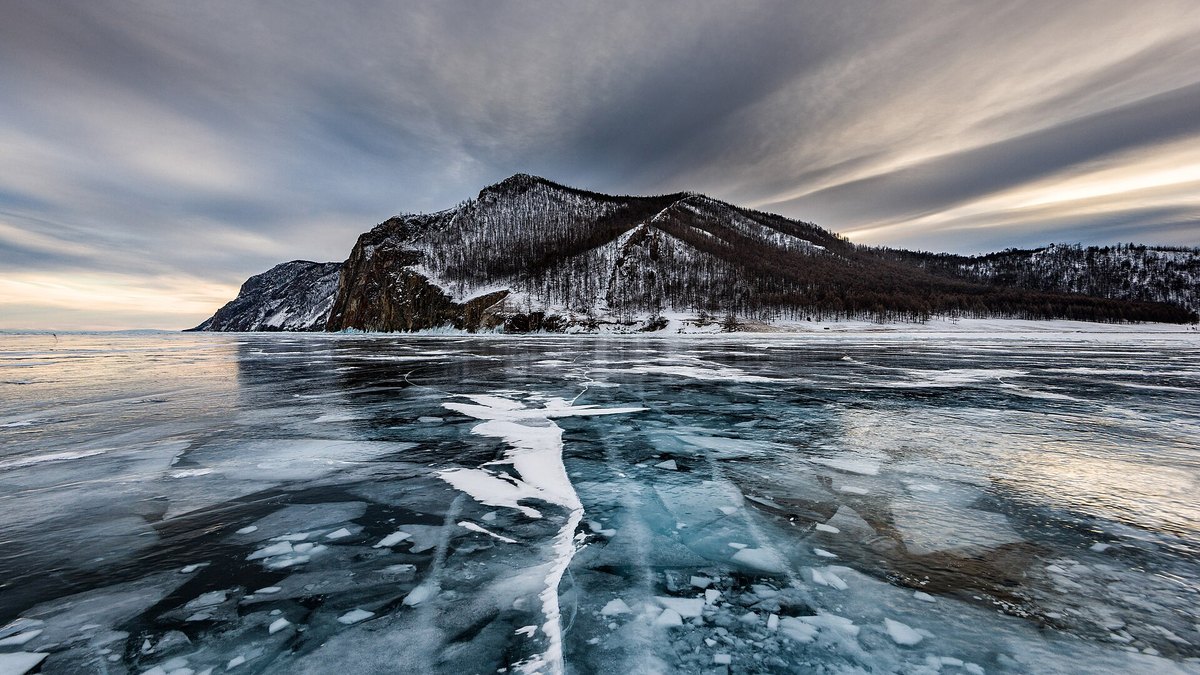
The oldest lake is Lake Baikal in Siberia, which UNESCO dates to 25 million years.4 According to a 2025 IUCN assessment, the lake reaches a depth of 1,638 meters and holds approximately 20 percent of the world's unfrozen freshwater. The same assessment records at least 2,640 animal species, approximately 56 percent of which are endemic to the lake.5 It is also home to the nerpa, the only seal species that lives exclusively in freshwater.3
Such long-lived basins typically form in continental rift zones. As the Earth's crust pulls apart, the depression deepens faster than river-borne sediment can fill it. Lake Tanganyika in East Africa exists within such a rift. In 1993, Andrew Cohen’s team at the University of Arizona calculated that the lake's central basin began forming 9 to 12 million years ago.6 A 2020 study by Walter Salzburger’s team at the University of Basel counted at least 241 cichlid fish species in the lake, all but two of which are endemic to the basin.7
Lake Ohrid, recognized as Europe's oldest lake, lies on the border between Albania and North Macedonia. During a 2013 drilling expedition, the team sampled 568 meters of sediment from beneath 245 meters of water. A study led by Bernd Wagner of the University of Cologne, published in Nature in 2019, showed that the lake formed 1.36 million years ago and has remained continuously filled since then. More than 300 endemic animal and plant species reside in the lake.8
What does the sediment of Lake Van reveal?
The Ahlat Ridge core provided data extending beyond the mere age of the lake. Researchers measured organic carbon, sediment color, and pollen concentrations. By aligning sudden shifts in these data with warming pulses found in Greenland ice cores, they established a precise chronology.2 The Lake Van record has thus become the longest terrestrial record in the Near East, serving as a critical proxy for understanding the climate of the semi-arid region between the Black, Caspian, and Mediterranean Seas.1
Notes and Sources
- Litt T et al. (2012). 500,000 Years of Environmental History in Eastern Anatolia: The PALEOVAN Drilling Project. Scientific Drilling 14: 18-29. doi:10.2204/iodp.sd.14.02.2012.
- Stockhecke M et al. (2014). Chronostratigraphy of the 600,000 year old continental record of Lake Van (Turkey). Quaternary Science Reviews 104: 8-17. doi:10.1016/j.quascirev.2014.04.008
- Hampton SE, McGowan S, Ozersky T et al. (2018). Recent ecological change in ancient lakes. Limnology and Oceanography 63: 2277-2304. doi:10.1002/lno.10938
- UNESCO World Heritage Centre. Lake Baikal (ref. 754, 1996).
- IUCN World Heritage Outlook. Lake Baikal, 2025 assessment.
- Cohen AS, Soreghan MJ, Scholz CA (1993). Estimating the age of formation of lakes: An example from Lake Tanganyika, East African Rift system. Geology 21: 511-514.
- Ronco F, Büscher HH, Indermaur A, Salzburger W (2020). The taxonomic diversity of the cichlid fish fauna of ancient Lake Tanganyika, East Africa. Journal of Great Lakes Research 46: 1067-1078.
- Wagner B, Vogel H, Francke A et al. (2019). Mediterranean winter rainfall in phase with African monsoons during the past 1.36 million years. Nature 573: 256-260.