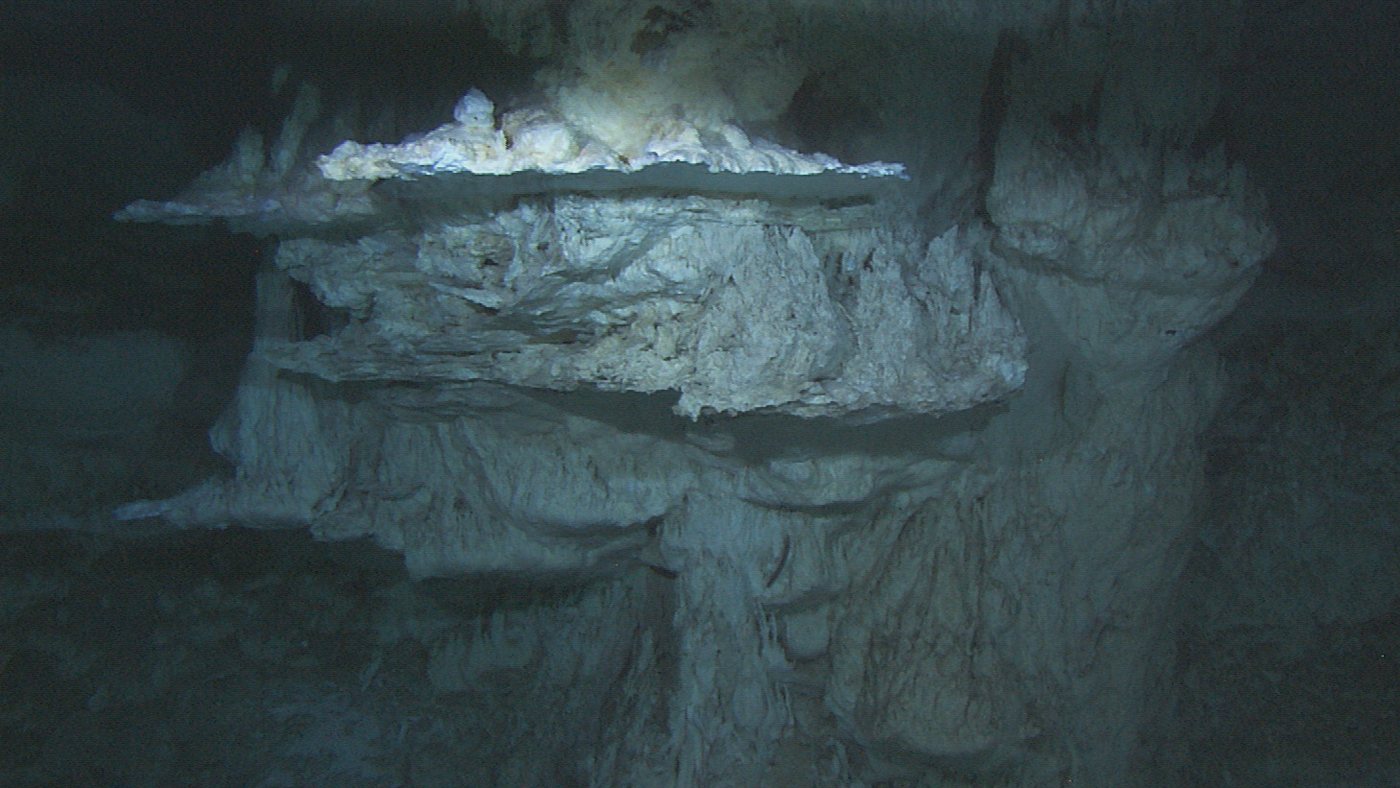
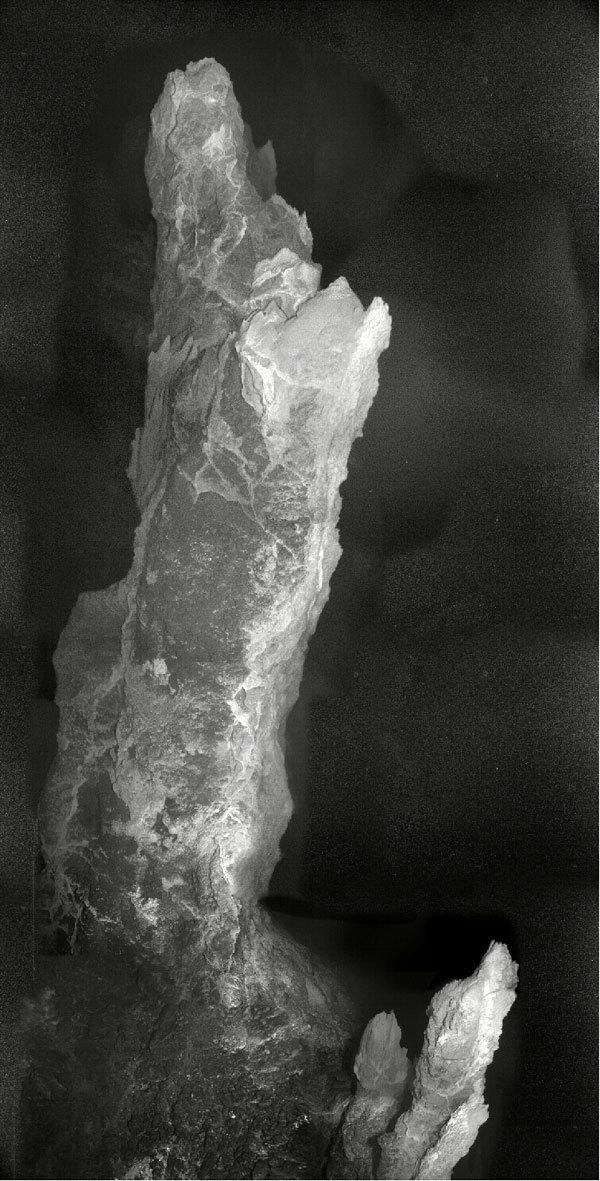
In 2000, researchers aboard an exploration vessel discovered a startling sight on the seabed of the mid-Atlantic: a field of white carbonate chimneys rising as high as 60 meters from the ocean floor. Located 15 kilometers from the Mid-Atlantic Ridge at a depth of 750 to 900 meters, this site was named the Lost City. These structures emitted a basic, soap-like fluid rich in hydrogen and methane at temperatures between 40 and 90 degrees Celsius.1
For twenty-five years, many biologists have championed this site as the likely birthplace of life on Earth. However, writing in the journal PNAS on August 28, 2026, geochemist Benjamin Tutolo of the University of Calgary systematically challenged the three fundamental assumptions underpinning this theory.2
- How cellular energy production became linked to seafloor vents.
- Why on-board measurements of Lost City fluids overestimate their pH levels.
- The current standing of the alkaline vent hypothesis amidst new scrutiny.
- Why Darwin’s 1871 'warm little pond' concept is returning to the spotlight.
How do hydrothermal vents function as natural batteries for life?
Every living cell today generates energy through a conserved process: it maintains a proton gradient across its membrane. As protons move across this barrier, they release the energy required to synthesize ATP, the primary fuel molecule for life. British biochemist Peter Mitchell proposed this mechanism in 1961, an achievement for which he was awarded the Nobel Prize in Chemistry in 1978.3 The alkaline vent hypothesis posits that this bioenergetic mechanism existed in inorganic form within these chimneys long before the first living cells. According to a 2016 study by Nick Lane, Víctor Sojo, and their colleagues, the mineral walls of these vents—theorized to be composed of iron and nickel sulfides—provide the necessary structure to sustain a proton gradient, potentially mirroring the process that modern bacteria and archaea use to fix carbon.4
What are the primary objections to the alkaline vent hypothesis?
Tutolo’s first objection concerns the thermodynamics of the 'battery' itself. Laboratory measurements of Lost City fluids at room temperature typically show a pH of 10.1 to 10.7. However, a 2015 study co-authored by Tutolo analyzed the Beehive vent, the hottest in the field, and estimated an in-situ pH of 8.0 to 8.5.56 As the fluid cools, hydroxide ions pair with sodium, artificially inflating the pH reading. Given that models suggest the Hadean ocean had a pH of approximately 6.6, the proton gradient between the vent and the ocean is far smaller than previously estimated—making the 'battery' significantly weaker than required for early biological processes.7
Tutolo’s second objection involves the role of sulfur. The hypothesis requires thin, iron-sulfide walls to function. However, the mantle rock that fuels Lost City, known as peridotite, is inherently sulfur-poor. Tutolo argues that ancient vents of this type would have lacked the sulfur necessary to form such structures.2 Finally, Tutolo highlights kinetic limitations, noting that the complex carbon chains required for primitive metabolism and cellular membranes would form too slowly under these temperature and chemical conditions to support the origin of life.
Is the 'warm little pond' theory a viable alternative to hydrothermal vents?
In a letter to botanist Joseph Hooker on February 1, 1871, Charles Darwin mused that life might have begun in a 'warm little pond' containing ammonia and phosphorus salts.9 Tutolo suggests this concept deserves renewed attention. The main historical obstacle to this theory has been the phosphate problem, as phosphate is essential for DNA, RNA, and ATP but usually precipitates out of natural water when it bonds with calcium. In 2020, Jonathan Toner and David Catling proposed that carbonate-rich lakes solve this issue, as phosphate remains in solution in these environments, reaching concentrations high enough to facilitate the chemistry of life.10

While this model has its own challenges, it remains a focal point for researchers exploring how organic molecules like RNA and proteins might have formed. These debates have significant implications for astrobiology, particularly regarding the search for life on icy moons like Europa and Enceladus. If hydrothermal vent models are flawed, our expectations for life elsewhere may need to be recalibrated. NASA’s Europa Clipper, which launched in October 2024, is set to reach Jupiter in 2030 to analyze the chemistry of Europa’s subsurface ocean from orbit.
Notes and Sources
- Deborah S. Kelley, et al. (2005). "A serpentinite-hosted ecosystem: the Lost City hydrothermal field", Science 307(5714): 1428-1434.
- Benjamin M. Tutolo (2026). "Rethinking the origin of life at seafloor hydrothermal vents", PNAS 123(36): e2613108123.
- Peter Mitchell (1961). "Coupling of phosphorylation to electron and hydrogen transfer by a chemi-osmotic type of mechanism", Nature 191: 144-148.
- Víctor Sojo, et al. (2016). "The origin of life in alkaline hydrothermal vents", Astrobiology 16(2): 181-197.
- William E. Seyfried Jr., et al. (2015). "The Lost City hydrothermal system", Geochimica et Cosmochimica Acta 163: 59-79.
- Susan Q. Lang, William J. Brazelton (2020). "Habitability of the marine serpentinite subsurface", Philosophical Transactions of the Royal Society A 378: 20180429.
- Joshua Krissansen-Totton, et al. (2018). "Constraining the climate and ocean pH of the early Earth", PNAS 115(16): 4105-4110.
- Nick Lane (2017). "Proton gradients at the origin of life", BioEssays 39: 1600217.
- Letter from Charles Darwin to Joseph Dalton Hooker, February 1, 1871. Darwin Correspondence Project, no. 7471.
- Jonathan D. Toner, David C. Catling (2020). "A carbonate-rich lake solution to the phosphate problem of the origin of life", PNAS 117(2): 883-888.