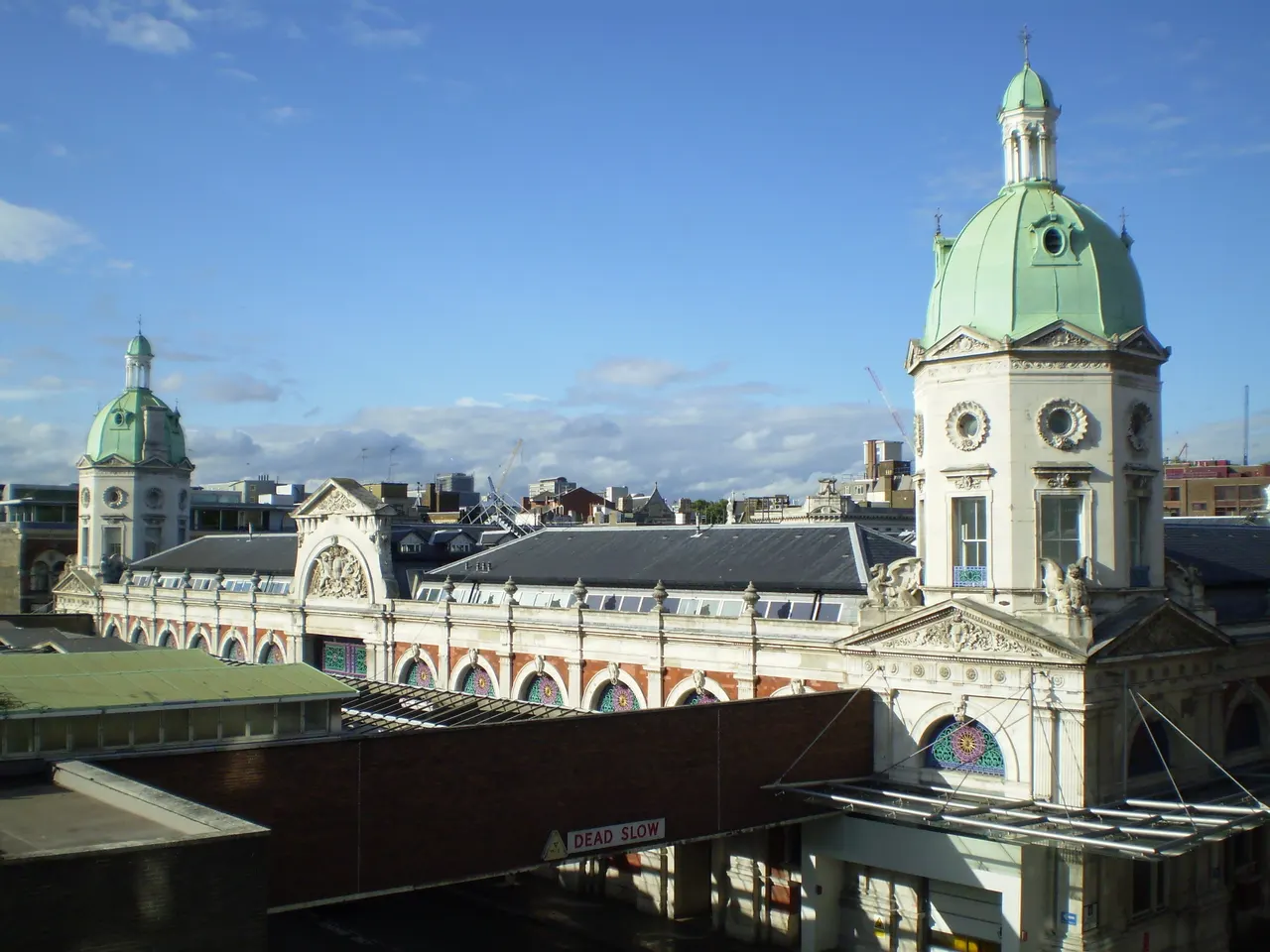
Imagine standing within a subterranean cathedral of brick and iron where the echoes of lowing cattle once mingled with the shouts of Victorian traders. This Saturday, that iconic site—the historic Smithfield Market—begins a miraculous second life. Following an ambitious £437m restoration project, the institution long known to culture lovers as the Museum of London opens its doors in its new home under a fresh, crisp name: the London Museum. Moving from its subterranean, modernistic 1970s enclave at London Wall near the Barbican complex into the majestic contours of Smithfield’s General Market Building, the museum has expanded its footprint dramatically from 17,000 square metres to 27,000. In doing so, it has accomplished something profound: it has turned the act of visiting a collection into an act of urban exploration, inviting us to encounter two millennia of human endurance within the very fabric of the city’s trade history.
A Crucible of Capital and Clay
To understand why this relocation matters, one must grasp how the London Museum itself came to be. Formed in 1976 through the amalgamation of two distinct collections—that of the City Corporation at the Guildhall Museum and the original London Museum—the institution was built to chronicle a metropolis of extraordinary lineage. London’s human history spans over 2,500 years, growing from humble prehistoric settlements along the braided channels of the River Thames into one of the world's most impactful financial and cultural centres.
The city's survival is itself a masterclass in resilience. London is a place that has endured devastated centuries of plague, horrific fire, civil war, aerial bombardment, terrorist attacks, and civil riots. For decades, its stories were held in a building created to heal the bomb-damaged scars of the Second World War as part of the Barbican redevelopment. Yet, that previous site proved difficult for modern visitors to navigate, keeping vast swathes of its archive hidden away in darkness. Now, by stepping into West Smithfield—a historic district sitting in Farringdon Without, the most westerly ward of the ancient City of London—the museum anchors its treasures in a setting that mirrors the grit, commerce, and spectacle of the city’s past.
The Art of Urban Archaeology
At the heart of the London Museum’s curatorial ethos is the discipline of urban archaeology—the specialized study of the material past within densely populated towns and cities. When human beings gather in vast numbers, they leave behind an astonishingly dense physical record. Where small communities can dispose of their refuse locally, large urban concentrations produce vast concentrations of waste: kitchen scraps, broken household objects, and industrial leftovers. Historically, material was constantly brought into these dense settlements but rarely taken out again, creating rich, layered stratigraphies of human experience.

Consider the deep history preserved in the soil beneath the pavement. In the early 1970s, at Fulham Palace in West London, archaeologists unearthed struck flints dating to the late Mesolithic and early Neolithic ages—evidence of early humans occupying an isolated eyot, a small island within the river channels. Upstream near Vauxhall Bridge, dendrology (the science of dating tree rings in ancient wood) dated the submerged timbers of a Bronze Age bridge to around 1750 BC. These physical relics, alongside artifacts spanning from the Iron Age to the modern era, tell a story of constant adaptation.
Urban archaeology allows us to decipher the social, economic, and physical dynamics of a metropolis that has continuously rebuilt itself upon its own discarded past.
By bringing these subterranean discoveries into the iron-ribbed halls of Smithfield, the museum connects ancient detritus with modern relics. Displays range seamlessly from prehistoric tools to the startling artifacts of 21st-century infrastructure—including the notorious modern fatbergs carved from the subterranean sewers, delicate feathers, and historical reminders of the flocks of sheep that were once driven directly through Smithfield's market gates.
Why London’s Treasures Matter Today
Why does this grand reimagining matter to us now? Because a city is more than its towering glass spires and financial exchanges; it is an ongoing human collaboration. By increasing its display space by over ten thousand square metres, the London Museum can finally show a vastly greater proportion of its collections, offering a panoramic view of how ordinary citizens navigated extraordinary times.

The historic core of the City of London remains a global hub of finance, but its true wealth lies in these preserved fragments of everyday life. Walking through the light-filled avenues of the restored market building, visitors no longer view history behind cold, detached glass. Instead, they experience the civic archive framed by the very Victorian ironwork that witnessed London's industrial zenith. As the London Museum opens its doors at Smithfield this Saturday, it does not merely display history—it invites us to step directly inside it.
Sources: This report draws on coverage by BBC Arts. The wording is our own.