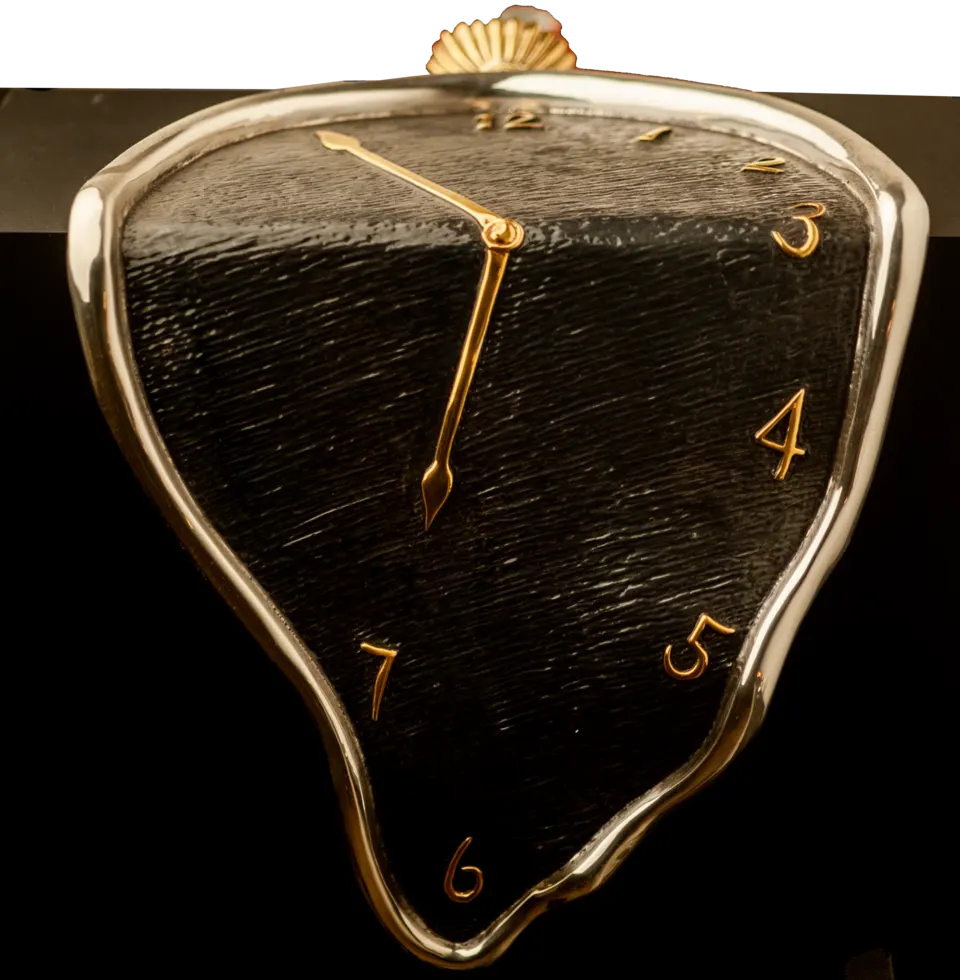
A pocket watch, usually the ultimate symbol of rigid, industrial punctuality, drapes limply over the edge of a block like a piece of melting cheese. Nearby, another timepiece is being devoured by ants, while a third hangs over the branch of a dead olive tree. This is the landscape of the subconscious made manifest: a world where the laws of physics are suspended, and the anxieties of the human soul are rendered with the clinical precision of a Renaissance master. It is an image that has launched a thousand interpretations and, more recently, captured the digital imagination, with a single analysis of Salvador Dalí’s genius garnering over 2.1 million views as a new generation seeks to decode his visual riddles.
The Super-Reality of the Unconscious
This fascination with the illogical is set to reach a new fever pitch. Tate Liverpool has recently announced that its doors will swing open in the Fall of 2027 following a major transformation, inaugurated by a sweeping Surrealism survey. Running through the Spring of 2028, the exhibition promises to reunite the works of Salvador Dalí, Eileen Agar, and Man Ray, offering a fresh lens on a movement that sought to do nothing less than rewire human perception.
Surrealism was never merely an aesthetic choice or a school of painting; it was a cultural revolution. Emerging in Europe during the fractured aftermath of World War I, it was a response to a world that had been torn apart by the so-called rationalism of modern states. Artists and writers, led by the movement’s pioneer André Breton, felt that the logic of the waking world had failed humanity. Their solution was to look inward, exploring the unconscious mind as a source of truth that was more authentic than any political or social structure.
"To resolve the previously contradictory conditions of dream and reality into an absolute reality, a super-reality."
Dalí and the Technicality of Dreams
At the heart of this movement stood Salvador Dalí, a man whose persona was often as bizarre as his canvases. Known formally as the Marquess of Dalí de Púbol, he was a figure of immense technical skill and precise draftsmanship. Unlike the abstract artists who would follow, Dalí did not want to abandon reality; he wanted to distort it. He used a hyper-realistic style to paint things that could not possibly exist, a technique that forced the viewer to confront the impossible as if it were a photograph.

In his most famous works, Dalí utilized what he might describe as a hand-painted dream photograph. By using chiaroscuro—the dramatic treatment of light and shade to create a sense of three-dimensional volume—he gave his melting clocks and distorted figures a weight and presence that made them feel dangerously real. He was not just painting a dream; he was capturing a surreality, a state where the boundaries between what we see and what we feel are erased.
A Global Language of the Bizarre
While Dalí provided the movement with its most recognizable face, the upcoming Tate Liverpool survey highlights that Surrealism was a broad and diverse church. Figures like Eileen Agar brought a unique sensibility to the movement, blending natural forms with the fantastic, while Man Ray used photography to prove that even a camera—a tool of documentation—could be used to lie beautifully. They were all united by the desire to allow the mind to express itself without the "exercise of reason," as Breton’s manifesto suggested.
This pursuit changed the trajectory of art history because it shifted the focus from the external world to the internal landscape. Before the Surrealists, art was often a window onto the world—a landscape, a portrait, a historical event. After Surrealism, art became a mirror held up to the strange, often frightening depths of the human psyche. It gave us permission to be illogical and recognized that our dreams are just as much a part of our biography as our waking hours.

Why the Dream Endures
Why does a movement that began over a century ago continue to unsettle us today? Perhaps it is because we live in an era where the boundary between the real and the simulated is thinner than ever. In a world of digital distortions and shifting truths, the Surrealist idea of an "absolute reality" feels remarkably contemporary. The melting clock is no longer just a comment on the relativity of time; it is a symbol of a world that feels increasingly fluid and unstable.
As we look toward the 2027 reopening of Tate Liverpool, the enduring power of these artists remains clear. They taught us that the most profound truths are often found in the things that make the least sense. By inviting us to step inside their dreams, Dalí and his contemporaries ensured that we would never look at the waking world the same way again. The survey will not just be a look back at a historical movement, but a reminder that we are all, in some sense, still living in the shadow of the Surreal.
Sources: This report draws on coverage by ARTnews. The wording is our own.