A Sacred Pattern in Close-Up
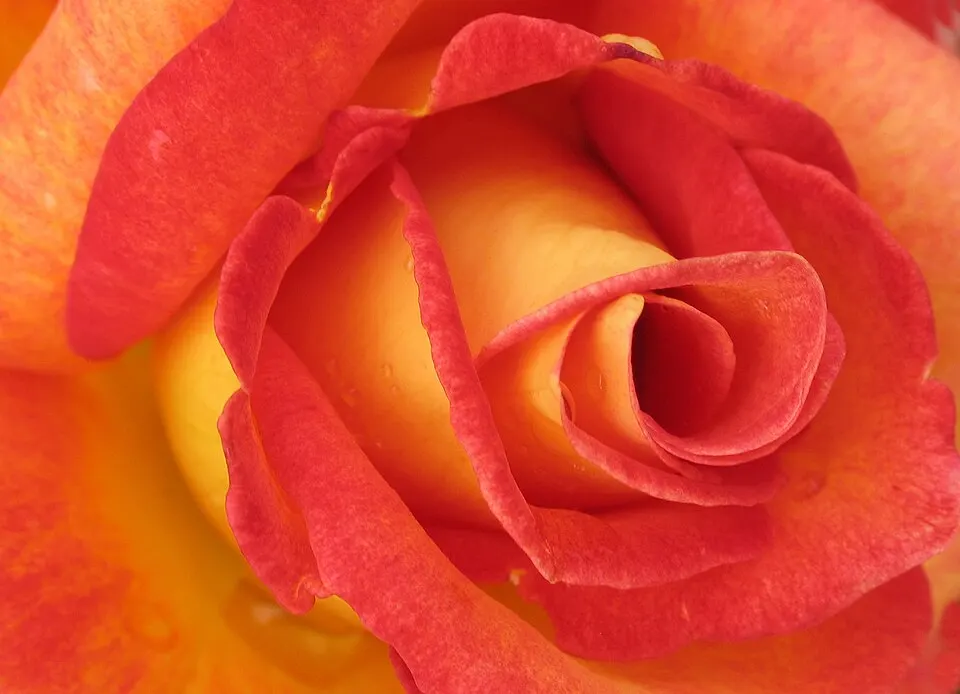
Imagine standing inches away from a unfurling crimson petal, where the light hits the curved edge like sunlight cutting through stained glass. What appears to the casual observer as a simple garden bloom becomes, under precise optical scrutiny, a labyrinth of velvet folds, radial symmetry, and translucent veins. A recent showcase of 15 striking shots from the Smithsonian Magazine Photo Contest captures radiant roses from every conceivable angle and hue, reminding us why this perennial flowering plant of the genus Rosa—a member of the family Rosaceae—remains an enduring muse for creators across millennia.
As William Shakespeare famously wrote, a rose by any other name would smell as sweet. Yet behind its legendary fragrance and dramatic prickles lies a structural beauty that photography is uniquely equipped to interrogate. Nature photography, an outdoor genre devoted to displaying natural elements such as plants, landscapes, and intricate textures, places a paramount emphasis on aesthetic value over the factual narrative of photojournalism. When applied to the rose, this aesthetic lens transforms an everyday emblem of romance into a monumental study of natural geometry.
From Ancient Persian Roots to Optical Precision
The cultural obsession with the rose is etched into the very history of human language and art. The modern word traces its lineage back through the Latin rosa—likely borrowed from Oscan—to the Greek rhódon, and further still to the Old Persian wrd- (or wurdi), with deep linguistic roots in Avestan, Sogdian, and Parthian. Today, there are over three hundred species and tens of thousands of cultivars worldwide, ranging from modest shrubs to ambitious climbers reaching up to seven metres in height. Though most species are native to Asia, with smaller native populations scattered across Europe, North America, and Northwest Africa, human fascination has hybridised the flower into countless variations of white, pink, red, orange, and yellow.
To truly grasp how contemporary photographers capture these blooms, one must understand the technical mastery of macro photography (also termed photomacrography or macrography). In its strictest definition, a macro photograph reproduces a subject at an optical reproduction ratio—the size of the image captured on the sensor compared to the actual subject—of 1:1 or greater. This means the subject is rendered life-size or larger. While early botanists relied on delicate watercolor wash and meticulous etching to catalog plants, modern photographers use macro lenses, defined broadly by optical designer Rudolf Kingslake as lenses corrected for exceptional performance across a wide range of object distances, to magnify the unseen world.

The optical reproduction ratio captures the secret architecture of the bloom, magnifying tiny living forms beyond life-size to reveal a hidden universe of form and light.
The Art of Seeing the Unseen
By bringing the eye within millimetres of the petal, macro photographers alter our relationship with a familiar icon. Instead of viewing a rose as an isolated symbol of human sentiment, macro techniques highlight its raw, botanical reality. The camera records the subtle variations in hue, the precise sequence of leaf attachments along the stem, and the sharp geometry of the prickles designed to protect the plant in the wild.
This close-up perspective shifts the viewer's focus toward pure abstraction. Light filtering through a single petal creates dramatic contrasts between light and shade, accentuating delicate surface textures that are entirely invisible from a step back. The contest entries highlighted by Smithsonian Magazine—a publication that has explored science, history, art, and innovation since its first issue in 1970—demonstrate how modern digital techniques honor a traditional subject through fresh, hyper-detailed observation.
Why the Magnified Rose Endures
Why does the magnified botanical photograph continue to hold such sway over our collective imagination? In an era saturated with transient digital media, the deliberate focus of macro nature photography demands a slowed-down, meditative form of attention. It forces us to appreciate the structural complexity of a living organism that easy commercial symbolism often obscures.

By bridging the precise science of optical magnification with an unyielding devotion to visual harmony, these new photo contest entries prove that the rose is far from an exhausted subject. Through the sharp focus of a macro lens, this ancient flower is continually reborn—offering an infinite terrain of color, light, and form for those willing to look closely enough.
Sources: This report draws on coverage by Smithsonian Magazine. The wording is our own.