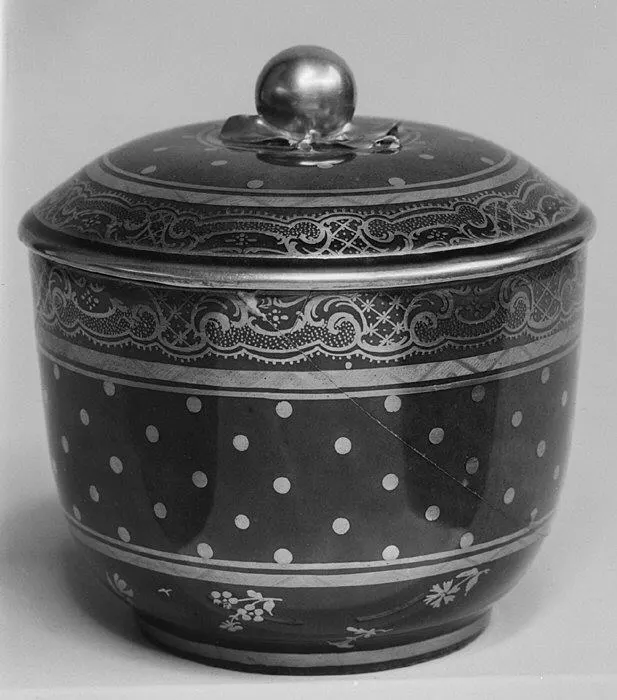
In the hushed, velvet-lined atmosphere of a Paris auction house, a small piece of porcelain just shattered expectations. Measuring little more than a handful, the delicate, white-veined vessel—famously known as a jatte-téton or 'breast bowl'—was hammered down for a staggering $2.47 million. This rare object, one of only four known to exist from Marie Antoinette’s personal collection, has long been a symbol of the dizzying refinement and fatal detachment of the French monarchy on the eve of revolution.
To look at the bowl is to witness the pinnacle of the Sèvres porcelain manufactory. Its surface is a creamy, translucent white, designed to mimic the softness of skin, while its form—a perfect hemisphere ending in a delicate, pink-tipped point—is both startlingly anatomical and strictly neoclassical. This was not a utilitarian object for a common kitchen, but a piece of high-concept art commissioned for a queen who wished to play at the simple life while surrounded by the most expensive craftsmanship in Europe.
The Pleasure Dairy: Versailles’ Pastoral Fantasy
The bowl was originally created for Marie Antoinette’s Laiterie de Propreté, or 'pleasure dairy', located at the Rambouillet estate near the Château de Versailles. In the late 18th century, the French aristocracy was gripped by a peculiar fascination with the 'natural' world, inspired by the writings of Jean-Jacques Rousseau. This movement, known as le retour à la nature, led the Queen to commission a rustic retreat where she could escape the rigid etiquette of the court.
However, this was nature viewed through a gilded lens. The dairy was a marvel of marble and cool stone, where milk was kept in hand-painted Sèvres vessels and the Queen and her ladies-in-wealth would masquerade as simple milkmaids. The 'breast bowl' was the centerpiece of this performance. Legend suggested the bowl was molded directly from the Queen’s own anatomy, though art historians view this more as a manifestation of the era’s obsession with maternal symbolism and the cult of the breast as a source of national nourishment.

The rare 'nipple bowl' is one of four such bowls that was made for the French queen’s 'pleasure dairy' near the Château de Versailles.
Sèvres and the Alchemy of Excess
The creation of such an object required a mastery of porcelain that remains unrivaled. Sèvres was the Royal manufactory, a place where chemists and artists collaborated to create pâte dure (hard-paste porcelain) that could rival the imports from China and Meissen. To achieve the specific blush and texture of the jatte-téton, artisans employed delicate glazes and precise firing techniques, ensuring the vessel was as durable as it was provocative.
In the context of 1780s France, these bowls were more than just whimsical table service; they were political lightning rods. While the populace faced bread shortages and economic ruin, the Queen was commissioning porcelain that celebrated the female form in a setting of artificial poverty. The dairy at Rambouillet, with its neoclassical friezes and exquisite ceramics, became a potent symbol of the perceived frivolousness of the crown. The 'pleasure dairy' was not a working farm, but a stage set for an elite that had lost touch with the ground beneath its feet.
Why the Breast Bowl Still Matters
The recent sale of this bowl for $2.47 million—surpassing its top estimate—proves that the allure of Marie Antoinette’s world has not faded. It remains a testament to a moment when art was used to navigate the boundary between the private body and the public image. The jatte-téton is a masterclass in neoclassicism, the movement that sought to revive the order and aesthetics of Greek and Roman antiquity, yet it subverts that order with a startling, intimate realism.

Today, we view these bowls through the lens of history, knowing the tragic end that awaited their patron. They are no longer just dairy vessels; they are relics of a vanished world. They represent a peak of human technical achievement in ceramics, where the fragility of the material perfectly mirrors the precariousness of the society that produced it. As this rare survivor enters a new private collection, it continues to serve as a haunting reminder of the beauty—and the cost—of absolute refinement.
Sources: This report draws on coverage by ARTnews. The wording is our own.