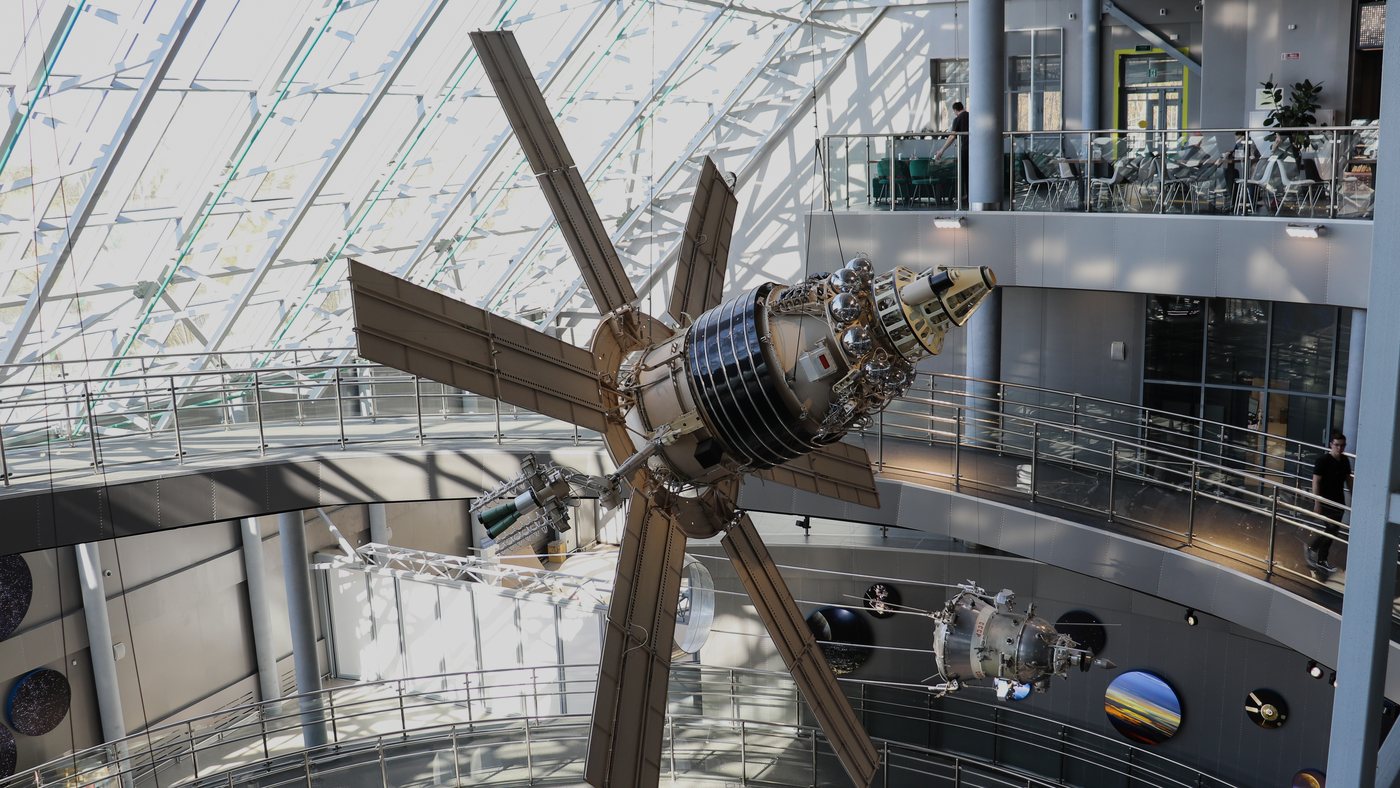
On April 23, 1965, the Soviet Union launched Molniya 1-1, which became the nation's first continuously operational communications satellite. Its trajectory was shaped like an elongated egg, with a perigee of a few hundred kilometers and an apogee nearing 40,000 kilometers. The satellite spent the vast majority of its 12-hour orbit drifting slowly near that high-altitude point, allowing it to maintain simultaneous visibility over Moscow and Siberia for hours at a time.1
This configuration faced a persistent challenge: the Earth is not a perfect sphere, as its rotation causes an equatorial bulge approximately 21 kilometers in height. The excess gravity exerted by this bulge gradually shifts the apogee of an elliptical orbit with every revolution. If the apogee drifted south of Siberia, the satellite would lose its ability to serve its intended region. Engineers solved this by setting the orbital inclination to 63.4 degrees, a "critical angle" where the rate of apogee drift approaches zero.2
The story of the Molniya orbit can be interpreted in reverse. Is it possible to rotate the orientation of an orbit without altering its size or eccentricity? It is possible, though it is physically costly. In orbital mechanics, this maneuver is known as apsidal precession, and its price is paid in the change of velocity, or delta-v, provided by a rocket engine.3
- Why two ellipses of the same size intersect at exactly two points and the mechanical requirements for engine burns.
- The prohibitive fuel cost of rotating a Molniya-type orbit compared to a lunar trajectory.
- How Cassini at Saturn and Europa Clipper at Jupiter perform orbital reorientations with minimal fuel consumption.
- How the century-long orbital shift of Mercury served as a test for Einstein’s theory of general relativity.
Can an orbit be rotated without changing its size or eccentricity?
The size of an orbit is defined by its semi-major axis, while its eccentricity determines its elongation. If these values remain constant while the orientation of the ellipse changes, the old and new orbits will intersect at exactly two points. At these points, maneuvers become more efficient because a spacecraft maintains the same speed at a given distance from the center of mass regardless of the orbital orientation. The magnitude of the velocity is identical at the intersection, meaning only the direction must be altered.3
Consequently, a single engine burn can suffice. When the craft reaches an intersection point, the engine is fired to shift the direction of velocity without changing its magnitude. This burn is directed along a line near the vector pointing toward or away from the planet. The difference between the original and target velocity vectors represents the required delta-v, which increases as the orbit becomes more eccentric or the rotation angle grows. In a perfectly circular orbit, there is no defined line of apsides to rotate.
The data illustrates this clearly. For a Molniya-type orbit with a 600-kilometer perigee and a 39,700-kilometer apogee, a 90-degree rotation requires a velocity change of 5.98 kilometers per second. In comparison, transitioning a craft from a 400-kilometer circular orbit to a lunar transfer trajectory requires only about 3.1 kilometers per second.4 Simply rotating the orbit in place costs nearly double the effort required to send that same craft to the Moon. In a less eccentric orbit with an apogee of 2,000 kilometers, the cost of the same rotation drops to 0.93 kilometers per second.
How does the Earth's equatorial bulge naturally rotate an orbit?
Orbital rotation can occur without engine intervention, which is exactly what the engineers behind the Molniya program accounted for. The effect of the equatorial bulge depends on the orbital inclination. If a Molniya-type ellipse were placed in the equatorial plane, its apogee would drift by 0.65 degrees per day, completing a quarter-turn in 138 days. As inclination increases, the drift slows, reaches zero at 63.4 degrees, and reverses in even steeper orbits.2
The critical angle does not eliminate all drift. Gravitational interference from the Moon and the Sun also disturbs the orbit, which is why the original Molniya satellites remained mission-capable for only about 18 months.1
How do missions like Cassini and Europa Clipper perform orbital maneuvers?
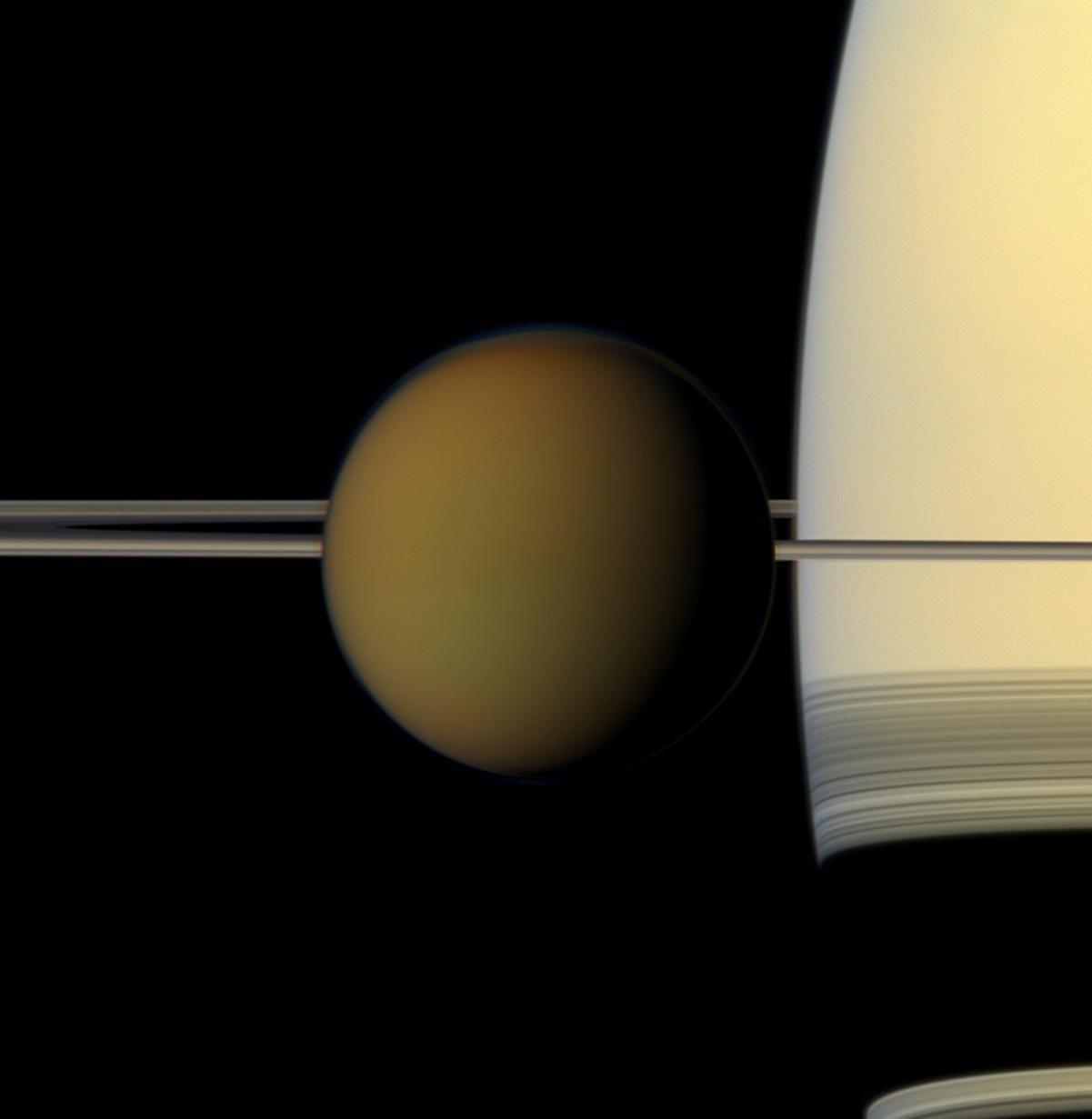
In interplanetary missions, fuel is the most expensive cargo, leading engineers to utilize natural gravitational interactions to perform orbital reorientations. Between September 2005 and July 2006, the Cassini spacecraft performed a series of "petal maneuvers," using targeted flybys of Titan to rotate the apogee of its orbit to study the magnetotail of Saturn. By shifting the orbit in sequence, the path resembled the petals of a flower when viewed from the poles, all powered by gravity assists from Titan.5
The Europa Clipper, launched in October 2024, is designed to utilize similar methods at Jupiter. During its planned 4.3-year tour, it will perform 53 flybys of Europa, 7 of Ganymede, and 9 of Callisto. Mission designers at JPL have planned "petal rotations" where the craft's orbital period is adjusted in a series of six maneuvers to rotate the apogee, ensuring flybys are optimized for specific surface lighting conditions. By relying on Callisto for these gravity assists, the team minimizes both fuel consumption and radiation exposure.6 The total planned delta-v budget for the entire post-arrival tour is only 214.8 meters per second.7
Why is Mercury's orbital shift significant for physics?
Orbital rotation also occurs naturally at planetary scales. The point at which Mercury is closest to the Sun, its perihelion, advances slightly every century, a phenomenon largely explained by the gravitational tug of other planets. In 1859, Urbain Le Verrier identified a small discrepancy in these calculations that could not be accounted for by Newtonian physics alone.8 On November 18, 1915, Albert Einstein presented a paper to the Prussian Academy of Sciences calculating this discrepancy at 43 arcseconds per century using his theory of general relativity.9 Observations compiled by Gerald Clemence in 1947 confirmed the discrepancy at 43.11 arcseconds per century.10
While Mercury’s shift is 43 arcseconds per century, a Molniya-type orbit in the equatorial plane shifts by 0.65 degrees per day. In both cases, the rotation of the ellipse is caused by slight deviations from the gravitational field of a perfect point mass. Europa Clipper is scheduled to enter Jupiter's orbit on April 11, 2030, where it will perform its first petal rotation using the gravity of Europa itself.11
Notes and Sources
- Yu. F. Kolyuka, N. M. Ivanov, T. I. Afanasieva, T. A. Gridchina, "Examination of the Lifetime, Evolution and Re-Entry Features for the 'Molniya' Type Orbits", 21st International Symposium on Space Flight Dynamics, 2009.
- S. Q. Kidder, T. H. Vonder Haar, "On the Use of Satellites in Molniya Orbits for Meteorological Observation of Middle and High Latitudes", Journal of Atmospheric and Oceanic Technology, 1990; H. D. Curtis, Orbital Mechanics for Engineering Students.
- H. D. Curtis, Orbital Mechanics for Engineering Students, section on "Apse line rotation".
- Calculations for delta-v and lunar transition: derived from standard orbital mechanics models (μ = 398,600.44 km³/s²).
- ESA, "Cassini Tour of Saturn and its Moons" and "Petal Rotation and Magnetotail Petal".
- S. Campagnola et al., "Europa Clipper Mission Analysis: Design of the 21F31 Reference Trajectory", ISSFD 2024.
- NASA/JPL, "Europa Clipper Mission Update to CAPS", presentation to the U.S. National Academies.
- U. Le Verrier, "Lettre de M. Le Verrier à M. Faye sur la théorie de Mercure et sur le mouvement du périhélie de cette planète", 1859.
- A. Einstein, "Erklärung der Perihelbewegung des Merkur aus der allgemeinen Relativitätstheorie", 1915.
- G. M. Clemence, "The Relativity Effect in Planetary Motions", Reviews of Modern Physics, 1947.
- NASA/JPL Horizons, Europa Clipper trajectory data, 2024.